Xiaomi's 17 Ultra Focuses on Refinement, Not Revolution: What It Means for Flagship Phones
हिंदी में सुनें
Listen to this article in Hindi
Xiaomi's new 17 Ultra emphasizes improvements over radical change, with implications for the future of flagship smartphone design and camera tech.
Xiaomi has officially unveiled its 17 Ultra in China, marking a continuation of its flagship lineup into 2025. Positioned as an evolution of the 15 Ultra, the new device emphasizes refinement over a complete overhaul, bringing changes to both its internal components and external design. This approach signals a strategic decision by Xiaomi to hone its existing formula for high-end smartphones.
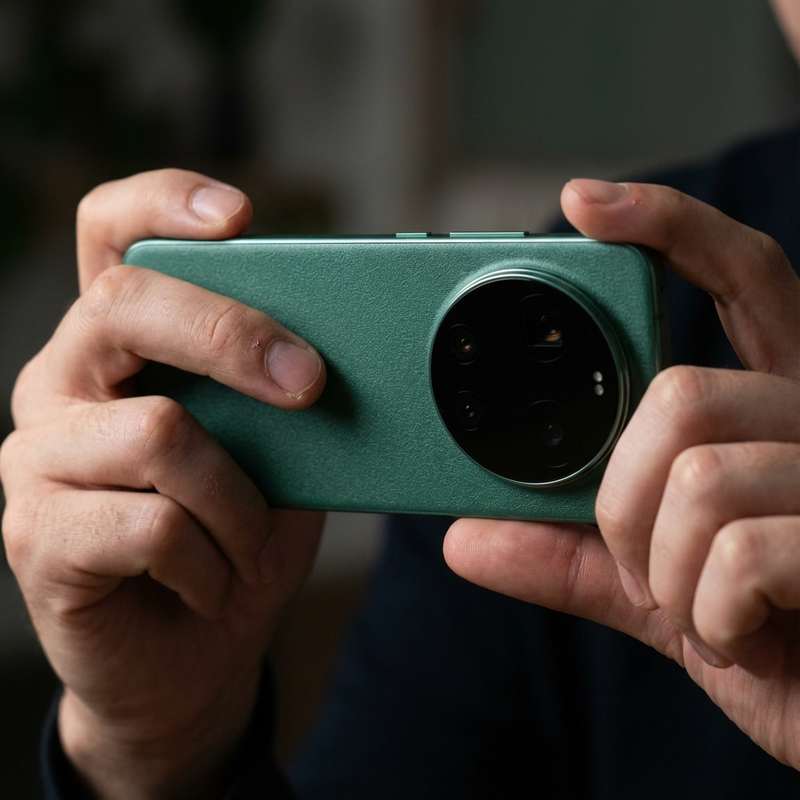
One of the most noticeable changes is the adoption of a flatter design. The 17 Ultra is the first in Xiaomi's Ultra series to feature a completely flat 2D display paired with a flat frame. Measuring 8.29mm thick, it's also the slimmest Ultra phone Xiaomi has produced. The device is available in four finishes, including black, white, Starry Green (with a mineral grain texture), and Cool Smoke Purple.
The 17 Ultra sports a 6.9-inch LTPO AMOLED flat display from TCL CSOT, with a 1.5K resolution and a 120Hz adaptive refresh rate. The display reaches brightness levels of up to 1060 nits in high-brightness mode and is protected by Xiaomi’s Shield Glass 3 (Dragon Crystal Glass 3) for enhanced durability. The flat screen design might appeal to users who find curved screens prone to accidental touches.
Under the hood, the phone is powered by Qualcomm’s Snapdragon 8 Elite Gen 5 chipset, built on a 3nm manufacturing process. This is coupled with LPDDR5X Ultra RAM and UFS 4.1 storage. Graphics are handled by the Adreno 840 GPU. The device runs Android 16 with Xiaomi’s HyperOS 3 on top. Xiaomi is also touting an advanced antenna system with five signal enhancement chips, support for 51 4G and 5G frequency bands, and UWB (ultra-wideband) technology.
Consistent with the Ultra series, the 17 Ultra places significant emphasis on its camera capabilities, developed in partnership with Leica. The primary camera is a 50-megapixel 1-inch Light Master sensor (Omnivision Light Hunter 1050L) with optical image stabilization (OIS) and LOFIC (lateral overflow integration capacitor) ultra-high dynamic range (UHDR) technology. This technology aims to improve light capture, especially in low-light conditions.
The phone also features a 200-megapixel periscope telephoto camera with a next-generation HPE image sensor, and a 50-megapixel ultra-wide camera. The telephoto lens uses a 3G+5P optical architecture with a floating lens design, enabling continuous optical zoom from 75mm to 400mm. A 50-megapixel Omnivision sensor handles front-facing camera duties.
A new “Fireworks Mode” utilizes LOFIC UHDR technology and AI-based scene recognition to optimize exposure in complex lighting situations. The 17 Ultra packs a 6800mAh battery with 90W wired and 50W wireless charging support. Despite the large battery, the phone weighs 224 grams.
Additional features include IP68 water and dust resistance, dual stereo speakers, an X-axis linear motor for haptics, NFC, Wi-Fi 7, Bluetooth 5.4, LHDC 5.0 audio support, and a 3D ultrasonic in-display fingerprint scanner. The 17 Ultra also offers integration with Apple’s ecosystem, allowing users to mirror and control their Xiaomi phone from an iPhone. This cross-platform compatibility is a notable addition.
Priced starting at 6,999 yuan for the 12GB/512GB variant, the Xiaomi 17 Ultra is currently available for pre-order in China, with sales beginning on December 27. Availability in other markets remains unconfirmed.
The Xiaomi 17 Ultra's approach of incremental improvements highlights a maturing smartphone market, where companies are focusing on refining existing technologies and designs rather than pursuing radical innovations. This emphasis on user experience and practical improvements could signal a broader trend in the flagship smartphone space.
Editor’s note: This article was independently written by the Scoopliner Editorial Team using publicly available information.