World’s clearest night skies: 7 destinations every stargazer should see at least once
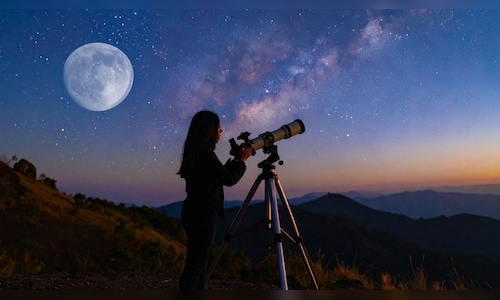
Light pollution has made truly dark night skies increasingly rare, but several regions around the world still offer exceptional stargazing experience. Here are seven such places known for offering some fine night-sky views on Earth.
Mauna Kea, Hawaii, USA | Mauna Kea’s high altitude, dry climate and stable atmosphere make it one of the clearest night-sky locations on Earth. It is home to world-leading observatories and offers exceptional visibility of planets and the Milky Way. (Representative Image: Canva)
Atacama Desert, Chile | Often described as the best stargazing region in the southern hemisphere, the Atacama has near-zero cloud cover and some of the darkest skies on the planet. Locations such as San Pedro de Atacama and the ALMA Observatory attract astronomers year-round. (Representative Image: Canva)
Aoraki Mackenzie International Dark Sky Reserve, New Zealand | One of the largest Dark Sky Reserves in the world, it offers spectacular views of the Magellanic Clouds and the Southern Cross. Its extremely low light pollution and remote setting make it a favourite among astrophotographers. (Representative Image: Canva)
NamibRand Nature Reserve, Namibia | NamibRand is Africa’s first International Dark Sky Reserve and boasts some of the driest, clearest skies on Earth. The Milky Way appears bright, detailed and almost three-dimensional. (Representative Image: Canva)
La Palma, Canary Islands, Spain | The Canary Islands are renowned for astronomy, and La Palma stands out thanks to the Roque de los Muchachos Observatory. Strict light-pollution regulations give visitors superb views of northern-hemisphere constellations. (Representative Image: Canva)
Uluru & the Red Centre, Australia | Central Australia’s desert environment offers pitch-black skies with minimal humidity. The region surrounding Uluru, Alice Springs and Kings Canyon is known for expansive views of the Milky Way and Aboriginal sky-story traditions. (Image: Canva)