Deep-Sea Methane Mounds Reveal Unexpected Life in the Greenland Sea
हिंदी में सुनें
Listen to this article in Hindi
Scientists discover active methane mounds 3.6km deep in the Greenland Sea, teeming with life. What this means for deep-sea ecosystems and methane release.
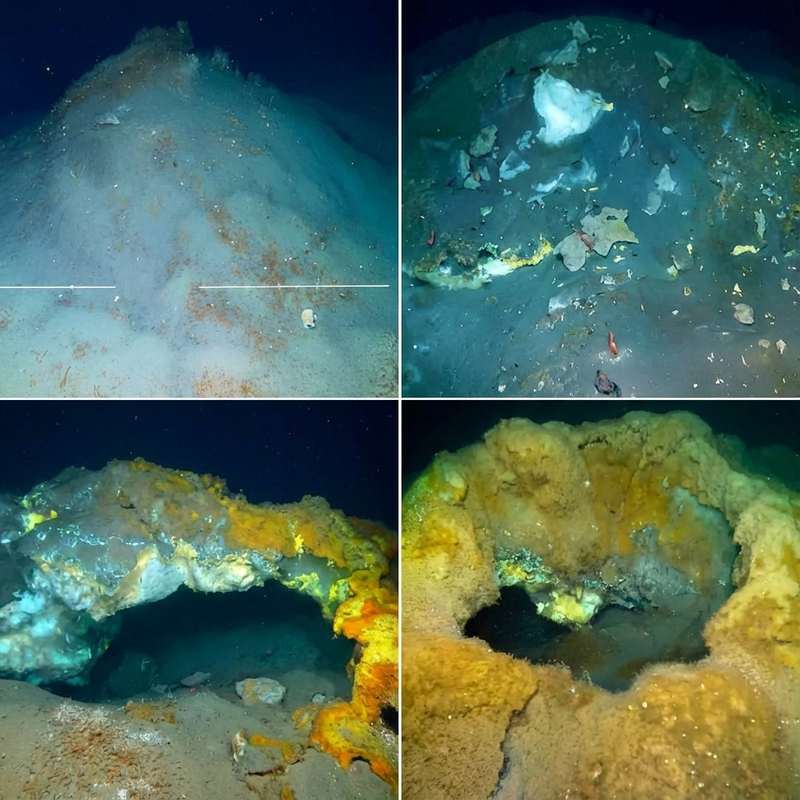
The ocean's depths, long considered barren landscapes, are increasingly revealing themselves as hotspots of biological activity. Recent investigations in the Greenland Sea have uncovered a surprising ecosystem flourishing around methane mounds at depths of 3.6 kilometers. These formations, created by the seepage of methane gas from the seabed, support unique communities of organisms that thrive in the absence of sunlight.
Methane, a potent greenhouse gas, is often associated with climate change concerns. In this context, the discovery of methane release from the seabed raises questions about its potential contribution to atmospheric warming. That said, the reality is a bit more complicated. the presence of thriving biological communities around these methane seeps introduces a crucial element: these organisms consume methane, potentially mitigating its release into the atmosphere. This process, known as methane oxidation, is a vital function of these deep-sea ecosystems.
The process that allows life to flourish in such extreme conditions is called chemosynthesis, a process analogous to photosynthesis but relying on chemical energy rather than light. Microbes, the foundation of this food web, oxidize methane, converting it into energy that supports a diverse array of organisms. These include specialized bacteria, archaea, and larger invertebrates that graze on the microbial mats. The intricate relationships within these deep-sea communities highlight the complexity and resilience of life in extreme environments.
These methane mounds are not merely isolated geological features; they are hubs of biological activity that contribute to the overall health and functioning of the deep-sea ecosystem. Understanding the dynamics of these ecosystems is crucial for predicting the impact of climate change on the Arctic Ocean. As ocean temperatures rise and ice cover decreases, the stability of these methane hydrates – the frozen form of methane trapped within the seabed – becomes a concern. Increased warming could lead to greater methane release, potentially exacerbating climate change. That said, the reality is a bit more complicated. the efficiency of methane oxidation by these deep-sea communities could play a significant role in buffering this effect. You can learn more about how climate change impacts different ecosystems by reading our [science basics explainer](/science-basics).
The study of these deep-sea methane seeps presents several challenges. The extreme depths and pressures require specialized equipment and techniques for exploration and sampling. Furthermore, the remote location of the Greenland Sea adds logistical complexity to research expeditions. Despite these challenges, scientists are employing advanced technologies, such as remotely operated vehicles (ROVs) and autonomous underwater vehicles (AUVs), to investigate these fascinating ecosystems. Future research will focus on quantifying the rate of methane oxidation by these communities, identifying the key microbial species involved, and assessing the potential impact of climate change on their stability. This relates to the broader field of [related field context](/oceanography-methane-seeps) and studying the biogeochemical cycles of the ocean.
While the discovery of these active methane mounds in the Greenland Sea is significant, it's important to avoid overstating its immediate implications. The overall contribution of these seeps to global methane emissions is still being investigated. Moreover, the capacity of these deep-sea communities to mitigate methane release is not fully understood. The interplay between methane release, microbial consumption, and ocean currents is a complex system that requires further study. The discovery builds on [prior research background](/deep-sea-exploration) which has shown the existence of similar systems in other parts of the world.
So where does that leave things? the discovery of thriving ecosystems around deep-sea methane mounds in the Greenland Sea provides valuable insights into the complex interplay between geological processes, biological activity, and climate change in the Arctic Ocean. While the implications for global methane emissions are still under investigation, these findings highlight the importance of understanding and protecting these unique deep-sea environments. Further research is needed to fully assess the role of these ecosystems in mitigating methane release and to predict their response to future climate change scenarios.
Editor’s note: This article was independently written by the Scoopliner Editorial Team using publicly available information.