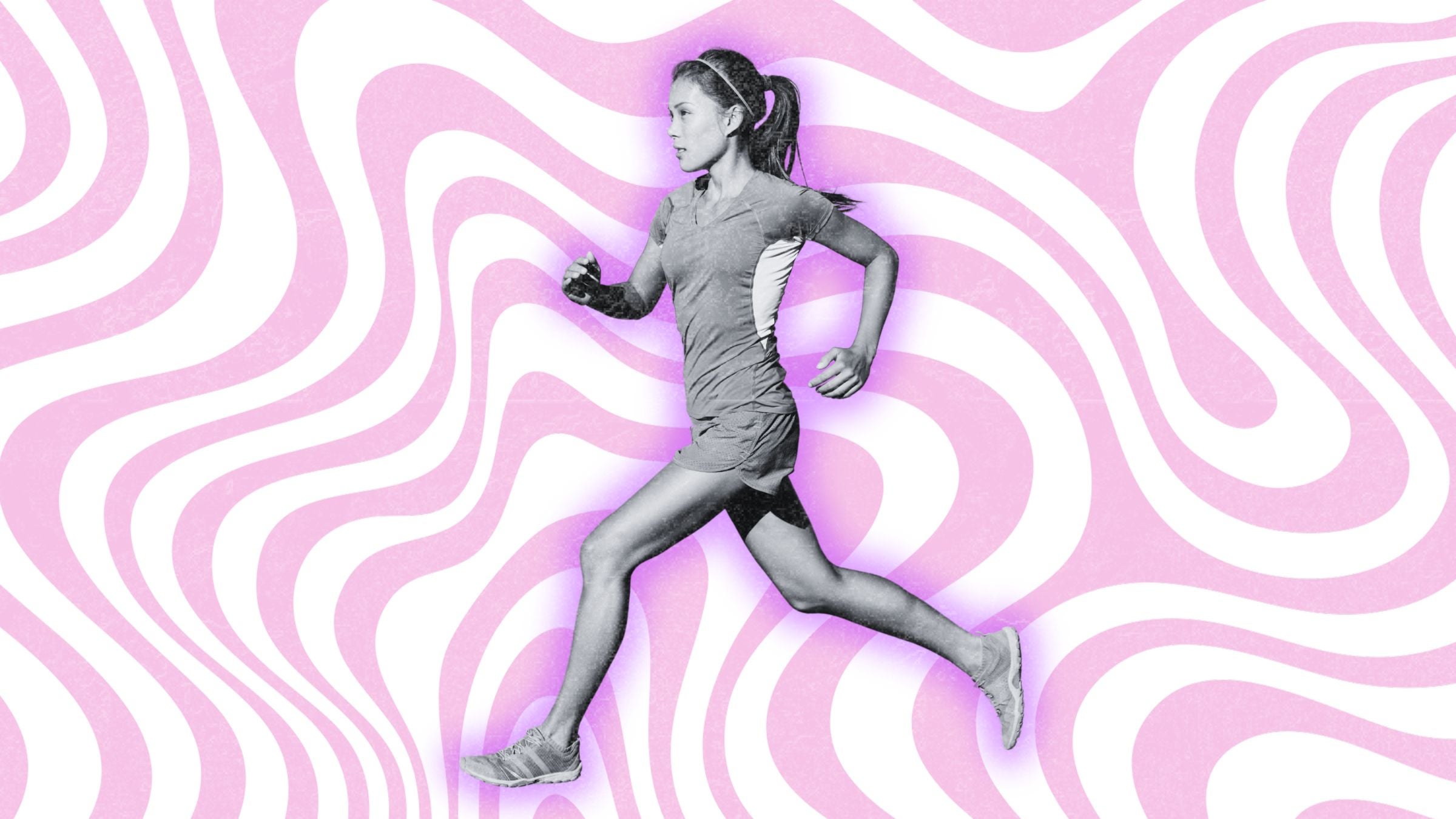
Why Runners Get Lightheaded When They Stand Up
हिंदी में सुनें
Listen to this article in Hindi
Study reveals why runners often experience lightheadedness when standing. Inner ear motion sensors may be the key. Penn State & Florida State research.
Many runners are familiar with that dizzy feeling upon standing up quickly, especially after relaxing. This is often referred to as "orthostatic intolerance," and it's been commonly thought to be linked to a runner's high fitness level and low resting heart rate. That said, the reality is a bit more complicated. new research suggests a different cause may be at play.
A study conducted by researchers at Penn State and Florida State universities, led by Chester Ray, explored how running's repetitive motion affects the inner ear. Their hypothesis was that the constant up-and-down movement experienced during running desensitizes the motion sensors in the inner ear, making them slower to react when a runner stands. The findings, published in the Journal of Applied Physiology, revealed that running does indeed have a unique effect on these inner motion sensors.
Your inner ear plays a crucial role in both hearing and balance. The balance system, also known as the vestibular system, relies on tiny rock-like crystals called otoliths, which translates to "ear stones" in Greek. When your head moves, these crystals shift due to gravity. Small hairs detect this movement and signal to the brain about the direction and speed of the head's motion.
This motion-sensing system is vital in preventing fainting when standing up. When you change position, gravity causes blood to redistribute, often pooling in the legs when you're upright. This can reduce blood and oxygen flow to the brain, leading to lightheadedness. To counteract this, the body constricts blood vessels and increases heart rate, a response partly triggered by signals from the otoliths.
In the study, volunteers underwent an eight-week training program that included either running, cycling (stationary), or no exercise. The running and cycling programs involved two 60-minute sessions and two interval sessions each week. The runners saw a 25% increase in their VO2 max (a measure of aerobic fitness), while the cyclists improved by 20%. The runners' average resting heart rate decreased from 61 to 53 beats per minute, and the cyclists' dropped from 65 to 55. There were no changes in the control group.
To assess otolith sensitivity, researchers used a "head-down rotation" procedure. Participants lay face down with their heads hanging off a table while researchers moved their heads to stimulate the otoliths. Electrodes then measured nerve signals traveling from the brain to the calf muscles, indicating how the blood vessels would constrict in preparation for standing. The results showed a significant decrease in these signals after eight weeks of running, but no change after cycling or inactivity.
The researchers also measured blood flow in the calf muscles by monitoring calf swelling. They observed that stimulating the otoliths through head-down rotation caused a reduction in blood flow to the calves due to blood vessel constriction. That said, the reality is a bit more complicated. this response was suppressed after eight weeks of running.
The study concludes that it's not just overall fitness that affects the body's response to standing. Instead, the specific up-and-down motion of running appears to lessen the brain's sensitivity to motion signals from the otoliths. While this may not be the only cause of headrushes, it is a contributing factor. The study used stationary bikes for the cycling group, so outdoor cycling might have slightly more side-to-side movement, potentially having a similar, though likely smaller, effect.
Runners sometimes experience lightheadedness and collapse after long races. This is also related to insufficient oxygen reaching the brain. While dehydration was previously blamed, it seems to occur right after stopping, suggesting a blood distribution issue. During running, blood vessels are dilated, and calf muscle contractions help pump blood back to the heart. When running stops, blood vessels remain dilated, but the calf muscle pump stops, causing blood to pool in the legs and leading to faintness. The solution is to keep moving after finishing a race.
Understanding the otolith study can be reassuring, knowing that lightheadedness doesn't necessarily indicate heart or blood pressure problems. Whether reduced otolith sensitivity is a problem is unclear. There's no evidence suggesting runners have worse balance than other athletes or the general population. Further research could explore the link between running stride smoothness and otolith sensitivity. Perhaps this could motivate some runners to refine their stride. For now, taking it slow when getting up seems like a good strategy.

:max_bytes(150000):strip_icc()/What-Happens-to-Your-Blood-Sugar-When-You-Eat-Bananas-daf3e534cdb247c2bc9c3d1f396ece17.jpg)


:max_bytes(150000):strip_icc()/healthiest-sandwich-bread-GettyImages-183953960-1a3aeb41759042849186f11e6a279510.jpg)
:max_bytes(150000):strip_icc()/AR-Coca-cola-2x1yellow-bb178bdf660d425bb0af091a138a1cc0.jpg)