The Mystery of the Hoba Meteorite: Understanding Its Flat Shape and Lack of Impact Crater
हिंदी में सुनें
Listen to this article in Hindi
An in-depth analysis of the Hoba meteorite, the largest ever found, and the peculiar absence of an impact crater.
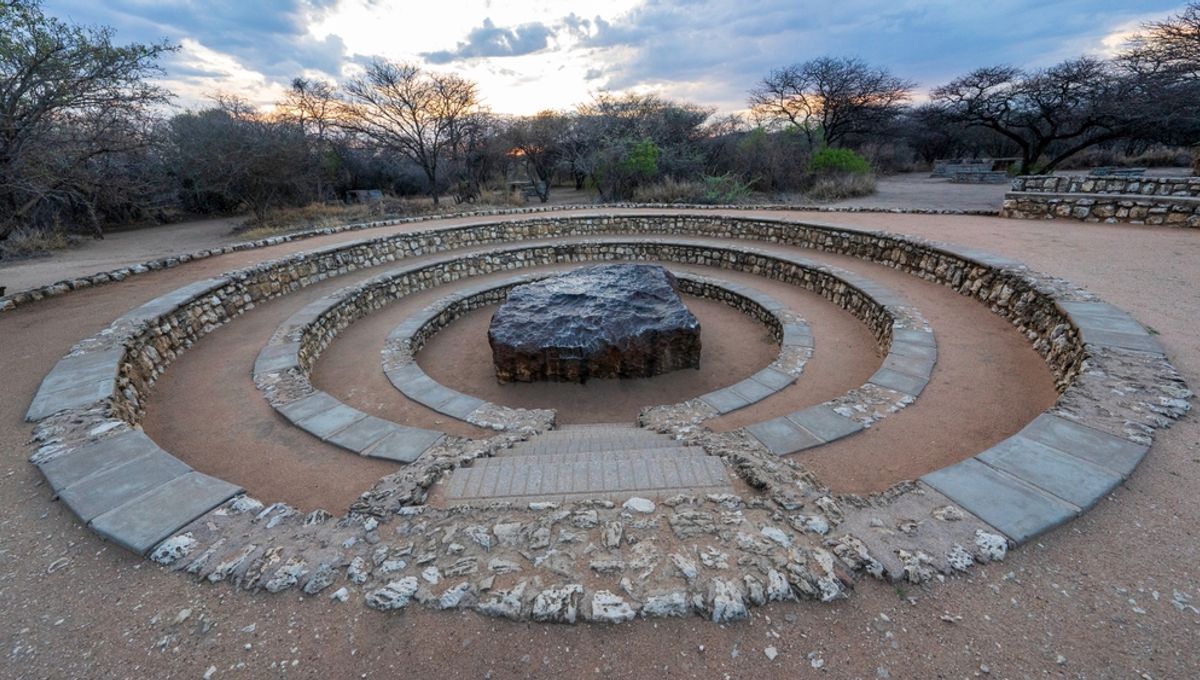
The Hoba meteorite, weighing 60 tons and composed primarily of iron and nickel, presents a unique case in the study of meteorites. Found on a farm in Namibia, its flat, slab-like shape and significant size are striking, but the absence of an impact crater raises intriguing questions about its journey to the Earth’s surface. Typically, meteorites create noticeable craters upon impact due to the immense forces involved. The Hoba meteorite, however, appears to be an exception, suggesting alternative scenarios regarding its origin and descent.
Scientists investigating the Hoba meteorite have proposed two main possibilities for its unusual characteristics. The first theory posits that the meteorite originated from a single parent body that did not fragment upon entering the Earth's atmosphere. Alternatively, it might represent just one of several fragments from a disintegrated parent body, potentially indicating a larger strewn field in which other pieces have yet to be discovered.
The meteorite's lack of an impact feature, which is notable given its massive size, leads to further speculation about its fall conditions. One theory suggests that the meteorite may have been transported from its original impact location, though this is considered unlikely due to the absence of evidence supporting such transport. The second theory implies that if the Hoba meteorite did indeed impact the Earth, any observable impact signatures may have eroded over time, possibly due to natural weathering processes.
In terms of physical characteristics, the Hoba meteorite measures approximately 2.7 meters (8.9 feet) in length and width, with a thickness of 0.9 meters (3 feet). Its surface shows signs of alteration from contact with the Earth's atmosphere and environment, including a thick layer of oxidation. Despite these alterations, the meteorite has not exhibited significant cracking, which further complicates the understanding of its fall dynamics and the forces it encountered.
The case of the Hoba meteorite is significant within the broader context of planetary geology and meteorite studies. It challenges existing notions about how meteorites interact with the Earth's surface and highlights the complexities involved in studying their origins. Understanding such anomalies can provide insights into the processes that govern meteorite falls and their subsequent transformations.
That said, the reality is a bit more complicated. while the findings surrounding the Hoba meteorite offer fascinating insights, they also leave several questions unanswered. For instance, if the meteorite originated from a larger body, what happened to the other fragments? And how might future research further illuminate the circumstances of its fall? These questions underscore the need for continued investigation into meteorites and their histories.
In summary, the Hoba meteorite serves as a reminder of the mysteries that still exist within our understanding of celestial bodies and their interactions with Earth. As scientists continue to explore these enigmas, they may uncover not only the story of the Hoba meteorite itself but also broader truths about the universe and our place within it.
Editor's note: This article was independently written by the Scoopliner Editorial Team using publicly available information.