Whooping Cough Cases Soar Amidst Declining Vaccination Rates
हिंदी में सुनें
Listen to this article in Hindi
US sees a surge in whooping cough cases, mirroring a decade-old peak, as DTaP vaccination rates decline. Investigation reveals concerning trends and outbreaks.
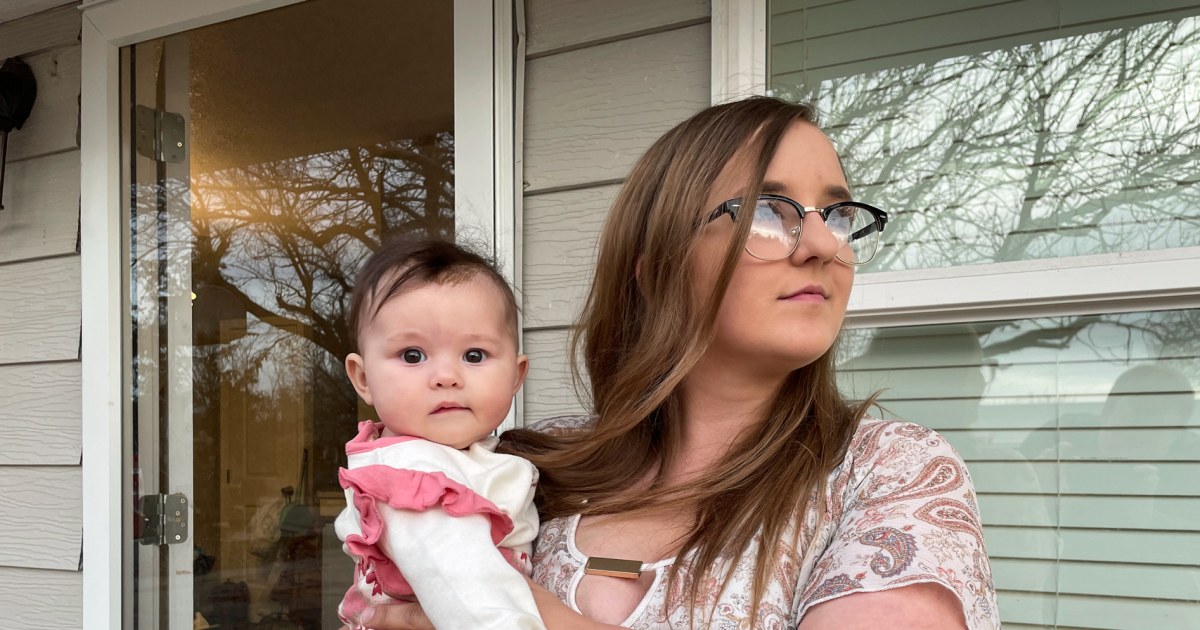
Two-week-old Feleena Owens struggled to breathe, her skin turning gray-blue as she fought for air amidst a severe cough. Her mother, Sophie Owens, 24, recalled moments when Feleena would stop breathing for as long as 11 seconds.
Feleena was soon airlifted to a Dallas hospital, approximately 80 miles from Sulphur Springs, Texas, where the Owens family resided. Doctors informed her parents that Feleena might not have survived had they delayed seeking medical attention. Feleena was diagnosed with pertussis, commonly known as whooping cough, and spent several weeks in the neonatal intensive care unit, including more than a week on a ventilator, according to her mother.
Feleena's case reflects a concerning trend: a rapid increase in whooping cough infections, particularly among children, in recent years. CDC data shows that as of December 6, 2025, there were 26,632 reported cases of whooping cough in the United States. This is the highest number of cases since 2014.
Vaccination rates are falling, fueling the surge. The American Academy of Pediatrics recommends that children receive four doses of the DTaP vaccine, which protects against diphtheria, tetanus, and pertussis, before starting kindergarten. That said, the reality is a bit more complicated. an investigation by NBC News and Stanford University revealed a decline in DTaP vaccination rates nationwide, contributing to a resurgence of preventable diseases, including measles.
Of the 35 states and Washington, D.C., that provided DTaP vaccination data to NBC News, 31 offered specific data on kindergarteners receiving the recommended four doses. The investigation found that approximately 70% of counties and jurisdictions in those 31 states fell below the 95% target rate considered necessary for community protection. In Texas, where the Owens family lives, over half the counties (58%) were below the recommended rate. Furthermore, in states with data dating back to 2019, over 75% of counties and jurisdictions demonstrated declining DTaP vaccination rates, with Texas seeing declines in approximately 85% of its counties.
The decline in vaccination rates coincides with significant increases in whooping cough cases in several states. Texas reported over 3,500 cases through October, about four times the number reported during the same period last year, according to the state's health department. Oregon reported a record 1,475 cases as of December 10, surpassing the previous high in 1950. The Oregon Health Authority also reported one infant death from whooping cough this year, the first since 2012. A spokesman for the Oregon Health Authority emphasized the importance of protecting babies, noting that about one-third of infants with pertussis require hospitalization, and one in 100 die. Since September 2024, at least six other pertussis-related deaths in children have been reported across the U.S.: two in Louisiana, one in South Dakota, and three in Kentucky.
Dr. Raphael Mattamal, a hospital pediatrician with Texas Tech Physicians Pediatrics in Amarillo, stressed that these deaths are preventable through vaccination. Sophie Owens said she doesn't know how Feleena contracted the illness, as the rest of their family had been vaccinated. Although Sophie received a booster during her pregnancy, as recommended during the third trimester to provide newborns some protection before they are old enough to be vaccinated themselves, this protection is not absolute.
Mattamal explained that adequate community protection prevents the spread of the disease, especially safeguarding those too young to be vaccinated. Whooping cough often begins with symptoms resembling common winter illnesses, such as a runny nose, mild cough, and sometimes a low fever, followed by violent coughing fits that can be severe. Babies are particularly vulnerable due to their small airways. The cough can persist for weeks or even months, and individuals are contagious from the onset of symptoms until three weeks after the first coughing fit.
According to Mattamal, the bacteria can linger in the air even after someone leaves the room, emphasizing that only a small number of bacterial particles are needed for transmission. Many individuals, especially adults, are unaware of their infection and unknowingly spread the bacteria. A 1995 study revealed that 20% of individuals seeking emergency care for a cough lasting two to three weeks actually had pertussis. Treatment typically involves antibiotics like azithromycin to clear the bacteria and reduce transmission.
Before the whooping cough vaccine was introduced, the U.S. saw approximately 200,000 cases annually in the 1920s. This number dropped to between 1,000 and 5,000 in the 1970s and 1980s. That said, the reality is a bit more complicated. cases have been steadily increasing since the late 1990s and early 2000s, with 6,000 to 9,000 cases diagnosed each year, according to CDC data. While cases decreased during the pandemic, they have since surged.
Dr. Kathryn Edwards, a vaccine safety expert and professor of pediatrics at Vanderbilt University Medical Center, noted a post-pandemic "burst of pertussis cases." Research published in JAMA Network Open by Edwards and her colleagues highlights the global rise in whooping cough infections, along with a decline in vaccination rates, including among pregnant women. The CDC recommends that babies receive their first pertussis vaccine at 2 months, with follow-up shots at 4 and 6 months, another before age 2, and again around kindergarten. Boosters are often necessary through the teen years, as protection wanes over time. Researchers are exploring new pertussis vaccine versions, such as a nasal spray, that could offer stronger and longer-lasting protection.
The question remains whether people will utilize even improved vaccines. Mattamal pointed out that the effectiveness of vaccines has led some to question their necessity, calling them "victims of their own success." He suggests that parents may not fully grasp the severity of the disease until they witness a child struggling to breathe. Sophie Owens echoed this sentiment, stating that the true severity of the illness is not understood until it affects one's own child.



:max_bytes(150000):strip_icc()/ms-martha-sourdough-08535a5ce5704845ab32e9e30cc333eb.jpg)