Where did it all go wrong?
हिंदी में सुनें
Listen to this article in Hindi
The OnePlus 15R boasts a 165Hz display, huge battery & fast chip, but missing features & a higher price make it a tough sell. Read our review.
The OnePlus 15R, equipped with a 165Hz display, a substantial 7,400mAh battery, and a Snapdragon 8 Gen 5 processor, appears to be a dream phone for those prioritizing specs. That said, the reality is a bit more complicated. the phone's appeal is complicated by omitted features, questionable software choices, and yet another price increase.
For several years, OnePlus's 'R' series has consistently delivered some of the best mid-range Android devices available. The OnePlus 12R from 2024 was a standout at $500, and the OnePlus 13R offered a better overall experience that justified its $600 price.
The OnePlus 15R aims to continue this trend, emphasizing performance and battery life while remaining more affordable than the flagship OnePlus 15. That said, the reality is a bit more complicated. the removal of a popular feature, a shift in software direction, and a lack of focus on camera quality and wireless charging make this year's R phone less appealing, especially with a price hike to $700.
Despite wanting to be impressed, a couple of weeks with the OnePlus 15R left me disappointed.
**Design and Durability**
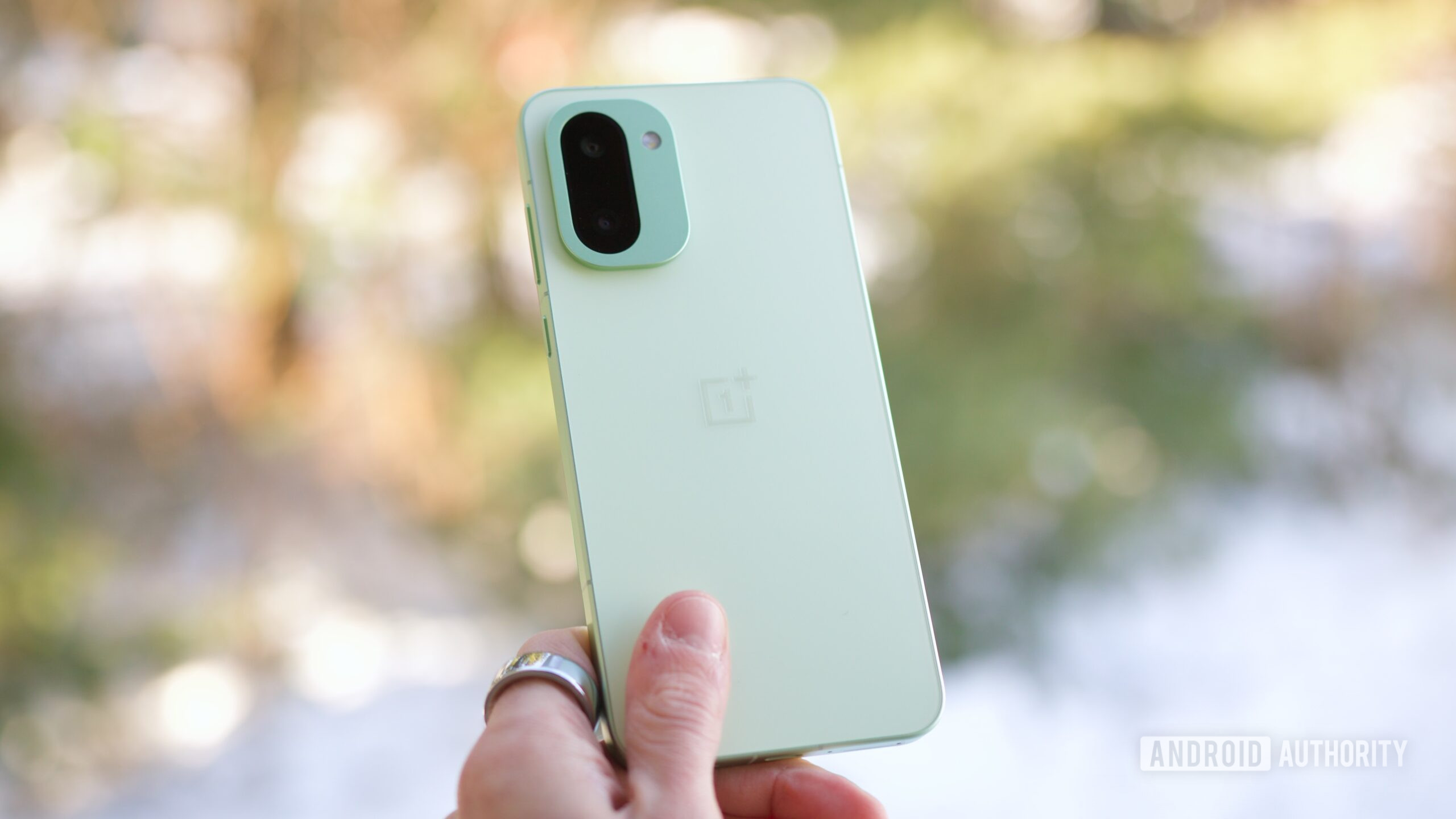
The OnePlus 15R creates a positive first impression. The aluminum frame feels premium, the frosted glass back resists fingerprints, and the buttons provide satisfying feedback. That said, the reality is a bit more complicated. a significant design change is the removal of the alert slider, a long-standing feature of OnePlus phones. The OnePlus 15R replaces the alert slider with the 'Plus Key,' which debuted on the OnePlus 15. The Plus Key is set to OnePlus’s Mind Space AI feature by default, which is used for storing screenshots and voice recordings. Although the Plus Key can be reassigned, options are limited to:
- Switching between Ring, Vibrate, and Silent modes
- Turning Do Not Disturb on or off
- Opening the Camera
- Turning the flashlight on or off
- Recording a voice memo
- Opening OnePlus Translate
- Taking a screenshot
You cannot assign the Plus Key to functions outside this list, such as launching a specific app. The button also only supports a press-and-hold action, lacking double- or triple-tap functionality. While a programmable button replacing the alert slider could have been acceptable, its execution falls short. The Plus Key feels like a weak imitation of Apple's action button.
On the upside, the OnePlus 15R boasts improved durability. It features IP66, IP68, IP69, and IP69K ratings, compared to the OnePlus 13R's IP65 rating. This means the phone can withstand submersion in five feet of water for 30 minutes and resist high-temperature water jets. Such durability is impressive, especially for a non-flagship phone.
Another hardware upgrade is the display's 165Hz refresh rate, an increase from the OnePlus 13R's 120Hz panel. Despite sounding impressive, its impact in everyday use is minimal. The 165Hz refresh rate is only active in a few supported games. Even when playing one of these games, distinguishing it from the standard 120Hz refresh rate was difficult.
That said, the reality is a bit more complicated. the OnePlus 15R now uses an LTPS panel, unlike the LTPO panel in the OnePlus 13R. Consequently, the 15R's refresh rate can only drop to 60Hz, while the 13R could go down to 1Hz. This means the 15R consumes more power when the screen is static, such as when reading or using the always-on display. While a 165Hz display sounds appealing, the trade-off doesn't seem worthwhile.
**Performance and Battery Life**
Despite questionable hardware choices, the OnePlus 15R excels in performance and battery life.
The Qualcomm Snapdragon 8 Gen 5 chip powers the 15R, a slightly less powerful version of the Snapdragon 8 Elite Gen 5 found in the OnePlus 15. Despite not being Qualcomm's top-end chip, its performance is unlikely to disappoint anyone.
CPU benchmark tests reveal a significant performance increase for the OnePlus 15R over the OnePlus 13R with its Snapdragon 8 Gen 3 chip. It also performs slightly below the Samsung Galaxy S25, which is powered by the Snapdragon 8 Elite. As anticipated, the OnePlus 15 leads due to its Snapdragon 8 Elite Gen 5. The OnePlus 15R's CPU performance aligns with 2025 flagship phones, which is remarkable considering its late 2025/early 2026 release.
GPU benchmarks tell a similar story, with the OnePlus 15R's performance nearly identical to the OnePlus 13R. The OnePlus 15 again takes the lead, but the 15R runs cooler, especially compared to the 15, which tends to overheat even after fixes. During the Wild Life Extreme Stress Test, the OnePlus 15 averaged 102.38°F, peaking at 114.62°F, while the OnePlus 15R averaged 94.82°F and peaked at 106.34°F.
These benchmarks translate to excellent real-world performance. The OnePlus 15R has been exceptionally smooth during testing. The interface is fluid, apps run seamlessly, and games perform well. Playing 'Call of Duty: Mobile' with high graphics and maximum frame rate was a great experience, and the phone barely warmed up even after extended play.
The OnePlus 15R's battery life is even more impressive. It features a 7,400mAh silicon-carbon battery, the largest ever in a OnePlus phone and among mainstream Android phones in the US.
With about three hours of screen time daily, primarily on Wi-Fi, the OnePlus 15R easily lasts two and a half days on a single charge. This includes 30 minutes of YouTube and 'Call of Duty: Mobile' each day, along with Reddit, X, Telegram, and TikTok use. With lighter use, the 15R could last three days.
That said, the reality is a bit more complicated. the charging setup detracts from the battery's potential. While the OnePlus 15R supports 80W wired charging, it requires OnePlus's 100W GaN power adapter, which isn't available in North America. Instead, a 55W adapter is included, effectively limiting charging speed in the US and Canada.
While 55W wired charging is still decent, it's slower than the OnePlus 15 but faster than the Samsung Galaxy S25 and Google Pixel 10. Recharging from 2% to 50% takes 26 minutes, and reaching 100% takes 63 minutes, which is reasonable given the battery size.
The absence of wireless charging is less acceptable. While understandable on the $500 OnePlus 12R in early 2024 and an annoyance on the $600 OnePlus 13R, it's now inexcusable on the $700 OnePlus 15R. Wireless charging is no longer a premium feature, and the OnePlus 15R isn't a budget phone. OnePlus's continued omission of wireless charging in the R series is questionable, especially as the price increases with each model.
**Camera**
OnePlus delivered a surprisingly capable camera system with the OnePlus 13R. While not the best, it featured a decent array of sensors and generally produced good-looking photos. That said, the reality is a bit more complicated. OnePlus has taken a step back with the OnePlus 15R.
While the primary camera remains 50 megapixels, it now uses an older Sony IMX906 sensor instead of the Sony LYT-700 in the 13R. In practice, this means photos in ample lighting look good, with decent colors and sharpness. That said, the reality is a bit more complicated. in low light, the OnePlus 15R struggles.
The primary camera struggles to focus, resulting in blurry and noisy photos. Even moderately lit environments can trigger night mode. The 8MP ultrawide camera is the same as the 13R, which isn't necessarily positive. The wider field of view is nice, but there's a noticeable drop in quality. It also performs poorly in low light, relying on harsh automatic flash.
There's no telephoto camera this time. The camera app includes a 2x zoom preset, but it's simply a cropped version of the primary camera, a downgrade from the 13R's dedicated telephoto sensor.
The OnePlus 15R features a new 32MP selfie camera, upgraded from 16MP on the 13R, but it's unremarkable. It can capture acceptable photos, but even slight movement can cause blurriness.
For video, the 15R supports 4K recording at up to 120fps and slow-motion recording. That said, the reality is a bit more complicated. video quality is limited by the same constraints as still photos; video in good lighting looks fine, but low-light performance is poor.
**Software**
Earlier this year, I praised OnePlus’s OxygenOS 15 update, calling it my favorite Android interface due to its responsiveness, customization, and multitasking. That said, the reality is a bit more complicated. the OnePlus 15R ships with OxygenOS 16, which undermines the previously excellent Android skin with a series of poor choices.
One such choice is the iOS-ification of OxygenOS. The app drawer now has a 'Categories' page resembling the iPhone. Liquid Glass-like elements appear throughout the UI and some OnePlus apps, and the Plus Key settings page poorly imitates Apple's action button interface. OnePlus even has its own Dynamic Island, which hides the battery percentage when it appears. The result feels cheap and uninspired.
OxygenOS 16 also feels sluggish. Actions like opening the app drawer or swiping down for Quick Settings are slowed by deliberate animations, making the OnePlus 15R feel slower than it should. This is a significant regression from the fast and responsive OxygenOS 15.
Other issues include the Standard display size making apps appear too large, while the Small size makes Quick Settings toggles look odd. OnePlus's AI features feel incomplete. Enabling fast charging requires navigating a submenu, and the OnePlus 15R consistently receives notifications slower than my Pixel 10 Pro.
Furthermore, OnePlus's update policy is mediocre. The OnePlus 15R is promised four years of Android OS upgrades and six years of security patches. While not the worst, it's far from the best. Google and Samsung offer seven years of updates as the standard. This is no longer sufficient for a $700 phone.
**Recommendation**
I anticipated a straightforward recommendation before reviewing the OnePlus 15R. The OnePlus 12R and 13R were easy to recommend, but the OnePlus 15R presents a challenge.
If seeking a lower-cost OnePlus phone, the OnePlus 13R is the better option. It's less than a year old, offers great battery life, very good performance, an LTPO display, and a superior camera system. It remains a good deal at its $600 retail price and can likely be found at a discount now that the 15R is available.
Better alternatives also exist outside of OnePlus. The Samsung Galaxy S25 FE wasn't our favorite phone of 2025, but it's a better contender in the mid-tier flagship space. Samsung's phone features more cohesive software, seven years of Android updates, and good battery life and charging. Its $650 price tag is already lower than the 15R, and it's often available for significantly less.
It's disappointing to be critical of the OnePlus 15R, especially given the success of its predecessor launched less than 12 months ago. While OnePlus's focus on battery life is commendable, it's insufficient to compensate for the phone's other shortcomings, especially at its price point.
The OnePlus 15R is overpriced, outclassed, and a victim of OnePlus's previous success. This isn't the right direction for the R series, and hopefully, OnePlus recognizes this soon.