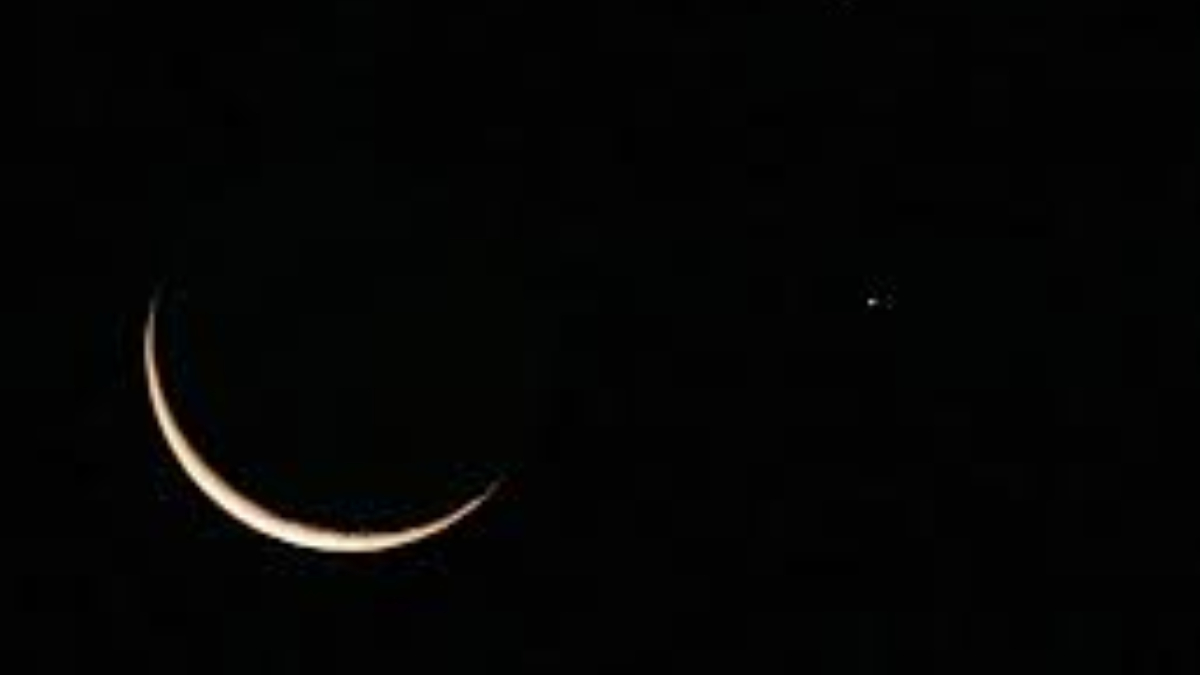
What the Moon Will Look Like On December 17?
हिंदी में सुनें
Listen to this article in Hindi
Find out the moon's phase on December 17, 2025, and when to see the next full moon (the Wolf Moon) in January 2026. Discover the lunar cycle's beauty.
The Moon, Earth's closest celestial neighbor, goes through a fascinating series of phases that have captivated humans for ages. These phases are due to the changing angles at which we view the Moon's illuminated surface as it orbits Earth and the Sun.
From New Moon to Waxing Crescent, First Quarter, Waxing Gibbous, Full Moon, Waning Gibbous, Last Quarter, and finally Waning Crescent, each phase has its own unique beauty and significance. The lunar phases play a crucial role in determining tides, calendars, and cultural traditions around the world. Observing these phases offers insight into the rhythms of nature, marking the passage of time and adding a poetic element to our daily view of the sky.
Understanding the Different Moon Phases
Here's a simple breakdown of the basic moon phases:
- **New Moon:** The Moon is between the Earth and the Sun. The side facing us is dark, making it invisible at night.
- **Waxing Crescent:** A sliver of light appears as the Moon begins to emerge from its New Moon phase. "Waxing" means the illuminated area is increasing.
- **First Quarter Moon:** Half of the Moon is illuminated, appearing as a perfect half-circle on the right side (in the Northern Hemisphere).
- **Waxing Gibbous:** The Moon is now mostly lit and continues to grow brighter as it heads towards the full moon.
- **Full Moon:** The entire face of the Moon is illuminated. It rises at sunset and remains visible throughout the night.
- **Waning Gibbous:** After the Full Moon, the illuminated portion starts to decrease. More than half of the Moon is still lit, but the lit area is shrinking.
- **Last Quarter Moon:** Again, half of the Moon is illuminated, but this time it's the left side (in the Northern Hemisphere).
- **Waning Crescent:** Only a tiny sliver of light remains before the Moon returns to the New Moon phase.
The moon completes all these phases in a 29.5-day cycle, known as the lunar cycle, which repeats every month.
The Moon on December 17, 2025
On December 17, 2025, the Moon will be in its waning crescent phase. Approximately 90% of the lunar surface will appear dark, with only a small portion reflecting sunlight towards Earth. The illuminated area will continue to shrink as the Moon approaches the New Moon in two days.
During this phase, the Moon sits low on the horizon and may only be visible shortly before or after sunrise or sunset. The waning crescent is the final stage of the lunar cycle before it begins anew with the next New Moon.
The Next Full Moon
Following December's Cold Moon, the next Full Moon, called the Wolf Moon, will occur on January 3, 2026. This will be the first Full Moon of the new year and the start of a new lunar cycle.
Conclusion
The Moon's phases create a unique rhythm in the night sky each year. December may or may not feature a supermoon, but regardless, the Moon will continue its graceful journey across the sky every night, adding beauty to our world.