Understanding the Wolf Supermoon: A Celestial Phenomenon Unveiled
हिंदी में सुनें
Listen to this article in Hindi
Discover the Wolf Supermoon, its significance, viewing tips, and what it reveals about lunar cycles and astronomy.
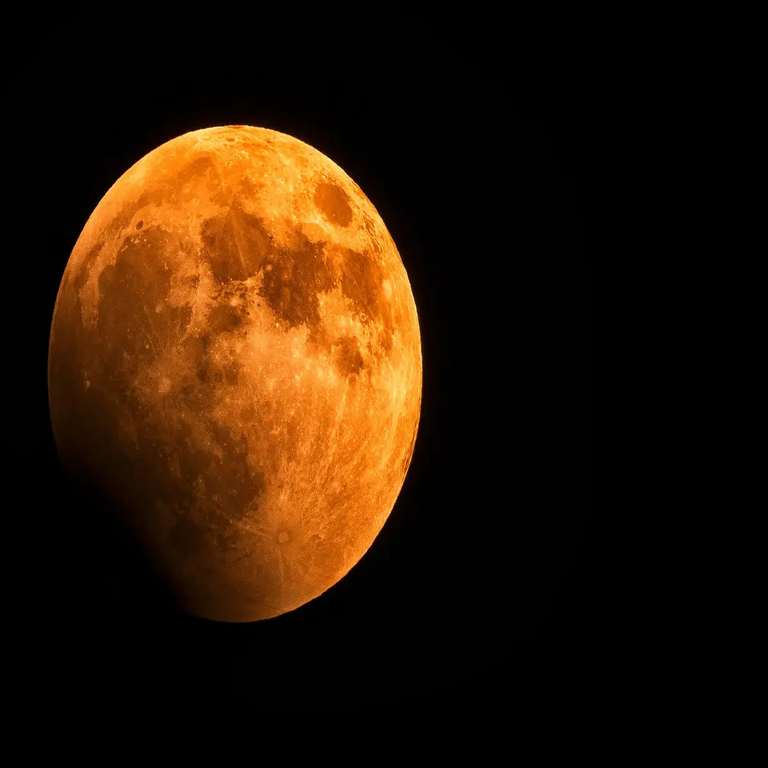
The Wolf Supermoon, occurring on January 3, 2026, is the first full moon of the year, capturing the attention of sky watchers around the world. NASA defines a supermoon as a full moon that coincides with the Moon's closest approach to Earth, known as perigee. During this event, the Moon appears significantly larger and brighter than usual, making it a notable highlight in the astronomical calendar. The peak illumination is expected at approximately 10:03 GMT (5:03 am EST), although the Moon will be visible on the evenings of January 2 and 3 as it rises in the eastern sky at dusk.
The term "Wolf Moon" has historical roots, linked to the behavior of wolves during winter nights when food is scarce. According to the Old Farmer's Almanac, the name reflects the sounds of howling wolves heard more frequently in January. Other cultures refer to it as the Cold Moon or Freeze-Up Moon, emphasizing the seasonal characteristics of the time. This supermoon is the first of three anticipated in 2026, with a notably larger supermoon expected on December 24, 2026.
To fully appreciate this astronomical event, observers are advised to look toward the eastern horizon at sunset on January 2 and 3. When the Moon is positioned low in the sky, it may appear particularly large due to optical effects known as the moon illusion. This phenomenon occurs when the Moon is near the horizon, giving an impression of increased size relative to objects on the ground.
The Wolf Supermoon also has a unique relationship with seasonal cycles. As it is the full moon closest to the winter solstice, it will trace the highest arc across the night sky from the Northern Hemisphere, providing a striking visual display. At perigee, the Moon is approximately 220,000 miles away from Earth, compared to its farthest point, or apogee, at around 250,000 miles.
The Wolf Moon in January 2026 is particularly significant as it concludes a lunar sequence that began in late 2025. This sequence serves as a reminder of the Moon's cyclical nature and its influence on Earth’s tides and ecosystems. The brightness of the supermoon allows for visibility even in urban areas affected by light pollution, enhancing accessibility for casual observers.
While the Wolf Supermoon is a fascinating natural event, it is important to note that its larger size and brightness do not have any direct impact on Earth or human behavior. Observations should be conducted with a focus on enjoyment and appreciation of celestial phenomena rather than attributing any undue significance to the event.
So where does that leave things? the Wolf Supermoon serves as a captivating start to 2026's astronomical calendar, inviting both amateur and seasoned astronomers to observe and engage with the cosmos. That said, the reality is a bit more complicated. like all celestial events, it is a reminder of our place in the universe rather than a harbinger of change or influence. As we look skyward, we are encouraged to appreciate the beauty and complexity of the natural world.
Editor's note: This article was independently written by the Scoopliner Editorial Team using publicly available information.