What if rockets used nuclear propulsion? How fast could we reach Mars
Nuclear rockets heat hydrogen with a compact reactor, giving far higher efficiency than chemical engines. NASA tests prove the idea works, with future designs promising faster trips to Mars and deeper space. But what limits it? More details below.
Chemical rockets burn fuel and oxidiser, reaching specific impulse around 300-450 seconds. Nuclear thermal rockets use a small reactor to heat hydrogen, reaching 850-900 seconds efficiency about twice as good, according to the US Department of Energy and NASA briefings. This means less fuel, more payload, or much faster journeys.
In the 1960s-70s, NASA’s NERVA programme tested nuclear thermal engines on the ground. Several full-scale tests achieved around 825 seconds specific impulse and operated for hours without major incident. Engineers even pushed engines beyond design limits to study failure, and they remained controllable. NERVA proved that nuclear rockets can work in practice, not just on paper.
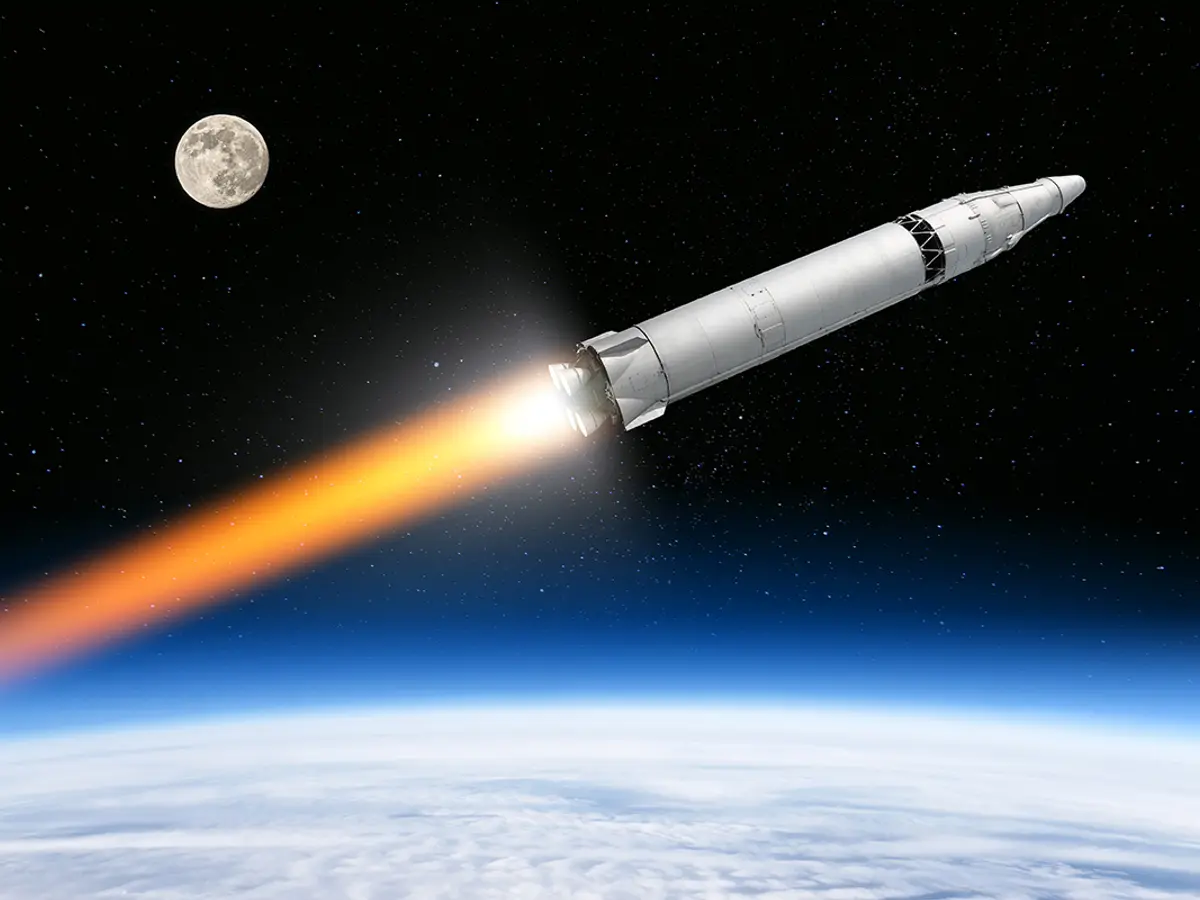
In a nuclear thermal rocket, a compact reactor splits uranium atoms, releasing heat. Liquid hydrogen passes through the hot core, turns into very hot gas, and rushes out through a nozzle to create thrust. No combustion is needed. Higher gas temperature plus light hydrogen molecules mean faster exhaust and higher specific impulse than chemical fuel.
The chemical trajectories to Mars take about 7-9 months. NASA studies show a nuclear thermal stage could cut this to roughly 3-4 months, depending on mission design. Shorter journeys reduce cosmic radiation exposure and limit time in microgravity. This directly improves crew health and simplifies life-support planning for human Mars missions.
Nuclear electric propulsion uses a reactor to generate electricity, which powers ion or Hall-effect thrusters. These engines produce low thrust but can run for months, achieving very high exhaust speeds. NASA and ESA analyses show such systems are ideal for heavy cargo, deep-space probes, and long-duration robotic missions where efficiency matters more than quick acceleration.
Hydrogen is extremely light, so when it is heated in a nuclear rocket it exits the nozzle at very high speed, raising specific impulse. Nuclear thermal designs using hydrogen reach 850-900 seconds efficiency, versus 450 seconds for the best chemical engines. Some advanced concepts suggest partially dissociating hydrogen into atoms to push performance above 1,000 seconds.
Modern nuclear space plans use low‑enriched uranium (LEU), not weapons‑grade fuel. NASA and the US Department of Energy say LEU designs can meet mission needs while reducing proliferation risks. Reactors would only start once safely in space. Launch vehicles would carry the reactor “cold”, cutting the risk of radioactive release if a launch fails.
New concepts like centrifugal nuclear thermal rockets (CNTR) spin molten fuel to the outer wall, heating hydrogen to much higher temperatures and pushing theoretical specific impulse above 1,000 seconds. Hybrid designs such as nuclear‑thermal‑electric rockets combine a thermal core for high thrust and electric thrusters for efficient cruise. These ideas remain experimental but are being modelled in current research.
Nuclear propulsion raises concerns about launch accidents, orbital debris, and weaponisation of space. Past projects, including Project Prometheus and earlier nuclear initiatives, faced political pushback and budget cuts despite technical promise. International rules and strict safety standards would be essential if more countries start flying reactors into orbit in the 2030s and beyond.
NASA, DARPA and industry partners are now funding demonstrator missions to test nuclear thermal propulsion in space before 2035. If successful, nuclear rockets could make crewed Mars missions routine, speed up missions to Jupiter and Saturn, and support permanent infrastructure in deep space. For now, chemical rockets dominate launches but nuclear propulsion is moving from concept back towards flight testing.