Watch meteor shower light up Chennai skies tonight
हिंदी में सुनें
Listen to this article in Hindi
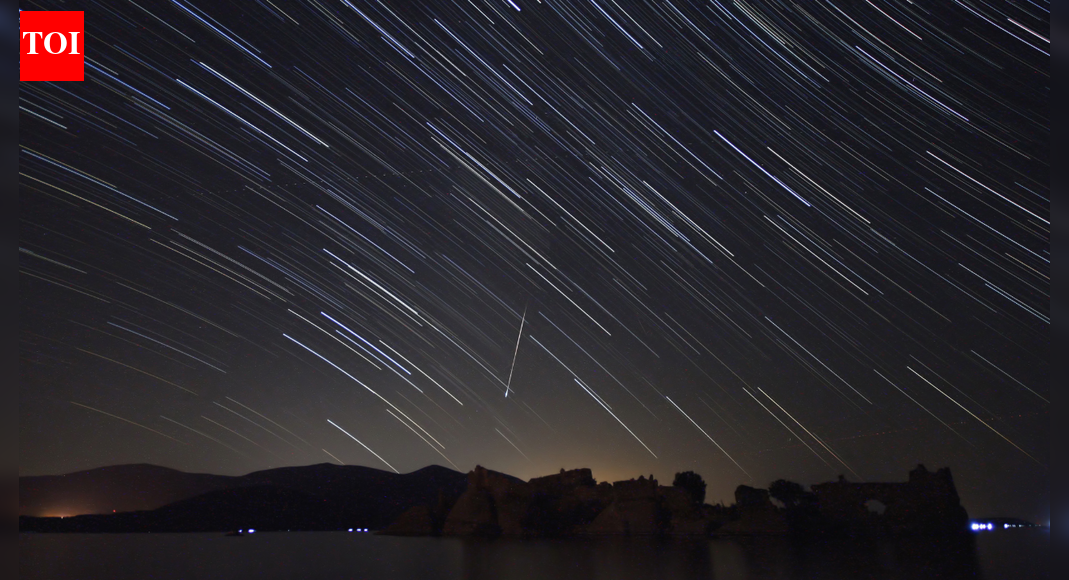
The Geminid meteor shower, known as the 'King of Meteor Showers,' will peak tonight, offering Chennai residents a spectacular celestial display. Prime viewing after midnight.
Stargazers in Chennai, here's one last chance to see the Geminid meteor shower. The peak of this celestial event, often called the 'King of Meteor Showers,' is expected tonight, December 14, and in the early morning hours of December 15.
Under clear, dark skies, it may be possible to see up to 100 meteors every hour. Experts say that for Chennai and much of Tamil Nadu, the Geminids are among the year's best astronomical events.
According to Tamil Nadu Weatherman Pradeep John's post on X, the best viewing spots are open areas away from city lights. He advises that the optimal viewing time is after midnight, and to allow your eyes at least 20 minutes to adjust to the darkness. Patience is important, as meteors tend to appear in bursts with quiet periods in between. No special equipment is needed – just a clear sky and a comfortable spot with an unobstructed view.
The Geminids were first observed in the mid-1800s. Initially, they produced only about 10 to 20 meteors per hour, drawing little attention. That said, the reality is a bit more complicated. the shower's intensity has increased over time, making it one of the most impressive meteor showers today. The Perseid Meteor Shower in August is the only event that is similarly popular and visible.
Unlike most meteor showers that come from comets, the Geminids originate from the asteroid 3200 Phaethon. This asteroid was discovered on October 11, 1983, by astronomers Simon Green and John Davies using data from the Infrared Astronomical Satellite (IRAS). It was initially named 1983 TB before being designated 3200 Phaethon. The asteroid's orbit is highly unusual, taking it extremely close to the Sun – even closer than Mercury – before extending beyond Mars' orbit. Each December, Earth passes through the debris trail left by 3200 Phaethon, resulting in the Geminid meteor shower.
S Soundararaja Perumal, former executive director of TNSTC, notes that meteor showers are relatively common, occurring up to four times a year. He also stated that they are not special celestial events like eclipses. Visibility can be affected by factors such as clouds and urban lighting, making predictions difficult. That said, the reality is a bit more complicated. many enthusiasts have already shared videos online of meteor showers they've captured. Tonight could be your chance to see one too.