Myanmar's Election: A Strategic Move Amidst Ongoing Civil Conflict
हिंदी में सुनें
Listen to this article in Hindi
गति:
Myanmar's recent elections, criticized as illegitimate, highlight the complexities of its ongoing civil war and regional geopolitical dynamics.
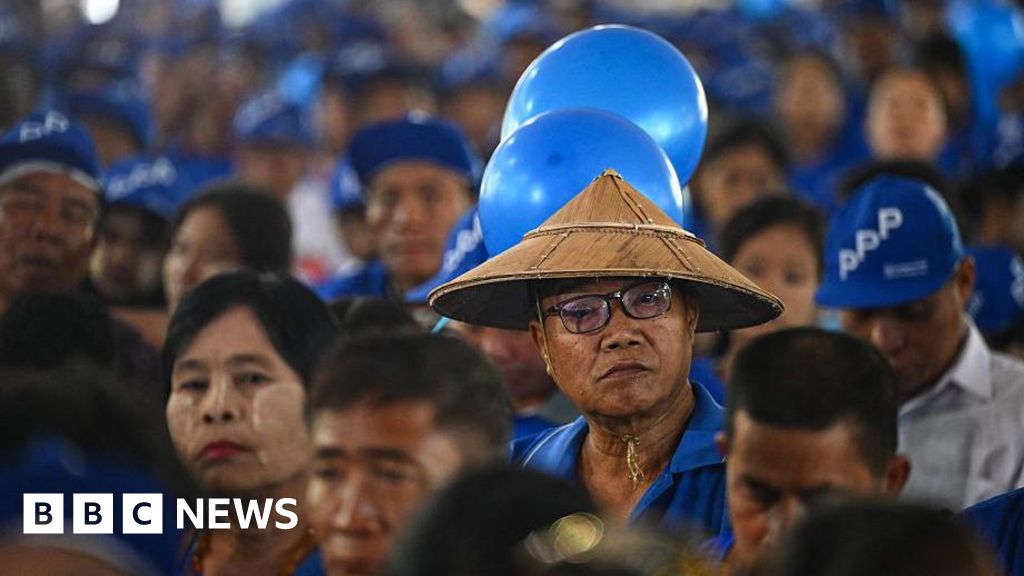
The recent elections in Myanmar, held under the auspices of a military junta, emerge against a backdrop of significant geopolitical tension and civil unrest. This electoral exercise, largely viewed as a means for the ruling military government to consolidate power, raises critical questions regarding its implications not only for Myanmar but also for regional stability and international relations.
- Geopolitical Context**
- Myanmar's geopolitical significance is accentuated by its strategic location between major powers such as China and India. The military's efforts to assert control through these elections coincide with broader regional dynamics, including China's growing influence in Southeast Asia. China's support for the junta, both politically and militarily, indicates a strategic alliance aimed at countering Western influence and ensuring stability along its borders. The outcomes of these elections thus have potential ramifications for the balance of power in the region, particularly as countries navigate their own foreign policy objectives in relation to Myanmar.
- Current State of Civil Conflict**
- The ongoing civil war, exacerbated by the coup that ousted the democratically elected government, has resulted in vast humanitarian crises, displacing millions and ravaging the economy. The military government's assertion of authority through these elections is juxtaposed against a reality where significant portions of the country remain outside its control, managed by various ethnic armed groups and opposition forces. This lack of control undermines any claims of legitimacy that the military might seek to establish through the electoral process.
- International Reactions and Human Rights Concerns**
- The elections have not only drawn criticism domestically but have also sparked international concern regarding human rights violations. The military's crackdown on dissent, illustrated by harsh penalties for those opposing the election, reflects a broader pattern of suppression that questions the very feasibility of a democratic process under such conditions. International observers and human rights organizations have highlighted the severe restrictions on civil liberties, complicating any potential dialogue for resolution or reconciliation.
- Strategic Interests of Regional Powers**
- China's role as a supporter of the junta and its strategic investment in Myanmar's infrastructure underscore its broader goals in the region. By backing the military government, China seeks to maintain a stable environment conducive to its economic ambitions, particularly the Belt and Road Initiative. On the other hand, India's interests in Myanmar focus on countering Chinese influence while supporting democratic processes, creating a complex interplay of regional strategies that may influence the outcomes of Myanmar's internal struggles.
- Implications for Regional Stability**
- The elections may serve to further entrench the military's power, potentially leading to increased instability as opposition groups escalate their resistance. As Myanmar's civil conflict continues, the resulting instability could spill over into neighboring countries, complicating security paradigms in Southeast Asia. Countries like Thailand and India may find themselves grappling with refugee flows and cross-border insurgencies linked to the conflict.
- The Risk of Prolonged Conflict**
- The ongoing civil war, combined with the military's attempts to solidify its power through these elections, suggests that Myanmar is at a critical juncture. The potential for prolonged conflict remains high, as both the military and opposition groups are unlikely to yield ground easily. This entrenched conflict poses risks not only to Myanmar's national integrity but also to regional security, as alliances and responses evolve in real-time.
- Future Scenarios and Uncertainties**
- The aftermath of the elections will prove crucial in dictating the future trajectory of Myanmar's political landscape. If the junta succeeds in portraying itself as a legitimate governing body, it may further isolate opposition forces and complicate international diplomatic efforts aimed at fostering peace. Conversely, if resistance movements gain momentum, the junta's grip on power could be challenged, leading to unpredictable developments.
- Conclusion**
- In summary, the elections in Myanmar, while ostensibly a step towards normalcy, underscore the complex interplay of domestic conflict and international relations. The military's attempts to legitimize its rule amidst ongoing civil strife reflect broader geopolitical tensions that could have lasting implications for the region. The situation remains fluid, with the potential for significant shifts depending on both internal dynamics and external influences.
Editor’s note: This article was independently written by the Scoopliner Editorial Team using publicly available information.
Based on information from :
BBC
•
28 Dec 2025, 09:16 AM IST