Wireless Charging: No Longer a Luxury, But a Necessity Due to USB-C Failures
हिंदी में सुनें
Listen to this article in Hindi
Frequent USB-C port failures make wireless charging a crucial backup for smartphones, ensuring device longevity and data access when wired connections fail.
For years, wireless charging has been seen as a convenience feature, often criticized for being slower and less efficient than traditional wired charging. That said, the reality is a bit more complicated. a growing problem with USB-C port reliability is pushing wireless charging into the realm of essential smartphone features. The modern phone's USB-C port, despite its theoretical durability, often becomes a point of failure, turning a valuable device into a paperweight.
While wired charging remains faster and more energy-efficient – independent tests show wireless setups can use nearly 50% more energy due to conversion losses and heat – the practical lifespan of USB-C ports is a significant concern. The USB Implementers Forum promises up to 10,000 plug cycles, but real-world use tells a different story. The compact design of USB-C, with its 24 tiny pins, makes it vulnerable to lint, moisture, and physical stress from heavy cables. This often leads to loose connections, intermittent data transfer, and unreliable charging.
Repair shops confirm this trend. Technicians at Asurion's uBreakiFix report that charging port repairs are among the most common phone issues. Replacing these ports is labor-intensive, as they are typically soldered to the motherboard and buried under adhesives. The cost can range from $50 to over $100, making it a significant expense for a seemingly small component. The problems aren't always due to user error. Off-spec cables, corrosion from moisture, and the daily strain of charging all contribute to port degradation.
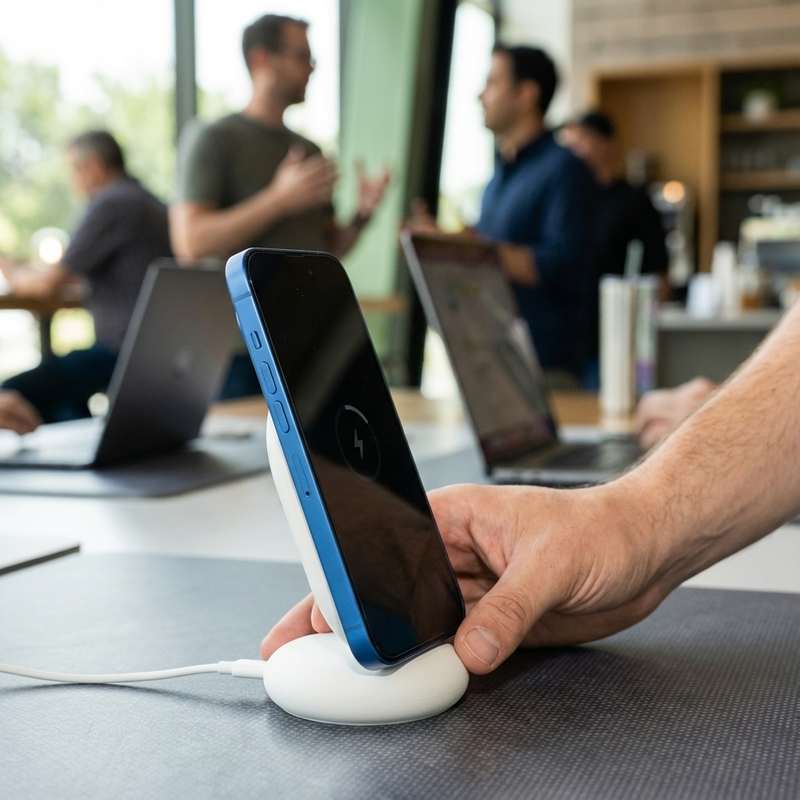
Wireless charging, therefore, becomes a crucial backup. When the USB-C port fails, a wireless charging stand or pad can keep the phone alive long enough to back up important data, finish a trip, or simply delay the purchase of a new device. It provides a reliable alternative when the primary charging method fails.
Modern wireless charging standards are also improving. Qi2, the latest standard, incorporates magnets similar to Apple's MagSafe, ensuring better alignment and reducing energy loss. Many iPhones already benefit from 15W magnetic wireless charging, and Android manufacturers are starting to adopt Qi2. Active cooling stands further minimize heat buildup during charging, improving efficiency and battery longevity.
When purchasing a new phone, consider wireless charging as a critical reliability feature, not just a luxury. Aim for at least 10-15W standard Qi or 15W Qi2 charging. Magnetic alignment, offered by Qi2 or MagSafe, eliminates guesswork and wasted power. Reverse wireless charging, which allows you to charge other devices like earbuds from your phone, offers an additional layer of redundancy.
To extend the life of your USB-C port, keep it clean using a wooden or plastic food pick and a soft brush. Avoid metal tools that can damage the pins. Use high-quality, standards-compliant cables, preferably USB-IF certified. Allow your phone to cool down after charging and avoid using it intensely while charging. For overnight wireless charging, use a stand with good airflow and a soft charge profile.
Ultimately, wireless charging serves as a safety net in a world where USB-C ports are proving less durable than expected. It's the backup functionality you hope never to need, but will be grateful for when your phone's charging port inevitably falters. As phones become increasingly essential to our daily lives, this redundancy is quickly becoming a must-have, not just a nice-to-have, feature.
Editor’s note: This article was independently written by the Scoopliner Editorial Team using publicly available information.