Ursid Meteor Shower: A Celestial Farewell Shaped by Comet Tuttle's Legacy
हिंदी में सुनें
Listen to this article in Hindi
The Ursid meteor shower, peaking around December 21-22, offers a glimpse into the debris trail of Comet 8P/Tuttle. Learn about its origins and viewing tips.
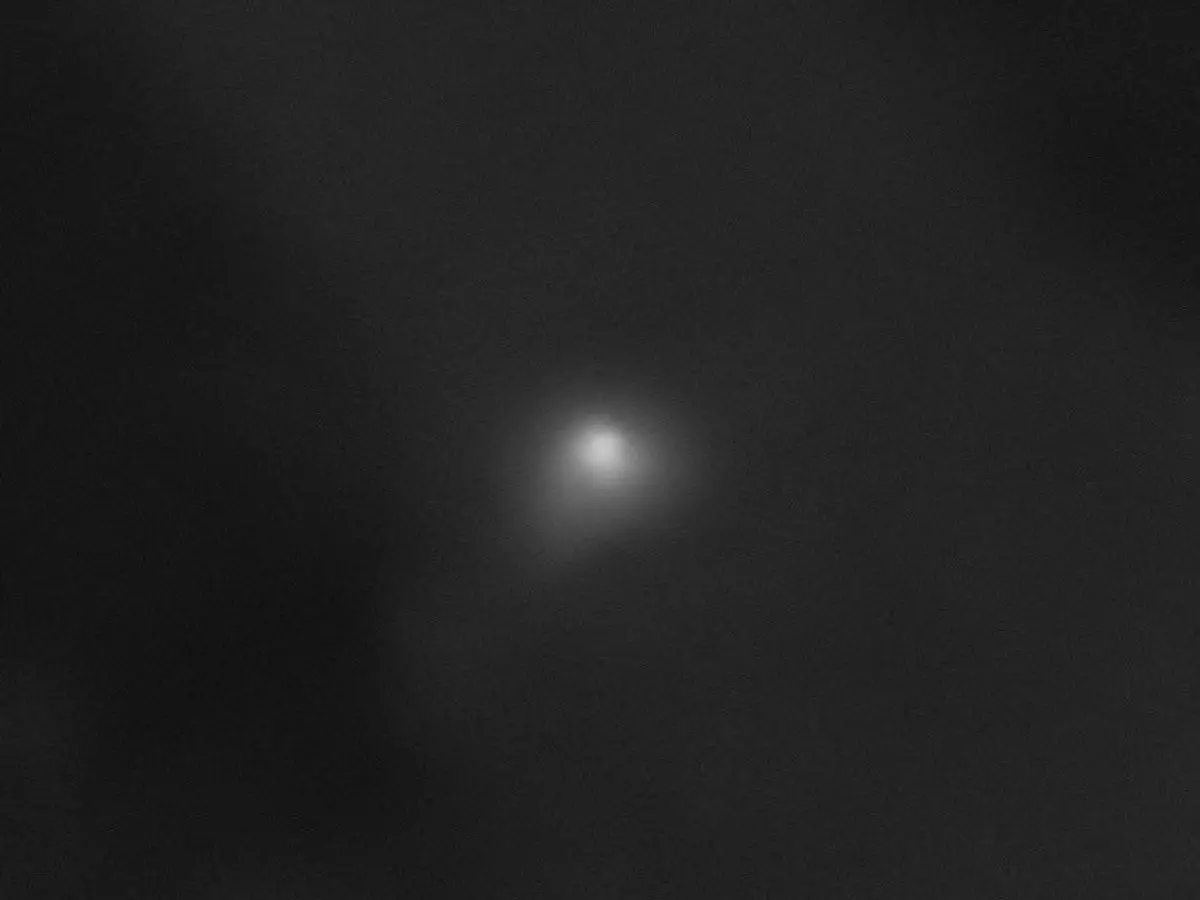
As the year draws to a close, stargazers have one last opportunity to witness a celestial display: the Ursid meteor shower. Active annually from around December 17th until Christmas, the Ursids reach their peak around December 21st and 22nd, offering a modest show of approximately 10 meteors per hour under optimal viewing conditions. While not as prolific as the Geminids, which precede them earlier in December, the Ursids provide a fascinating connection to a specific object in our solar system: Comet 8P/Tuttle.
The Ursids are born from the debris shed by Comet 8P/Tuttle, a periodic comet that swings through the inner solar system every 13.6 years. As the comet orbits the Sun, it leaves behind a trail of dust and ice particles. When the Earth, in its own annual orbit, passes through this trail, these particles enter our atmosphere at high speeds, burning up and creating the streaks of light we recognize as meteors. These meteors appear to radiate from a specific point in the sky, known as the radiant. For the Ursids, this radiant lies within the constellation Ursa Minor, also known as the Little Dipper. Locating Ursa Minor in the night sky can help observers pinpoint the area where the meteors will seem to originate, although the meteors themselves can appear anywhere in the sky.
The discovery of Comet 8P/Tuttle is credited to Horace Parnell Tuttle, who first spotted it in January 1858. Later, the association between the comet and the Ursid meteor shower was established through observations and orbital calculations. The recognition of the Ursids as a distinct meteor shower is largely attributed to the work of William Denning, a British amateur astronomer who dedicated his life to observing the night sky. Denning's meticulous observations in the late 19th century led to the identification of several new comets and meteor showers, including the Ursids, highlighting the valuable contributions that amateur astronomers can make to the field. Understanding the [science basics explainer] of meteor showers helps appreciate Denning's contributions.
The visibility of the Ursids is primarily limited to the Northern Hemisphere. To maximize your chances of seeing them, find a location away from city lights. Light pollution can significantly reduce the number of meteors visible, making it harder to spot the fainter ones. Allowing your eyes to adjust to the darkness for at least 20 minutes will also improve your ability to see meteors. While binoculars can be used to scan the area around the radiant, most observers prefer to simply use their unaided eyes, as this allows for a wider field of view. The Ursids, while not exceptionally numerous, offer a chance to connect with the cosmos and witness the remnants of a distant comet.
It's important to note that predicting the exact number of meteors visible during any shower is challenging. Factors such as the comet's recent activity, the Earth's precise path through the debris stream, and local weather conditions can all influence the observed meteor rate. While the Ursids typically produce around 10 meteors per hour, this number can vary. Some years have seen higher or lower rates, depending on these variables. Furthermore, the extended show predicted by NASA on December 23rd isn't guaranteed and depends on the distribution of debris from Comet 8P/Tuttle. Understanding how comets contribute to [related field context] of meteor showers provides a broader perspective.
Despite their relatively low meteor count, the Ursids offer a unique opportunity to observe a meteor shower linked to a specific, well-studied comet. Comet 8P/Tuttle's periodic returns allow astronomers to monitor its activity and refine their understanding of the relationship between comets and meteor showers. While missing the peak on December 21st and 22nd might mean fewer meteors, the potential for an extended display on December 23rd, as suggested by NASA, provides an incentive for continued observation. The Ursids, therefore, serve as a reminder of the dynamic and ever-changing nature of our solar system and the ongoing efforts to unravel its mysteries. Consulting [prior research background] on meteor shower prediction can enhance the observing experience.
So where does that leave things? the Ursid meteor shower, a modest but reliable annual event, provides a connection to Comet 8P/Tuttle and a chance to witness the remnants of its journey through the solar system. While not the most spectacular meteor shower, its predictable nature and association with a specific comet make it a worthwhile target for stargazers, especially those in the Northern Hemisphere. Remember to seek out dark skies, allow your eyes to adjust, and enjoy the final celestial show of the year.
Editor’s note: This article was independently written by the Scoopliner Editorial Team using publicly available information.