Chasing Stardust: Why the Ursid Meteor Shower Still Captivates Us
हिंदी में सुनें
Listen to this article in Hindi
Explore the Ursid meteor shower, its origins, viewing tips for optimal stargazing, and the cultural significance of celestial events throughout history.
The night sky, a vast canvas speckled with distant suns, has always held a profound grip on the human imagination. Long before scientific understanding stripped away the mystical veil, celestial events were intertwined with mythology, agriculture, and even the very fabric of societal structure. Today, even with advanced telescopes and sophisticated models of the universe, the simple act of looking up at a meteor shower retains a powerful, almost primal appeal. The annual Ursid meteor shower, a reliably modest but charming display occurring near the winter solstice, provides just such an opportunity for wonder. But why does a relatively minor celestial event continue to capture our attention in an age dominated by technological marvels?
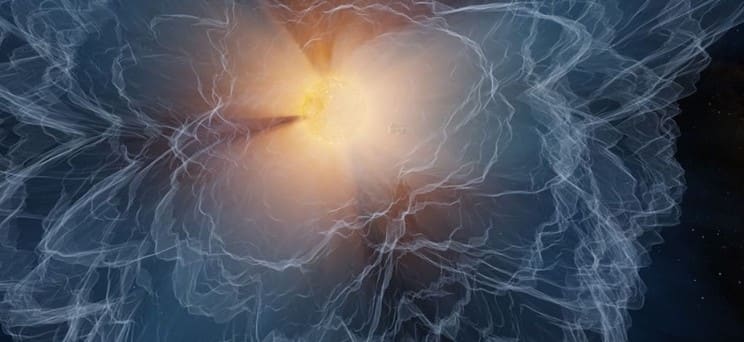
The Ursids, originating from debris shed by comet 8P/Tuttle, are a reminder of the constant cosmic ballet occurring around us. The Earth, in its yearly journey around the sun, periodically passes through streams of space dust left behind by comets. When these particles enter our atmosphere, they burn up, creating the fleeting streaks of light we call meteors. While the Ursids typically produce a relatively low rate of visible meteors – perhaps five to ten per hour under optimal conditions – their timing near the winter solstice adds to their allure.
The winter solstice, the shortest day of the year in the Northern Hemisphere, marks a turning point. For millennia, cultures around the world have celebrated this period of increasing daylight, often with festivals and rituals symbolizing rebirth and renewal. The appearance of the Ursids during this time can be seen as a celestial confirmation of this cyclical process, a reminder that even in the darkest of times, light – both literal and metaphorical – will return. This link to ancient traditions provides a deeper resonance for the modern observer, connecting us to a shared human history of gazing at the stars and seeking meaning in their movements.
That said, the reality is a bit more complicated. the experience of observing the Ursids, or any meteor shower, is increasingly complicated by light pollution. The pervasive glow of artificial lights obscures the fainter meteors, making it difficult to witness the full spectacle. This is a growing concern for astronomers and amateur stargazers alike. Light pollution not only diminishes our ability to appreciate the natural beauty of the night sky but also impacts nocturnal wildlife and wastes energy. Efforts to mitigate light pollution, such as promoting responsible outdoor lighting practices, are crucial for preserving our access to the wonders of the cosmos. Finding dark sky locations can be a real game changer. Understanding RBI policy and its impact on infrastructure development is also important, as unchecked urbanization can contribute to light pollution.
Beyond the aesthetic appeal, the study of meteor showers provides valuable scientific insights. By analyzing the composition and trajectory of meteors, scientists can learn more about the composition of comets and the distribution of dust in the solar system. Such research contributes to our understanding of the formation and evolution of our planetary neighborhood. Furthermore, studying meteor showers helps us assess the potential risks posed by space debris to satellites and spacecraft. While the vast majority of meteors are small and pose no threat to Earth, larger objects can potentially cause significant damage. Continued monitoring and research are essential for protecting our technological infrastructure in space. You can gain a broader perspective on the Indian economy by understanding how investments in space exploration and related technologies are driving innovation and economic growth.
Furthermore, the accessibility of meteor shower observation makes it a powerful tool for science education and public engagement. Unlike many astronomical phenomena that require specialized equipment, meteor showers can be observed with the naked eye. This allows anyone, regardless of their background or resources, to participate in the wonder of scientific discovery. Stargazing events often foster a sense of community and spark curiosity about the universe, inspiring the next generation of scientists and engineers. Understanding topic basics for readers is crucial in fostering wider interest in science.
The Ursid meteor shower, while not the most spectacular celestial event, serves as a reminder of our connection to the cosmos and the importance of preserving our access to the night sky. It is an invitation to step away from the distractions of modern life, look up, and contemplate the vastness of the universe and our place within it. While light pollution and other challenges exist, the enduring appeal of meteor showers suggests that the human fascination with the stars will continue to shine brightly.