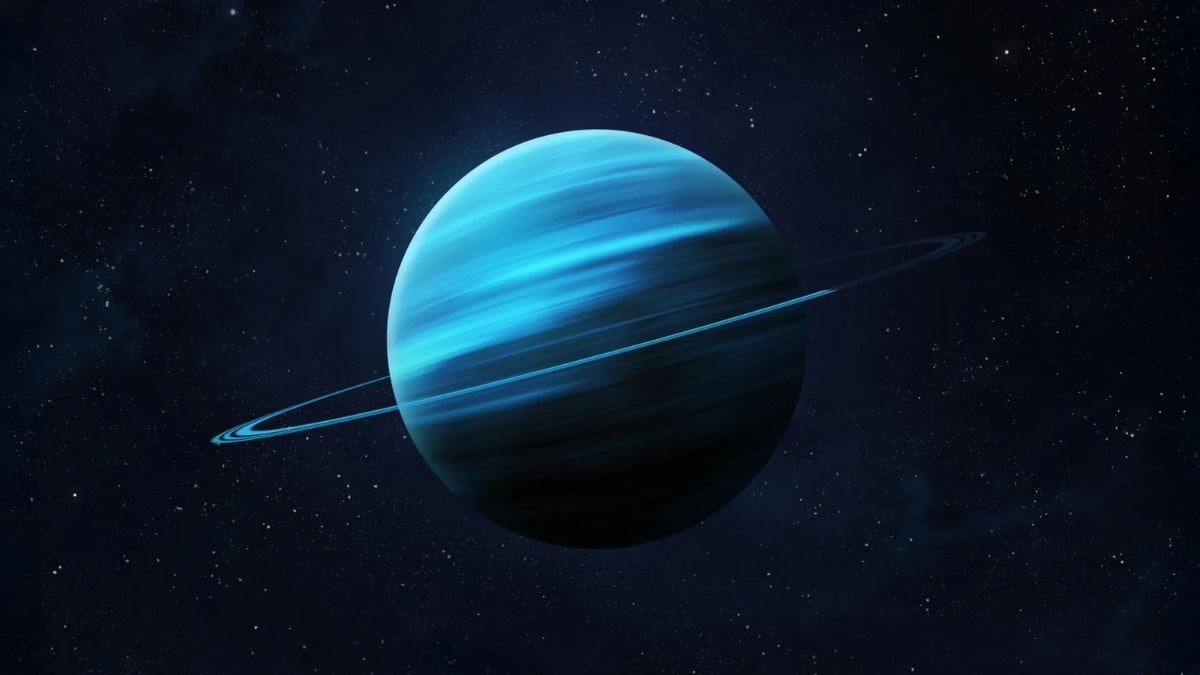
Uranus and Neptune May Be Rocky Worlds Not Ice Giants, New Research Shows
हिंदी में सुनें
Listen to this article in Hindi
New simulations reveal Uranus and Neptune may contain far more rock than ice, reshaping models of their interiors, magnetic fields, and the need for future missions.
Recent discoveries indicate that Uranus and Neptune are not lowly ice giants as they have always been portrayed to be, but may have rocky interiors at least as much as watery ices, disproving decades of textbook models of the distant worlds. This new analysis of their internal makeup can be used to explain their strange magnetic fields, and calls on future missions to look at what is actually beneath their blue skies.
Rethinking Ice Giants' Interiors
According to the paper, University of Zurich scientists put up new hybrid simulations which are unbiased statistical models, but with physical constraints to investigate potential interior compositions of Uranus and Neptune. They present their work to demonstrate that the internal composition of these planets is no longer constrained to water, ammonia, and methane ices, but may also be highly rocky, depending on the relationship between the internal densities and pressures and the gravitational data. This increased variety of models extends our knowledge of so-called ice giants to a much greater extent and indicates the constraints of previous thoughts regarding their composition.
Magnetic Mysteries and Future Exploration
Uranus and Neptune also have bizarre, multi-polar magnetic fields that are very different from the Earth's straightforward north-south ones. According to the latest models, the magnetic fields of these two planets could be produced by the different layers of ionic water and rock in their interiors, with the depth of the dynamo regions determining the field geometry.