Uranus and Neptune May Be More Rock Than Ice, Study Suggests
हिंदी में सुनें
Listen to this article in Hindi
A new study challenges the “Ice Giant” theory, suggesting Uranus and Neptune may be composed of more rock than previously believed. Learn more.
New Delhi:
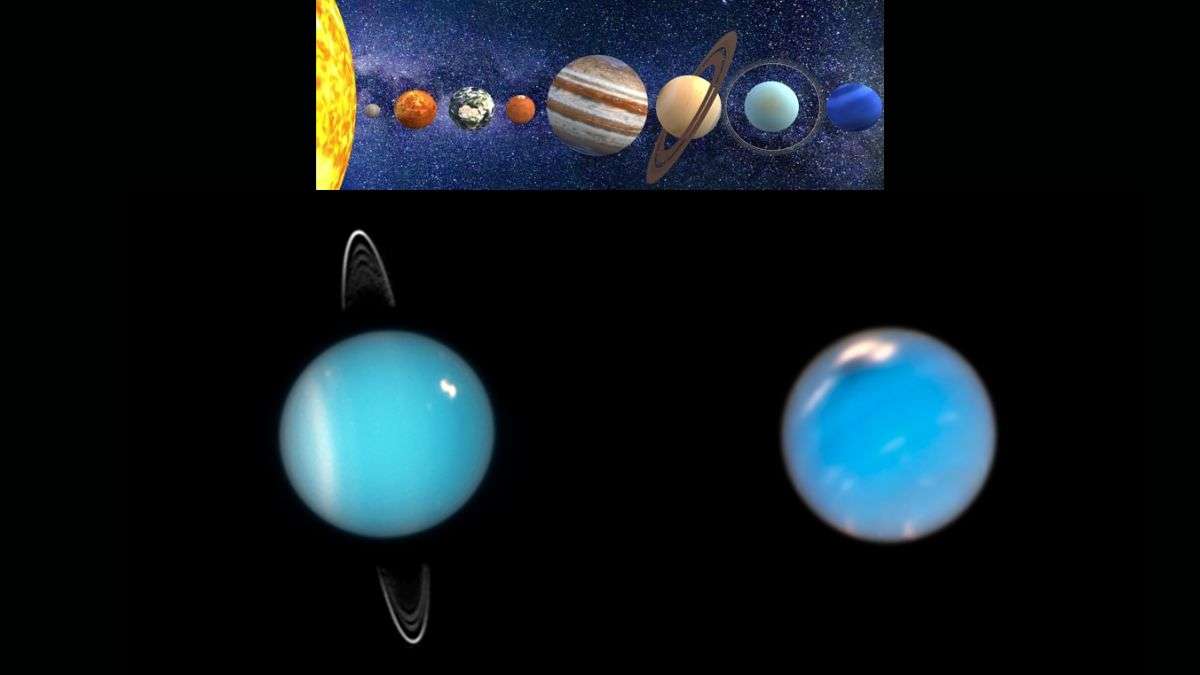
For a long time, Uranus and Neptune, the solar system's most distant planets, have been categorized as “Ice Giants.” This classification stemmed from the assumption that their composition mainly consisted of water, ammonia, and methane – a characteristic that distinguished them from gas giants like Jupiter and Saturn. That said, the reality is a bit more complicated. recent research might overturn this long-held belief.
A new study published in 'Astronomy & Astrophysics' proposes that Uranus and Neptune could be significantly rockier than initially thought. Researchers at the University of Zurich arrived at this conclusion by re-evaluating the planets' composition using advanced modeling techniques.
Challenging Old Assumptions with New Models
The research team developed innovative models of the planets' interiors by integrating existing data with physical equations, thereby minimizing the reliance on assumptions that shaped earlier studies. These “unbiased” simulations indicate that Uranus and Neptune might be primarily composed of rocky materials, rather than ice.
Luca Morf, the lead author of the study, suggests that the term “ice giant” could be misleading. He stated that the term is overly simplistic, given that Uranus and Neptune are, in reality, poorly understood planets. The study suggests that the planets may be rocky or a combination of both ice and rock.
This revised understanding has significant implications for how researchers interpret the development of the outer solar system.