Evolving Alliances: How North Korea's Support for Russia Reshapes Geopolitical Calculus
हिंदी में सुनें
Listen to this article in Hindi
North Korea's deepening ties with Russia amid the Ukraine conflict signal a realignment of global power dynamics and potential challenges to international norms.
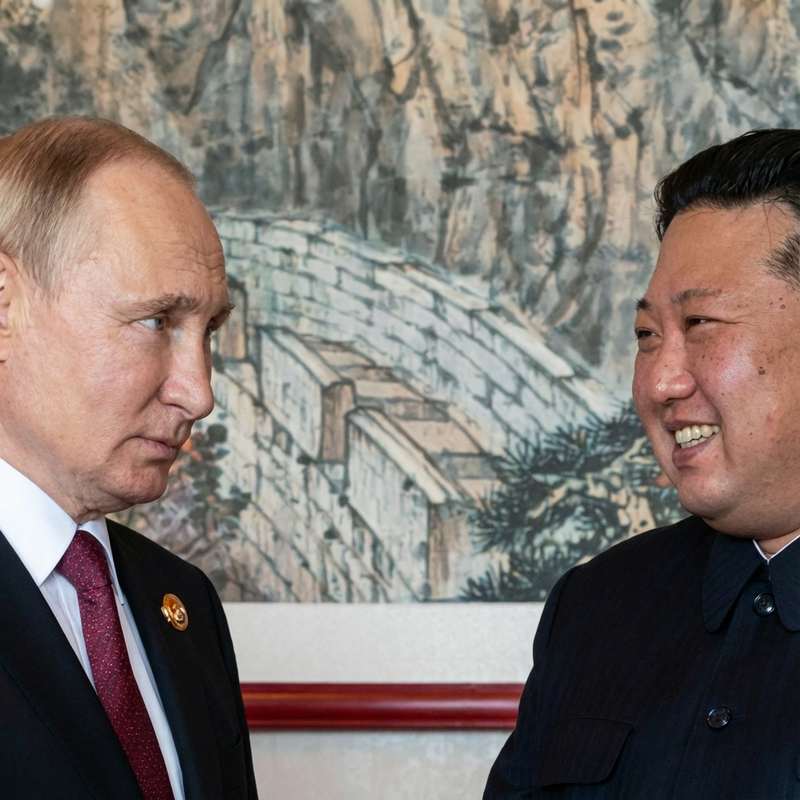
The war in Ukraine has catalyzed a series of geopolitical realignments, forcing nations to reassess their alliances and strategic priorities. While much attention is focused on Western support for Ukraine and the evolving dynamics within NATO, a less scrutinized but equally significant development is the deepening relationship between Russia and North Korea. This burgeoning partnership, underscored by Kim Jong-un's recent declaration of shared "blood, life and death" with Russia, signifies a potential shift in the global balance of power and poses complex challenges to international security.
North Korea's explicit support for Russia's military campaign in Ukraine, including the deployment of troops and provision of military equipment, is a departure from its traditionally isolated stance. This move is not simply an act of solidarity but a calculated strategy to bolster its own security and economic interests. Russia, facing international sanctions and constrained access to conventional arms markets, has found a willing partner in North Korea, which possesses significant stockpiles of Soviet-era weaponry and is eager to generate revenue through arms sales. This dynamic allows Russia to circumvent some of the constraints imposed by Western sanctions, while providing North Korea with much-needed hard currency and potentially, advanced military technology in return. Understanding the nature of sanctions is critical to understanding the limitations of great power conflict.
The implications of this alliance extend beyond the immediate conflict in Ukraine. North Korea's involvement provides Russia with a strategic advantage, potentially prolonging the conflict and complicating efforts to reach a diplomatic resolution. Furthermore, the exchange of military technology and expertise between the two countries could enhance North Korea's weapons programs, posing a direct threat to regional security in East Asia. The potential transfer of Russian missile technology or nuclear expertise to North Korea would significantly escalate tensions in the Korean Peninsula and undermine international efforts to denuclearize the country.
This alliance also presents a challenge to the existing international order. The United Nations Security Council resolutions prohibit North Korea from exporting arms or engaging in military cooperation with other countries. Russia, as a permanent member of the Security Council, is obligated to uphold these resolutions, yet its deepening ties with North Korea clearly violate these commitments. This undermines the credibility and effectiveness of the Security Council, potentially emboldening other states to disregard international norms and pursue their own strategic interests, in defiance of the established international order.
The sustainability of the Russia-North Korea alliance is subject to several constraints. The long-term economic viability of the partnership depends on Russia's ability to provide North Korea with significant economic assistance and technological transfers. While Russia has the resources to do so, its own economic challenges, exacerbated by the war in Ukraine and Western sanctions, may limit its capacity to fully meet North Korea's needs. Additionally, China's position on this alliance remains a key factor. While China shares some strategic interests with Russia in countering Western influence, it is also wary of North Korea's nuclear ambitions and the potential for regional instability. China's potential willingness to pressure North Korea to limit its military cooperation with Russia could impact the future trajectory of the alliance. Understanding China's global position is critical to understanding how the geopolitical landscape is shifting.
Ultimately, the deepening alliance between Russia and North Korea represents a significant development with far-reaching implications. It not only impacts the dynamics of the war in Ukraine but also reshapes the geopolitical landscape, challenging international norms and raising concerns about regional and global security. Monitoring the evolution of this partnership and understanding its potential consequences is crucial for policymakers and analysts alike.
Editor’s note: This article was independently written by the Scoopliner Editorial Team using publicly available information.