Ukraine's Drone Boat Expansion: A New Phase in Asymmetric Naval Warfare
हिंदी में सुनें
Listen to this article in Hindi
Ukraine's deployment of drone boats in riverine environments signals a shift in asymmetric naval warfare, impacting regional power dynamics and global naval strategy.
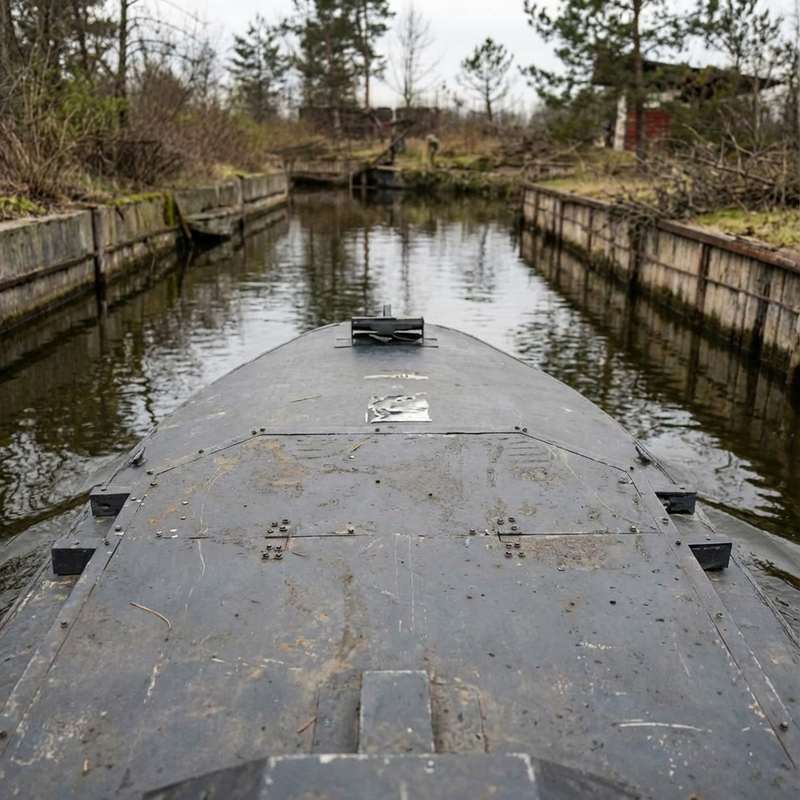
The ongoing conflict in Ukraine has become a proving ground for novel military technologies and tactics, with implications extending far beyond the Donbas. Kyiv's recent expansion of uncrewed surface vessel (USV) operations into the Dnipro River and its tributaries represents a significant evolution in asymmetric naval warfare. This localized adaptation highlights the broader trend of smaller, cheaper, and more adaptable naval assets challenging traditional power projection paradigms.
The strategic importance of the Dnipro River region lies in its function as a critical geographical boundary and logistical artery. Control of the river and its surrounding areas provides a strategic advantage for both sides, influencing troop movements, supply lines, and overall defensive capabilities. Ukraine's deployment of USVs, such as the Barracuda, in this area is not merely a tactical maneuver; it's a strategic attempt to deny Russia freedom of movement and disrupt its operational tempo within a contested space. While these riverine USVs lack the long-range capabilities of their Black Sea counterparts, their effectiveness in localized engagements forces Russia to divert resources to counter this threat, further straining its already stretched military capacity.
The development and deployment of these USVs also underscore a crucial shift in military procurement and innovation. Facing resource constraints and a pressing need for effective defensive capabilities, Ukraine has embraced a decentralized approach to weapons development. The Barracuda, reportedly designed and launched by a special unit of the 40th Marine Brigade, exemplifies this trend. This contrasts sharply with the traditional, centralized defense procurement models of major military powers. This distributed innovation model allows for rapid adaptation to evolving battlefield conditions and potentially creates more cost-effective solutions. This approach could be instructive for other nations facing similar asymmetric threats or resource limitations.
That said, the reality is a bit more complicated. the limitations of these systems, particularly the lack of satellite communication on the Barracuda, also highlight the challenges of relying solely on such technology. While AI-guidance and waypoint navigation offer some degree of autonomy, the need for local control or line-of-sight relay systems introduces vulnerabilities. Electronic warfare and jamming capabilities, which Russia is actively developing, could significantly degrade the effectiveness of these USVs. Furthermore, the limited range of the Barracuda restricts its operational scope, confining it primarily to short-distance missions within the Dnipro River region. Over-reliance on localized successes without addressing broader strategic vulnerabilities could prove detrimental in the long run. The potential for escalation also remains a concern. As both sides continue to develop and deploy USVs, the risk of unintended consequences and miscalculation increases, potentially leading to more direct confrontations at sea and further destabilizing the regional security environment. The potential impact of these technologies on established naval doctrines and international maritime law also remains to be seen. As USV technology proliferates, questions regarding rules of engagement, attribution of attacks, and the legal status of autonomous weapons systems will become increasingly pressing. Understanding the global context of technology and world affairs remains key.
Ultimately, the deployment of USVs in the Dnipro River marks a new phase in the conflict, and a potential turning point in naval warfare. It demonstrates the effectiveness of asymmetric strategies in challenging established military powers and highlights the growing importance of unmanned systems in modern combat. The long-term implications of this development, both for the conflict in Ukraine and for global naval strategy, are still unfolding, but it is clear that the age of drone warfare is rapidly expanding beyond the aerial domain.
Editor’s note: This article was independently written by the Scoopliner Editorial Team using publicly available information.