Russia's Internal Security Challenges Expose Geopolitical Vulnerabilities
हिंदी में सुनें
Listen to this article in Hindi
Recent attacks in Moscow highlight Russia's internal security vulnerabilities and their potential impact on regional stability and global power dynamics.
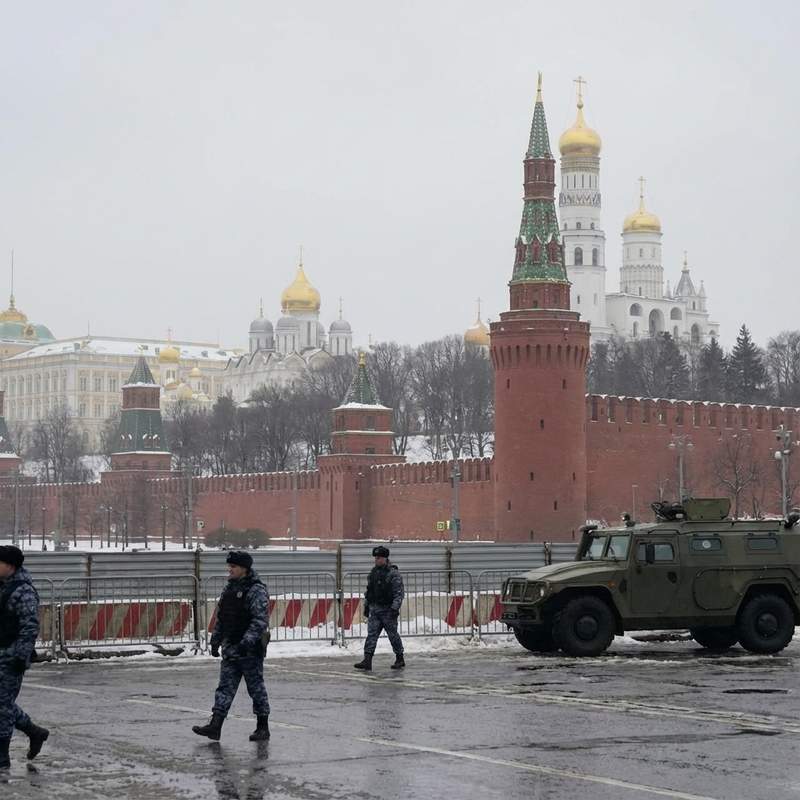
Russia's projection of power on the international stage is inextricably linked to its internal stability. While Moscow dedicates significant resources to external security operations and projecting influence abroad, vulnerabilities within its own borders can undermine its geopolitical standing. Recent incidents in Moscow, including the killings of two police officers and a high-ranking general, point to a potentially escalating internal security challenge that could force a recalibration of Russia's strategic priorities. These events matter now because they occur against the backdrop of the ongoing war in Ukraine and heightened tensions with NATO, potentially diverting resources and attention from these critical external fronts.
While the precise actors responsible for these attacks remain unconfirmed, the potential for both internal dissent and external interference cannot be discounted. Russia has historically faced challenges from various extremist groups, particularly in the North Caucasus region. The ongoing war in Ukraine has also created new avenues for potential destabilization, with Ukrainian intelligence services likely seeking to exploit vulnerabilities within Russia to disrupt its war effort. The ability of these actors, whether internal or external, to conduct operations within Moscow itself signifies a breakdown in security protocols and a potential escalation of the conflict beyond Ukraine's borders.
Furthermore, these incidents have implications for the Russian security apparatus, particularly the FSB (Federal Security Service). A perceived failure to prevent such attacks can erode public confidence in the government's ability to maintain order and stability. This erosion of trust can, in turn, fuel further dissent and create opportunities for those seeking to undermine the regime. The Russian government's response to these incidents will be crucial. A heavy-handed crackdown could further alienate segments of the population, while a perceived lack of action could embolden those seeking to challenge the status quo.
The global impact of these developments lies in their potential to alter Russia's foreign policy calculus. If the Kremlin becomes increasingly preoccupied with internal security threats, it may be forced to scale back its engagement in other regions, such as Syria or Africa, where it has been actively projecting its influence. This could create power vacuums that other actors, including China, the United States, or regional powers, could seek to fill. Furthermore, internal instability in Russia could exacerbate existing tensions with its neighbors, particularly those with significant Russian-speaking populations. This could lead to further regional conflicts and instability, potentially drawing in other global powers. Understanding world affairs background provides crucial context for interpreting these events.
That said, the reality is a bit more complicated. there are also constraints on the potential impact of these incidents. The Russian security apparatus remains formidable, and the government has demonstrated a willingness to use force to suppress dissent. Furthermore, public support for the war in Ukraine, while potentially waning, remains significant, which could limit the scope of any potential internal unrest. The true extent of the internal security threat also remains unclear. While the recent attacks are concerning, they may be isolated incidents rather than a sign of a broader trend. Despite these constraints, the risk of further escalation remains real, and the international community should closely monitor the situation.
The long-term consequences of these developments are difficult to predict, but they could have a significant impact on Russia's geopolitical trajectory. If the Kremlin is unable to effectively address its internal security challenges, it could face increasing instability and a decline in its global influence. Conversely, if it is able to successfully suppress dissent and maintain order, it could emerge stronger and more assertive on the international stage. The future of Russia, and its role in the world, may depend on its ability to manage these internal challenges in the years to come. India's global position could be indirectly affected by any shift in Russia's foreign policy, especially concerning arms deals and energy cooperation. The situation is complex, and a neutral analysis is vital to understanding the true scope of the threat.
Editor’s note: This article was independently written by the Scoopliner Editorial Team using publicly available information.