Trump’s Pressure Campaign On The ICC Is Falling Apart
As the U.S. and Israel pressure the International Criminal Court for its work on Gaza, dozens of global governments sent a signal of support for accountability this week.
For almost a year, President Donald Trump has waged an unprecedented campaign against a core institution of international law, the International Criminal Court, seeking to end its work on the war in Gaza. This week suggested that Trump remains far from the outcome he wants.
Officials from the ICC’s 125 member states have been conferring in The Hague at their first annual assembly since U.S. sanctions began upending the lives of court personnel and those who work with them. Those governments have reiterated they have no plans to concede to Trump, and instead have made statements suggesting the court can continue functioning — including by pursuing Israeli officials for their role in the war.
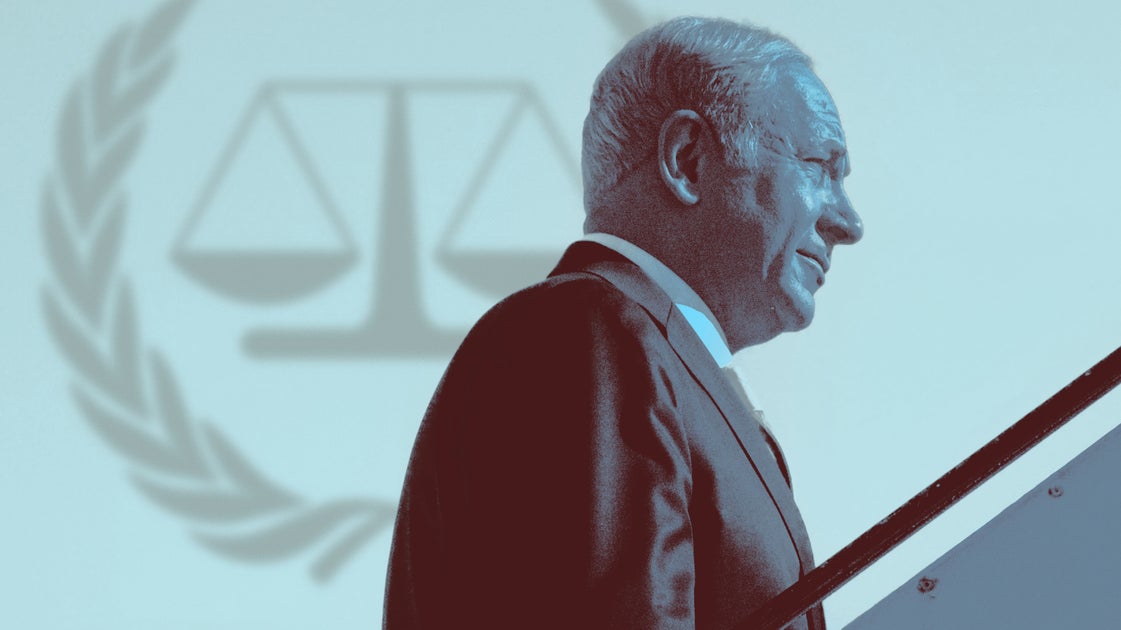
The ICC issued arrest warrants for Israeli Prime Minister Benjamin Netanyahu and former Israeli defense minister Yoav Gallant in late 2024 over alleged war crimes and crimes against humanity in Gaza, which remain in effect. (Both men deny criminality.) Israel says alleged misconduct by the ICC prosecutor (which he denies) should render those warrants moot, but there is no sign the court sees any problem in the warrants that could provide a basis for acceding to Tel Aviv and Washington. And the court got fresh proof its members are willing to help it hold individuals accountable for atrocities, as Germany on Monday handed over a Libyan suspect who German authorities detained in July.
Advertisement
“It’s been a constructive mood [with] a lot of states leaning in to working together to project a sense of support for the court,” Liz Evenson, the international justice director at Human Rights Watch, told HuffPost.
Trump targeted ICC officials during his first presidency over its probes of U.S. actions in Afghanistan, but he has attacked people connected with the court more aggressively in his second term.
The Trump administration has used America’s disproportionate global financial power and threats of further repercussions to hinder the court’s work and create a chilling effect — even as Palestinians continue to face U.S.-backed Israeli policies that ICC judges said could constitute grave crimes, and that could undermine Trump’s own stated vision of peace for Gaza.
Advertisement
For the court, the past year has come to represent an existential paradox: The ICC’s pursuit of accountability over Gaza is both the reason it has a target on its back, and proof it is necessary.
“We never accept any kind of pressure,” Tomoko Akane, a judge from Japan and the ICC’s president, said during the ongoing summit.
Some suspect Trump will try to torpedo the court altogether by sanctioning it as an organization. Still, the run-up to the summit suggested growing momentum to defend the body and, by extension, the global standards intended to prevent suffering among innocents.
Advertisement
Nicolas Guillou, a sanctioned French ICC judge, called for the European Union to deploy a statute that would bar European entities from abiding by potential American sanctions. Governments reiterated their support for the court, given the range of global situations that could amount to war crimes and might only be tried at the ICC as “a court of last resort” when other judicial systems fail.
Advocates for international law are increasingly hopeful that countries will protect the court because of their conviction that an independent tribunal to prosecute individuals for atrocities is key to worldwide stability, and that non-members — like the U.S. and Israel — should not determine its fate.
“I have never seen in 15 years in The Hague such camaraderie and alignment. Our differences are becoming less important because we know the whole Rome Statute system is being threatened,” Danya Chaikel, the representative to the ICC for the International Federation for Human Rights, a coalition of nongovernmental organizations, told HuffPost ahead of the gathering. Chaikel was referring to the treaty that established the court.
Advertisement
“I sense this kind of wave of support and I’m more optimistic. I wasn’t a couple of months ago,” she continued.
A Court Under Siege
Defenders of the ICC welcome solidarity but have sought more concrete steps to insulate the court and stem fears among those documenting possible war crimes, given the unprecedented extent of U.S. intimidation.
The Trump administration has indicated its immediate goal is to see the warrants against Netanyahu and Gallant withdrawn.
Advertisement
That in itself appears extremely unlikely. Critics of the warrants often cite doubts about Karim Khan, the ICC prosecutor who requested and secured them. Though Khan’s prosecution strategy has faced questions and his future remains uncertain — pending a United Nations investigation widely seen as taking too long and currently without any clear end date — several ICC judges and notable outside experts have endorsed the fact-finding and analysis he cited in his applications for the warrants. This year, the court has rejected an Israeli request to quash the warrants, then an Israeli appeal against that rejection.
But on a broader scale, the court’s entire mission is a target. Global standards for how civilians must be treated and how to wage war are often, in the eyes of the Trump administration, a hindrance and a violation of national sovereignty. The president, himself convicted of felonies, has promoted impunity for various violations of domestic and international law; in addition to opposing the ICC warrant for Netanyahu, Trump is supporting the Israeli leader’s bid for a pardon over his corruption charges from Israeli prosecutors.
Should the court capitulate or collapse, that would be a win for a Trumpian vision of a global order in which the rule of law amounts to might makes right.
Advertisement
Meanwhile, the ICC has never appeared so vulnerable in its 23-year history.
Its work on Israel-Palestine has faced attacks since it began. After Palestine joined the court as a member state in 2015, Israel began surveilling and threatening court officials, reports suggest. After the Palestinian militant group Hamas initiated a new war in the region with its horrific Oct. 7, 2023, attack on Israel, Khan began focusing on that fresh round of conflict. His staff faced increased threats and American nudges to slow any attempted prosecutions over Israel’s treatment of Palestinians, which President Joe Biden had directed the U.S. to enable with military and diplomatic support. But by Nov. 21, 2024, a panel of ICC judges said there were “reasonable grounds to believe” Netanyahu and Gallant committed major crimes in Gaza. (They also unveiled warrants for Hamas leaders, which have been withdrawn as they have been killed.)
Biden condemned the court’s move and his administration repeated its claims that Israel respects international law. Upon taking office, Trump has built on Biden’s policy of denying the ICC a role in litigating what has happened in Gaza, just as he has generally resembled his predecessor by refusing to acknowledge concerns from legal experts and lawmakers over the U.S. role in the war. He added a sanctions campaign against ICC-linked individuals and groups that has had the effect of disrupting personal lives and chilling involvement in Gaza-related work: Trump has now targeted three prosecutors, six judges, three Palestinian human rights groups and UN special rapporteur Francesca Albanese (whose sanctioned status was first reported by HuffPost).
American sanctions have significant consequences because many private companies sever ties with those targeted out of fear of being punished by the U.S. government. The sanctioned individuals and groups have lost access to bank accounts that supported staff and family members, products from Amazon, Airbnb, Microsoft, Expedia and other companies, and are barred from travel to the U.S. Additionally, anxiety has spread among those even distantly connected to the court, from staff to personnel at other organizations, that they will face repercussions too, spurring some to stop working on war crimes probes.
“We expect all ICC actions against the United States and our ally Israel — that is, all investigations and all arrest warrants — to be terminated [or] all options remain on the table,” State Department legal adviser Reed Rubinstein told a gathering of the court’s member states in July. He repeated the U.S. position that the court lacks jurisdiction over countries that are not ICC members, including Israel, accusing it of an “overreaching abuse of power.”
Advertisement
U.S. sanctions on the court directly would likely have a sweeping ripple effect.
ICC defenders want its member governments to demonstrate their support for the court by passing laws requiring them to cooperate with ICC arrest warrants, as well as by condemning selective support for the court’s operations. The U.S. and many of Israel’s other allies, for instance, have previously welcomed an ICC warrant for Russian President Vladimir Putin over accusations of war crimes in Ukraine. Seeming hypocrisy could embolden potential war criminals and undermine faith in common international law by creating the impression that, as Khan has said one senior official told him, “the court was built for Africa and thugs like Putin, not democracies like Israel.”
“States can’t have double standards. If they want arrests, they need to treat all non-cooperation the same, whether that’s on Putin or on Netanyahu,” Evenson said.
The court has repeatedly proven it can convict and jail high-profile war criminals. So far this year, the ICC has secured the arrest of former Philippines President Rodrigo Duterte — accused of directing the slaughter of thousands — and issued warrants for Taliban leaders in Afghanistan, including for their inhumane treatment of women.
Advertisement
Chaikel said the court’s supporters should emphasize what the court has done to assist victims of brutality rather than debate sanctions.
“It is far more than arrests,” she said. “Its work has a deeper impact on people’s lives and communities.”
Silencing The Court, Prolonging Pain
The dispute over the Gaza warrants has largely ignored the brutal reality of what continues to happen in the region. In fact, evidence of criminality — implicating the U.S. as Israel’s backer — may still be growing.
Advertisement
In issuing their warrants a year ago, the ICC judges said Israel’s restrictions on food, water and medicine for Palestinian civilians in Gaza and consistent failure to let enough shipments enter could constitute the war crime of using starvation as a method of warfare, as well as the crimes against humanity of enforced deaths or “murder,” forcing people into inhumane conditions and persecution on political and/or national grounds.
Israel imposed a full blockade on Gaza for nearly three months this year. And today, sharp limits on inflows persist, with Israel refusing to open all crossings into the strip, rejecting shipments based on an often shifting list of materials it claims could help militants (so-called “dual-use” items, including learning material for children) and hindering the work of aid groups.
Additionally, the ICC judges cited Israeli attacks that appeared directed at civilians, another potential war crime. Since the Trump-brokered ceasefire began last month, Israeli strikes in Gaza have continued almost daily, including the killing on Sunday of two children seeking firewood — Fadi Abu Assi and Goma Abu Assi, 11 and 8 — who the Israel Defense Forces said represented a threat.
Advertisement
“The picture people have is, ‘A ceasefire has come, so problem solved.’ That’s an insultingly superficial way to look at it,” a person who has spent time among U.S. officials working on Gaza told HuffPost, requesting anonymity to speak frankly. “It’s much closer to the status quo ante than… a state of recovery.”
Ironically, Trump himself has made progress in Gaza a matter of U.S. credibility. He has pushed a UN Security Council resolution establishing an American-dominated transitional regime there and established a U.S. military-run center overseeing developments in the strip — with no Palestinian representation.
American military representatives there “show they know nothing about Gaza or the humanitarian response,” the person said, describing their lack of awareness that Palestinians had cell phones and their belief that aid workers have been targeted by Palestinian militants, rather than primarily by Israel.
Advertisement
A spokesperson for U.S. Central Command directed HuffPost to a press release describing how partner nations and organizations have sent representatives to the center.
Stacy Gilbert, a veteran State Department emergency response expert who quit over U.S. policy on Gaza, told HuffPost she senses echoes of past U.S. government-led efforts to increase aid for Palestinians that were hugely controversial and did not significantly improve conditions.
“They continue to put so much effort into these mechanisms that are untested versus what they had before with the UN system,” Gilbert said. “The fundamental issue is holding Israel accountable for what they are doing: for their violations of international humanitarian law, for their blockages of humanitarian assistance. Until they are held accountable for that, nothing else is going to work.”
Advertisement
Israel has consistently challenged the international aid infrastructure in Gaza. It has banned any engagement with the UN Relief and Works and Agency (UNRWA), historically the largest humanitarian organization functioning in the strip, and has recently been telling other aid groups they have lost their official registration with Israeli authorities and must renew it, through a process many see as ideological — intended to reduce criticism of Tel Aviv — and risky, since it involves providing lists of their staff. (On Wednesday, Israel said it would open another crossing point into Egypt, at Rafah, but Egyptian authorities disputed the claim.)
“There’s no drinking water, there’s no sewage system… people just don’t have homes to return to and on top of that there’s a lot of skepticism,” he said.
Advertisement
As international governments discuss the court and the war, they are doing so at “an even more perilous time,” Gilbert said. “Nothing has fundamentally changed; a little bit of aid is trickling in but not enough, and now winter is approaching.”