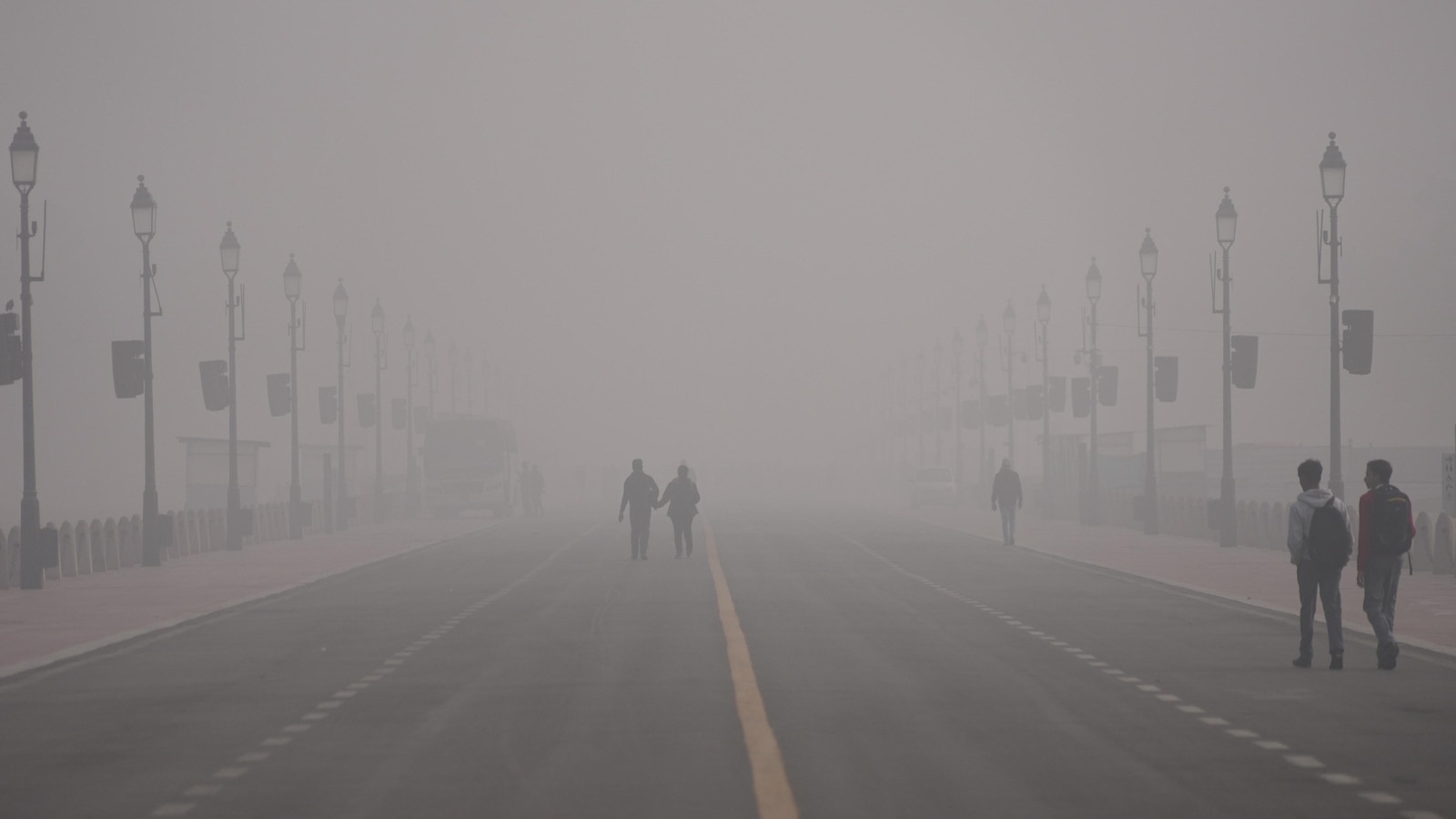
Toxic smog blankets New Delhi, disrupting travel, air quality at hazardous levels
हिंदी में सुनें
Listen to this article in Hindi
New Delhi grapples with hazardous smog. Flights & trains delayed, construction halted, and health warnings issued as air pollution reaches critical levels.
New Delhi is currently battling a severe smog crisis, with air pollution reaching levels not seen in weeks. The toxic haze has triggered travel chaos and prompted authorities to implement emergency measures.
Flight schedules have been severely affected, with over 40 cancellations and dozens of delays reported. Train services are also facing major disruptions, with more than 50 trains arriving and departing from the capital running behind schedule.
Healthcare professionals are urging residents to stay indoors, as hospitals report a surge in patients suffering from respiratory problems and eye irritation. "New Delhi is like a gas chamber right now," stated Dr. Naresh Dang of Max Healthcare, emphasizing that air purifiers offer limited relief and calling for long-term governmental solutions.
For the past two days, Delhi's air pollution has been classified as "severe" by the federal government. Such levels pose a risk to healthy individuals and can severely impact those with pre-existing heart or lung conditions. Data from the Central Pollution Control Board revealed that on Sunday, air quality index readings exceeded 450 at multiple monitoring stations, a jump from 430 on Saturday and the highest reading of the winter thus far. Monday's reading remained critically high at 449. A reading below 50 is considered satisfactory. Government advisories recommend minimizing outdoor activities and wearing N95 masks during periods of severe pollution, with children, pregnant women, the elderly, and those with respiratory or cardiovascular issues facing the greatest risk.
"I have never witnessed pollution like this before. While Delhi was polluted during my visit last year, this year the air is even worse. I can physically feel the smoke as I breathe," said Tiam Patel, a tourist visiting the city.
In an effort to combat the smog, authorities have banned construction activities, restricted the use of diesel generators and cars, and deployed water sprinklers to help settle the haze. Schools and offices are also allowing many students and employees to remain at home.
That said, the reality is a bit more complicated. environmental advocates stress that the air pollution crisis demands comprehensive and lasting solutions.
New Delhi, along with its surrounding areas, is home to over 30 million people and frequently ranks among the world's most polluted cities. A report earlier this year from IQAir, a Swiss-based air quality monitoring organization, indicated that India is home to six of the world's ten most polluted cities, with New Delhi holding the title of the most polluted national capital.
The city's air quality deteriorates each winter as farmers in neighboring states burn crop residue. The smoke becomes trapped by cooler temperatures, mixing with emissions from vehicles, construction, and industry. Pollution levels often reach levels 20 times higher than the World Health Organization's safe limits.
According to Delhi-based environmentalist Vimlendu Jha, the air quality is unhealthy throughout the year, not just during the winter months. "The reality is that it remains polluted through the year," he stated.
Earlier this month, New Delhi residents staged protests to voice their discontent with the government's perceived inaction on the pollution issue.
A study published last year in the medical journal Lancet linked long-term exposure to polluted air to 1.5 million additional deaths annually in India.
Shweta Narayan, a campaign lead at the Global Climate and Health Alliance, pointed out that "Deaths related to air pollution are not being counted" due to a lack of systematic mechanisms for tracking them.
In October, Indian authorities conducted a controversial cloud-seeding experiment over New Delhi in an attempt to induce rainfall and clear the city's toxic air. That said, the reality is a bit more complicated. the experiment did not produce any rainfall.