time low! Currency nears the 90 per dollar mark; what does it mean?
India Business News: The Indian rupee hit an all-time low of 89.95 against the US dollar, driven by speculators and importers. Experts cite a strong dollar and delayed tra
The Indian rupee hit an all-time low of 89.95 against the US dollar, driven by speculators and importers. Experts cite a strong dollar and delayed trade deal as key factors. While some foresee appreciation with a trade deal, others expect continued volatility around the 90-per-dollar mark.
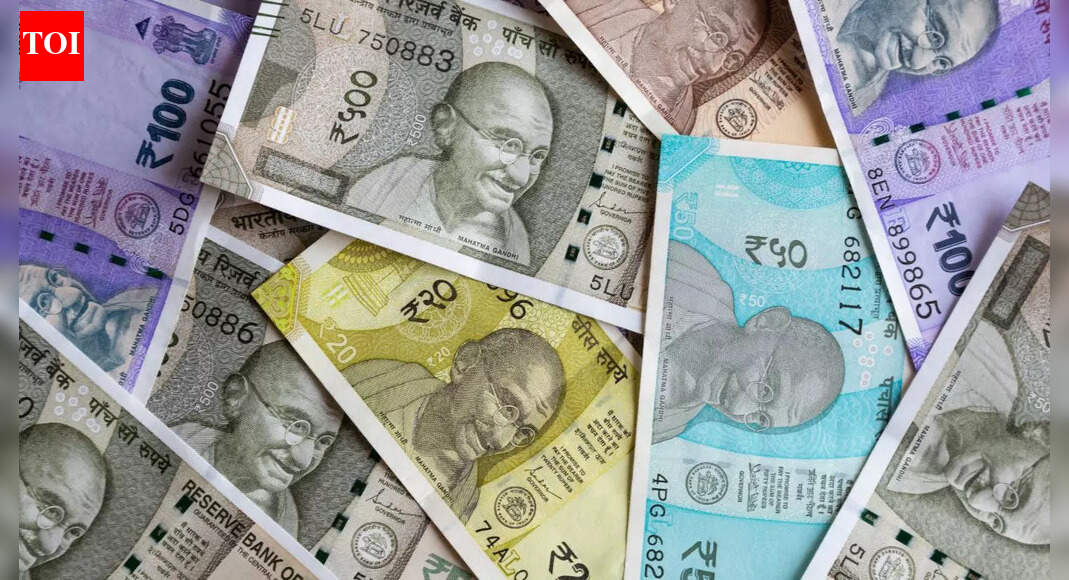
Rupee on Tuesday tumbled 42 paise to close at an all-time low of 89.95 against the US dollar, extending its depreciation streak and edging closer to the crucial 90-per-dollar mark. So far, the rupee has depreciated by over 4% this year, falling 0.8% in November alone. This slump was mainly driven by speculators covering their short positions and importers consistently buying dollars. Market experts pointed to a combination of external and domestic factors for the sharp fall, including the strength of the US dollar and the continued delay in the first tranche of the India-US BTA (trade deal). This decline follows Monday’s session, when the rupee had already depreciated by eight paise to end at 89.53 against the dollar. According to Prithvi Finmart, "Record trade deficits of October month due to higher imports and delay in the US-India trade deal pushed the rupee lower."What are experts saying? Dharmakirti Joshi, chief economist at CRISIL Limited believes that a potential reversal could be on the horizon. When asked about the consistent depreciation and what the future holds for the currency, he told ANI that he sees appreciation ahead. "My belief is that if you get a trade deal (with the US), I think the depreciated rupee will again start appreciating, and I think it also depends quite a lot on what the global financial conditions are and our expectation is that rupee will strengthen from these levels in the months ahead," Joshi said. He also underlined that fluctuation is inherent to the currency market. "If you see the history of the Rupee since 2013-14, the taper tantrum period, I think we have seen periods when the Rupee weakens much faster. And there are periods when it strengthens also," he said.BoB flags persistent pressure despite strong GDP print A Bank of Baroda report by economist Aditi Gupta noted that the currency’s depreciation in November stood out especially because the US dollar weakened during the same period. "The depreciation in INR was more pronounced (in November) if we consider the fact that the dollar weakened in the same period. Strong demand from importers, low foreign inflows, uncertainty over US trade deal and an elevated trade deficit, weighed on the domestic currency," the report stated. Gupta added that even a stronger-than-expected GDP reading did little to boost sentiment, with the currency continuing to trade at a new low. "We expect USD/INR to trade in the range of 89-90/USD this month," the report read.UBI remains positive Union Bank of India took a comparatively optimistic tone, signalling that the majority of the weakness may already have played out. "Given that the rupee has already weakened by roughly 4% this year, we do not expect significant further depreciation in the near term," UBN report notes.Volatility forecast remains strong across markets Prithvi Finmart told ANI, "We expect a rupee to remain volatile this week amid volatility in the dollar index, volatility in the domestic equity markets and ahead of the US Fed monetary policy meetings and a pair could trade in the range of 88.5500-90.6000 this week."Why is the 90 level mark important? Anindya Banerjee, head of commodity and currency at Kotak Securities, noted that the 90 mark is a critical psychological threshold for the rupee. "A cluster of buy-stop orders likely sits above it. This is precisely why the RBI must remain active below 90; if the pair starts sustaining above this zone, the market could quickly shift into a higher trending phase toward 91.00 or even higher." Banerjee added that, at this point, it is vital for the central bank to ensure that speculators do not become overly confident in a one-directional move, as such behaviour could trigger an avoidable surge in volatility for the rupee.
End of Article