This newly discovered 'Fire Amoeba' survives extreme heat limits
Updated on 01 Dec 2025 | Category: Science
A newly discovered fire amoeba survives temperatures up to 63°C, challenging biological limits and reshaping understanding of complex life in extreme environments.
Scientists have identified an extraordinary amoeba thriving in extreme heat. This finding overturns assumptions about what temperatures complex life tolerates. The newly found species challenges long-established biological survival limits.
Found in Volcanic Hot Spring
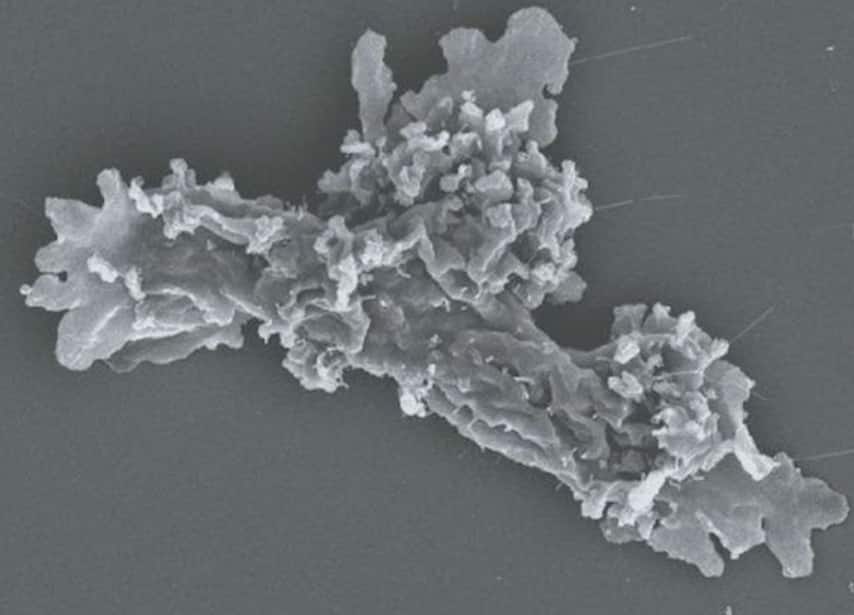
Researchers found this amoeba in Lassen volcanic hot springs. The species, Incendiamoeba cascadensis, thrives in scorching geothermal pools. It survives temperatures near boiling, shocking the scientific community worldwide. The organism endures intense volcanic heat with remarkable cellular resilience.
Record-Breaking Heat Tolerance
The amoeba grows at forty-two degrees Celsius or higher. It divides rapidly at fifty-five degrees during laboratory testing. It survives extreme ranges reaching sixty-three degrees without damage. No known eukaryote shows comparable heat resistance under similar conditions.
Specialised Cellular Adaptations
This organism displays specialised proteins stabilising cellular machinery under heat. Heat-shock responses activate consistently to prevent thermal structural collapse. Its membranes remain flexible even at unusually dangerous temperature levels. These adaptations keep metabolic processes functioning during extreme environmental stress.
Implications For Alien Life
The amoeba expands boundaries guiding life detection beyond Earth. Its resilience suggests complex organisms may survive harsher extraterrestrial environments. Scientists now reconsider planetary habitability models for extreme worlds. Future missions may widen criteria for evaluating life-supporting planetary conditions.
Future Research Directions
Teams will examine molecular tools enabling such extraordinary thermal stability. They aim to decode metabolic pathways sustaining growth without thermal failure. Findings could transform understanding of evolution in extreme environments. They may also inform biotechnology built for high-temperature industrial applications.