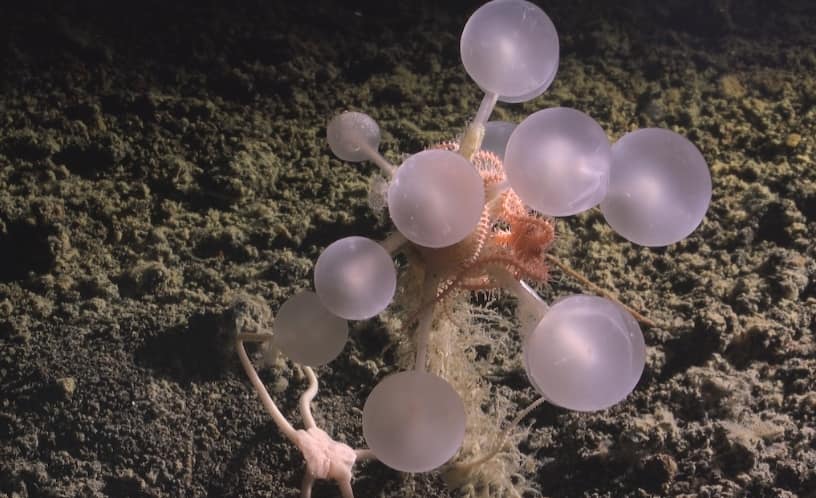
This "death-ball” sponge, a new deep-sea creature hunts prey with tiny hooks
हिंदी में सुनें
Listen to this article in Hindi
A new species of predatory sponge, nicknamed "death-ball," has been discovered in the Southern Ocean, using tiny hooks to capture prey. Found at 3,601 meters!
A remarkable new sponge species has been identified in the depths of the Southern Ocean. Unlike most sponges, which filter water for food, this one actively hunts and consumes small animals using minuscule hooks.
Researchers have dubbed it the "death-ball" sponge because of its peculiar appearance. It belongs to the genus Chondrocladia, a group known for unusual, predatory sponges.
A Predatory Sponge
Most sponges passively filter microscopic plankton from the water. This newly discovered sponge, however, uses hooked structures to snare small crustaceans and invertebrates. Its spherical shape makes it resemble a miniature, deadly hunting trap. This predatory behavior is quite rare among sponges, which are typically gentle filter feeders.
Deep-Sea Discovery
Scientists discovered the sponge at a depth of 3,601 meters (11,814 feet) near Antarctica. A remotely operated vehicle (ROV) captured images of its unique form and hunting methods. The discovery was made during the Nippon Foundation–Nekton Ocean Census project. Along with this sponge, the team documented nearly 30 previously unknown deep-sea species.
Challenging Assumptions
The finding challenges established ideas about sponge biology and behavior. It highlights how much remains unknown about deep-sea life. Each newly discovered species reveals unique ways of adapting to extreme pressure and darkness. Researchers note that they are still studying much of the collected material.
Exploring Hidden Biodiversity
The discovery underscores the vast biodiversity hidden in the deep ocean and the unique adaptations of creatures living there.