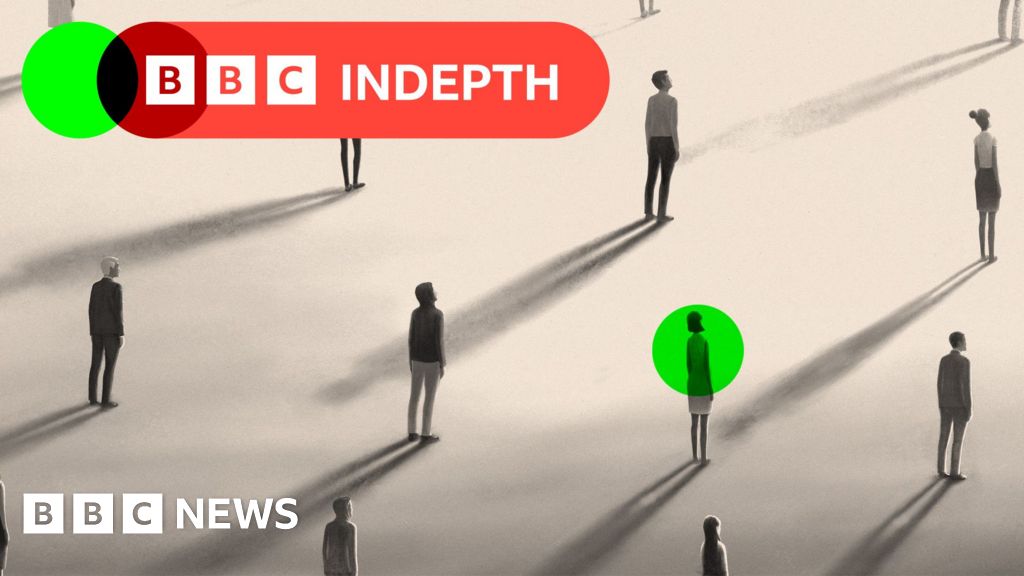
The surprising truth about who the loneliest generations are
हिंदी में सुनें
Listen to this article in Hindi
Recent studies reveal that young adults, not the elderly, report the highest levels of loneliness. Experts explore the reasons and potential solutions.
While social isolation is often associated with older individuals, particularly around the holidays, research indicates that younger adults are experiencing loneliness at surprisingly high rates. Adam Becket, 26, vividly recalls an October evening in 2021 when he felt profoundly alone amidst Halloween revelers in Bristol, a city he'd moved to a year prior for a job. Despite being surrounded by people, he felt like an outsider, a feeling that is increasingly common among his generation.
Data from the Office for National Statistics (ONS) last month revealed that 33% of Britons aged 16 to 29 reported frequent feelings of loneliness, a figure exceeding that of older age groups; only 17% of those over 70 reported similar feelings. Echoing these findings, a World Health Organization review of global studies also identified young adults and adolescents as the loneliest. Although some data suggests loneliness spikes again in the over-85 age bracket in certain countries, most research highlights young adults as particularly susceptible.
Professor Andrea Wigfield, director of the Centre for Loneliness Studies at Sheffield Hallam University, notes that adults aged 18-24 are the loneliest, followed by older people, describing it as a growing problem. Experts attribute this trend to factors prevalent in modern society. Many young people live in shared housing with uncongenial housemates, work remotely, and primarily interact with friends online. While the internet offers access to global friendships, the idealized image of carefree young adulthood, popularized by shows like Friends, needs reevaluation, according to experts.
Early adulthood has historically been a period of instability, with young individuals leaving home, relocating, and experiencing weakened family ties, which can trigger loneliness. Dr. Meg Jay, a clinical psychologist, highlights the "scattering" effect, where friends and acquaintances disperse geographically, making it challenging to maintain connections. Becket experienced this firsthand after moving from London to Bristol, where he had to rebuild his social circle. He eventually found solace in running and cycling clubs, though his feelings of loneliness still fluctuate.
Contemporary factors are also exacerbating the issue. People are marrying and having children later in life. The ONS reports the average age for first marriage in the UK is now 31, up from 23 for men and 21 for women in 1970. This increases reliance on friends for emotional support, and if those friendships falter, loneliness can ensue. Professor Richard Weissbourd points to a decline in community engagement, with reduced participation in civic organizations like churches and trade unions since the 1970s. This trend, described as the "Bowling Alone" thesis, reflects a broader erosion of social connections. Young adults, who may have left their families but not yet started their own, are particularly affected by this decline.
Zeyneb, 23, living alone in Cheltenham, experienced peak loneliness during her master's degree due to limited class time and difficulty connecting with classmates. Her family lives in Romania, and she spends much of her time alone while searching for employment. She yearns for a "third place," a social environment outside of home or work, but finds such spaces lacking. Even her gym offers little interaction, with most people wearing headphones and avoiding eye contact.
The increase in remote work post-pandemic also contributes to the problem. While fewer young adults work from home compared to older generations (28% of 16-29 year olds versus 54% of 30-49 year olds in early 2025), it can disproportionately impact them. Dr. Jay believes working from home is a "nightmare" for twenty-somethings, hindering the formation of new friendships. The urban houseshare paradox further complicates matters. Despite young adults being more likely to live with others (only 5% of those in their early 20s live alone in England and Wales, compared to 49% of those over 85), this doesn't necessarily alleviate loneliness. Emotionally distant flatmates can exacerbate feelings of isolation.
Smartphones and social media also play a role. British 18-24 year olds spend an average of six hours and 20 minutes online daily, according to Ofcom. While the direct link between social media use and loneliness is debated, experts like Dr. Jay emphasize the "compare and despair" effect, where social media amplifies existing feelings of loneliness by creating the impression that everyone else is living a more exciting and fulfilling life.
That said, the reality is a bit more complicated. reporting biases may also contribute to the data. Professor Weissbourd suggests that young adults, more familiar with mental health terminology, might be more inclined to self-report feelings of loneliness in surveys. While this may partially explain the findings, Professor Wigfield believes the high rates of loneliness among young adults are a genuine phenomenon.
David Gradon's experience illustrates a common trajectory. After his friends moved away from London, he developed depression and recognized his condition as loneliness. He eventually created The Great Friendship Project, a non-profit organization that hosts social events for young adults in London. Council-funded youth clubs, primarily aimed at teenagers, could be expanded to serve individuals in their early twenties, according to Laura Cunliffe-Hall of UK Youth. That said, the reality is a bit more complicated. funding remains a significant obstacle, with local authority spending on youth services in England having decreased substantially since 2010.
Investing in friendship services could yield long-term cost savings, given the severe health consequences associated with chronic loneliness. Professor Wigfield notes that chronic loneliness is linked to inflammation and increased risks of cardiovascular disease and dementia. The NHS has invested in "social prescribing," connecting patients with mental health issues to community-based services. That said, the reality is a bit more complicated. Professor Wigfield points out that the availability of these services varies significantly depending on location.
Looking ahead, Dr. Jay sees potential for improvement. She believes working from home is becoming less appealing to young adults, and some companies are encouraging employees to return to the office. She also hopes for a growing resistance to social media, although widespread change has not yet been observed. For individuals like Zeyneb, solutions can be found in unexpected places, such as the companionship of a pet.




:max_bytes(150000):strip_icc()/ms-martha-sourdough-08535a5ce5704845ab32e9e30cc333eb.jpg)