Hanif Mohammad: Pakistan's Original 'Little Master' and Test Pioneer
हिंदी में सुनें
Listen to this article in Hindi
Before Imran Khan, there was Hanif Mohammad. Discover how Pakistan's original 'Little Master' shaped a nation's cricket identity through sheer resilience and skill.
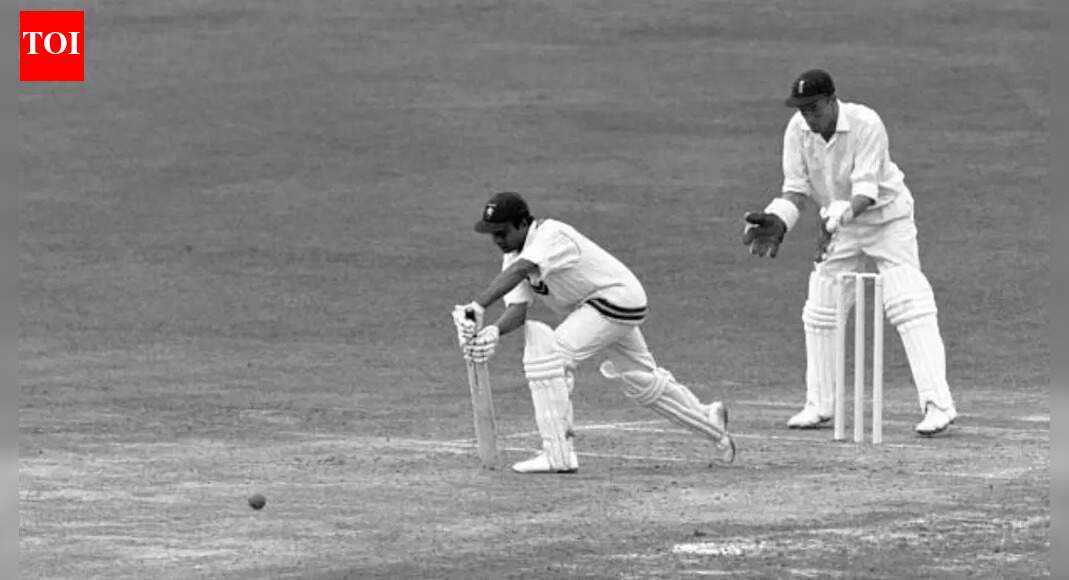
Before the emergence of celebrated names like Imran Khan, Wasim Akram, or Shoaib Akhtar, Pakistan possessed a cricketing beacon in Hanif Mohammad. He wasn't known for brute force or blistering speed. Instead, Hanif established himself through unwavering endurance, instilling in his team the spirit of resilience. He became Pakistan's first genuine cricket superstar.
In a young nation still defining its identity, Hanif provided a voice through his batting prowess. His achievements, widely followed across Pakistan via radio broadcasts, propelled cricket beyond the confines of elite circles, transforming it into a nationwide passion. No longer just a sport for the privileged few, cricket became accessible to everyone.
Born in 1934 in Gujarat, pre-partition India, Hanif Mohammad's family relocated to Pakistan following Partition, a move that would shape his cricketing destiny. He represented Pakistan in 55 Test matches, including their inaugural Test against India in 1952. Over a 17-year career, he amassed 3,915 runs, maintaining an average of 43.98. While statistically significant, these figures only partially capture his essence. Hanif's true impact resided in what he symbolized and how he approached the game. His diminutive stature, standing at 5 feet 3 inches, earned him the moniker “Little Master.” When he debuted in first-class cricket, he appeared even younger and smaller than his peers. At just 16, he stepped onto the field in Lahore in November 1951 for his first unofficial Test between Pakistan and the MCC, marking his first-class debut. Wisden, in its obituary, quoted Brian Statham's initial impression: "He looked about 12."
That said, the reality is a bit more complicated. the lightheartedness soon faded. Hanif scored 26 runs in 165 minutes. In the subsequent match, he demonstrated remarkable patience, batting for over four hours to secure 64 runs as Pakistan pursued a target of 288. This understated innings proved transformative. Eight months later, Pakistan attained Test status. With Abdul Hafeez Kardar leading as captain and Fazal Mahmood spearheading the attack, Hanif played the crucial role of holding the innings together. Consistently, he shielded Pakistan from defeat, constructing lengthy innings rooted in solid defense, astute judgment, and unwavering discipline.
His defining moment remains etched in cricket lore: Bridgetown, 1957–58. During Pakistan's tour of the West Indies, the hosts posted a formidable 579. Pakistan faltered, scoring only 106 on the third day of the six-day match, forcing them to follow on, trailing by a massive 473 runs. Defeat seemed inevitable. By the close of Day 3, Hanif had reached 61, having weathered Roy Gilchrist's barrage of short-pitched deliveries, opting not to hook. For the next three days, Hanif remained at the crease, accumulating runs with relentless determination. He added exactly 100 runs on the fourth day, while Pakistan lost only one wicket. On the fifth day, he battled through pain from Gilchrist's bruising blows and sunburn that caused skin to peel under his eyes. During breaks, he would retreat to a corner of the dressing room, consuming a piece of chicken for sustenance. By stumps, he had amassed 270 runs, giving Pakistan a narrow lead. Ultimately, he scored 337, batting for an astounding 970 minutes, forging century partnerships with four different players, including his brother Wazir. Pakistan declared at 657 for 8, resulting in a draw. Hanif's innings endures as the longest individual innings, measured in minutes, in Test history.
The following year, Hanif reinforced his reputation, demonstrating that his Bridgetown performance was no fluke. Playing for Karachi against Bahawalpur in 1959, he achieved a score of 499 in a first-class match, then the highest first-class score ever recorded. He was unfortunately run out in the final over, attempting to reach his 500th run. This record stood for 35 years, until Brian Lara surpassed it with 501 for Warwickshire.
While his reputation sometimes painted him as solely a defensive player, Hanif possessed a more versatile game. He could launch an attack when the situation demanded and is often credited with inventing the reverse sweep. His capabilities were multifaceted. He captained Pakistan, served as wicket-keeper, and even bowled with both right- and left-handed techniques in Test matches. That said, the reality is a bit more complicated. his defining skill remained his ability to occupy the crease for extended periods.
Hanif's career was not without its challenges. The 1962 tour of England marked his first prolonged period of low scores. He managed only 177 runs in the series, averaging 17.70, with a highest score of 47. Five years later, approaching his mid-30s, he returned to England determined to prove himself. English fast bowlers anticipated that short balls would be his weakness. John Snow relentlessly tested him. Hanif responded with an unbeaten 187 in the first Test at Lord’s. This innings consumed 556 balls and the match concluded in a draw. As the 1960s drew to a close, maintaining consistency became increasingly difficult, leading Hanif to retire. He concluded his career with 12 Test centuries and 15 half-centuries. His average, which had once exceeded 47, settled at 43.98. Notably, he scored Test centuries against all opponents on their home grounds, dispelling any notion that his success relied on familiar conditions. His away average of 42.62 closely mirrored his overall Test average.
Hanif was also a central figure in one of cricket's most remarkable families. Three of his brothers — Wazir, Mushtaq, and Sadiq — achieved Test cricket status. Another brother, Raees, once served as Pakistan's twelfth man. In 1969–70, Hanif, Mushtaq, and Sadiq played together against New Zealand in Karachi, Hanif’s last Test, mirroring the Grace brothers’ achievement for England in 1880. At least one of the brothers participated in Pakistan’s first 89 Tests. His son, Shoaib, later played 45 Tests.
Hanif Mohammad passed away on August 11, 2016, in Karachi, at the age of 81. By that time, Pakistan cricket had witnessed fearsome fast bowlers and world-title-winning captains. Yet, before Pakistan mastered the art of winning, it learned the value of resilience. That lesson originated from Hanif Mohammad, whose birthdate falls on this day, December 21, 1934.