The missile meant to strike fear in Russia’s enemies fails once again
One of Vladimir Putin’s favorite sabres to rattle seems to have lost its edge.
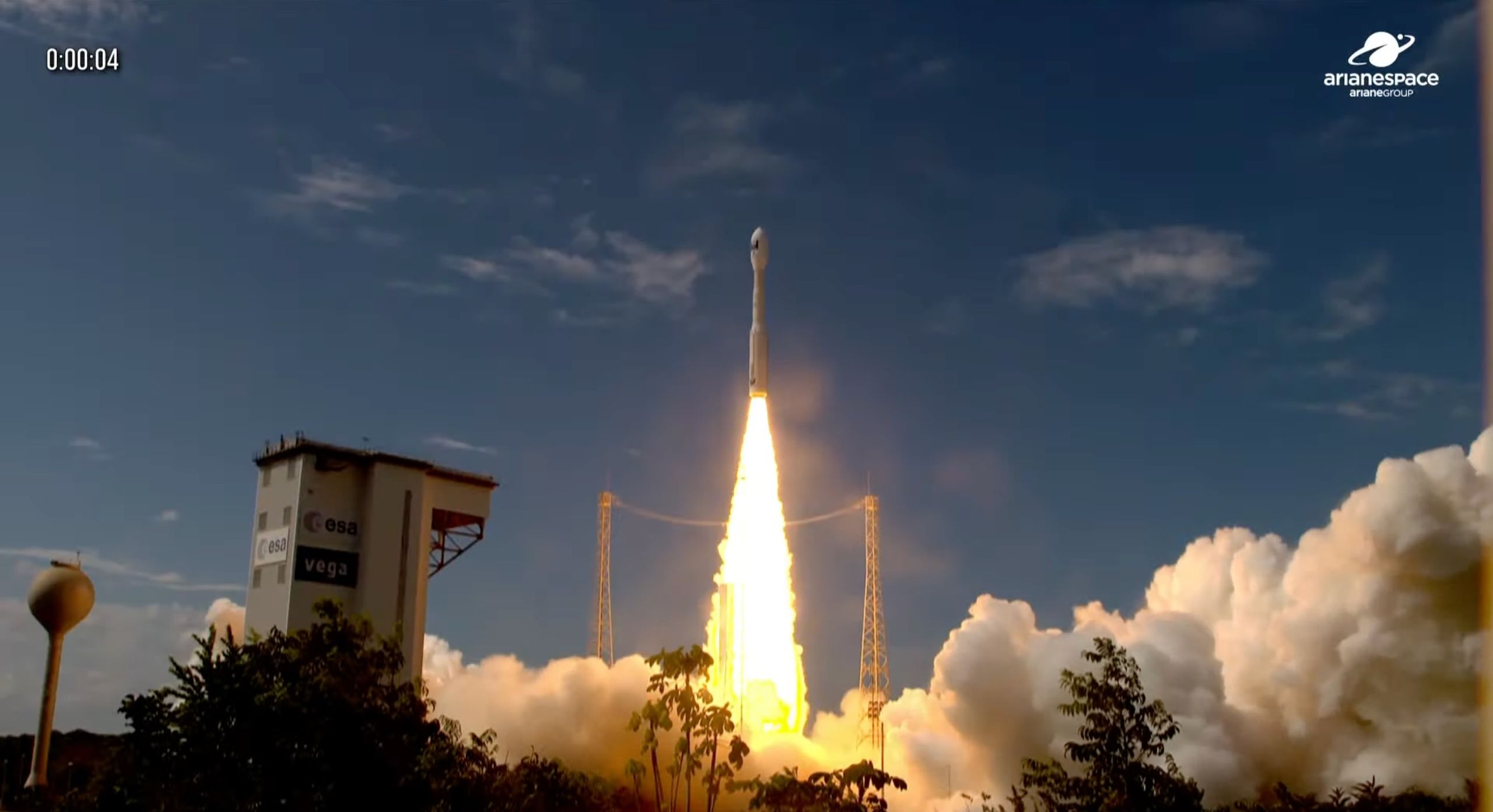
A Russian intercontinental ballistic missile (ICBM) fired from an underground silo on the country’s southern steppe Friday on a scheduled test to deliver a dummy warhead to a remote impact zone nearly 4,000 miles away. The missile didn’t even make it 4,000 feet.
Russia’s military has been silent on the accident, but the missile’s crash was seen and heard for miles around the Dombarovsky air base in Orenburg Oblast near the Russian-Kazakh border.
A video posted by the Russian blog site MilitaryRussia.ru on Telegram and widely shared on other social media platforms showed the missile veering off course immediately after launch before cartwheeling upside down, losing power, and then crashing a short distance from the launch site. The missile ejected a component before it hit the ground, perhaps as part of a payload salvage sequence, according to Pavel Podvig, a senior researcher at the United Nations Institute for Disarmament Research in Geneva.
The crash was accompanied by a fireball and a noxious reddish-brown cloud, the telltale sign of a toxic mix of hydrazine and nitrogen tetroxide used to fuel Russia’s most powerful ICBMs. Satellite images taken since Friday show a crater and burn scar near the missile silo.
Analysts say the circumstances of the launch suggest it was likely a test of Russia’s RS-28 Sarmat missile, a weapon designed to reach targets more than 11,000 miles (18,000 kilometers) away, making it the world’s longest-range missile.
An unusable weapon
The Sarmat missile is Russia’s next-generation heavy-duty ICBM, capable of carrying a payload of up to 10 large nuclear warheads, a combination of warheads and countermeasures, or hypersonic boost-glide vehicles, according to the Center for Strategic and International Studies. Simply put, the Sarmat is a doomsday weapon designed for use in an all-out nuclear war between Russia and the United States.
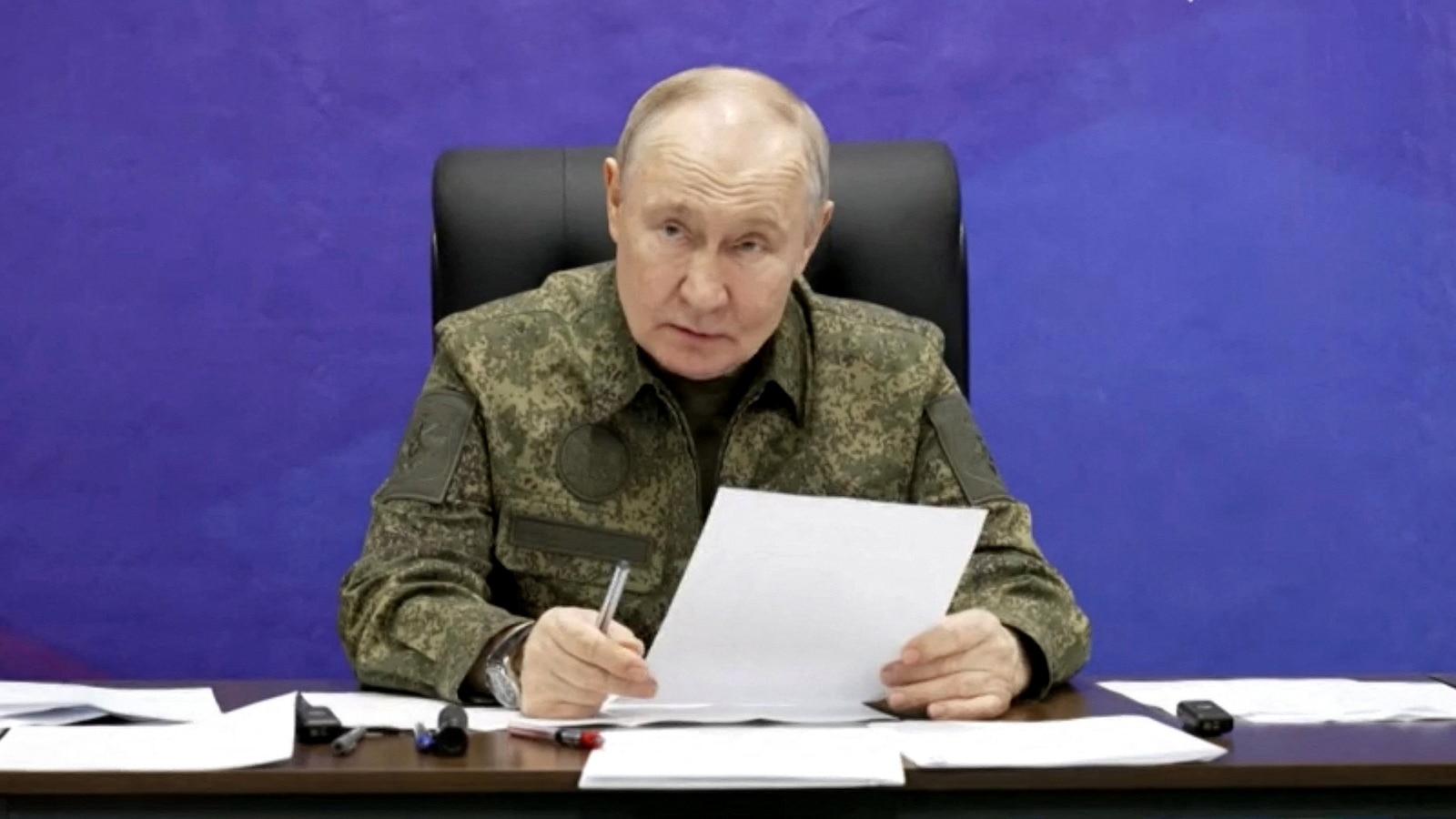
Therefore, it’s no wonder Russian officials like to talk up Sarmat’s capabilities. Russian President Vladimir Putin has called Sarmat a “truly unique weapon” that will “provide food for thought for those who, in the heat of frenzied aggressive rhetoric, try to threaten our country.” Dmitry Rogozin, then the head of Russia’s space agency, called the Sarmat missile a “superweapon” after its first test flight in 2022.
So far, what’s unique about the Sarmat missile is its propensity for failure. The missile’s first full-scale test flight in 2022 apparently went well, but the program has suffered a string of consecutive failures since then, most notably a catastrophic explosion last year that destroyed the Sarmat missile’s underground silo in northern Russia.
The Sarmat is supposed to replace Russia’s aging R-36M2 strategic ICBM fleet, which was built in Ukraine. The RS-28, sometimes called the Satan II, is a “product solely of Russian industry cooperation,” according to Russia’s Ministry of Defense.
The video of the missile failure last week lacks the resolution to confirm whether it was a Sarmat missile or the older-model R-36M2, but analysts agree it was most likely a Sarmat. The missile silo used for Friday’s test was recently renovated, perhaps to convert it to support Sarmat tests after the destruction of the new missile’s northern launch site last year.
“Work there began in Spring 2025, after the ice thawed,” wrote Etienne Marcuz, an analyst on strategic armaments at the Foundation for Strategic Research, a French think tank. The “urgent renovation” of the missile silo at Dombarovsky lends support for the hypothesis that last week’s accident involved the Sarmat, and not the R-36M2, which was last tested more than 10 years ago, Marcuz wrote on X.
“If this is indeed another Sarmat failure, it would be highly detrimental to the medium-term future of Russian deterrence,” Marcuz continued. “The aging R-36M2 missiles, which carry a significant portion of Russia’s strategic warheads, are seeing their replacement pushed even further into the future, while their maintenance—previously handled by Ukraine until 2014—remains highly uncertain.”
Podvig, the UN researcher who also runs the Russian Nuclear Forces blog site, agrees with Marcuz’s conclusions. With the R-36M2 missile soon to retire, “it is extremely unlikely that the Rocket Forces would want to test launch them,” Podvig wrote on his website. “This leaves Sarmat.”
The failure adds fresh uncertainty to the readiness of Russia’s nuclear arsenal. If this were actually a test of one of Russia’s older ICBMs, the result would raise questions about hardware decay and obsolescence. In the more likely case of a Sarmat test flight, it would be the latest in a series of problems that have delayed its entry into service since 2018.
While Sarmat has floundered, Russia’s military resources have been devoted to fighting the war against Ukraine, a conflict burning through Russian airplanes, artillery, drones, and troops. In his rhetoric, Putin has invoked his strategic arsenal to warn against increasing US or European involvement in the war. In reality, Russia’s modernization of its nuclear forces has stalled while the Kremlin replenishes assets core to the war in Ukraine.
Russia has an inventory of lighter ICBMs capable of carrying single warheads or a handful of MIRVs—Multiple Independently-targetable Reentry Vehicles—each with its own nuclear weapons. When it works, the Sarmat can heave many more warheads to far-flung targets in a single launch.
Russia has scheduled a test of its Yars missile, one of the military’s smaller ICBMs, for next week, according to airspace warning notices issued Monday advising pilots to steer clear of the rocket’s flight path. Like the United States, Russia routinely tests its missile arsenal to ensure its nuclear forces are ready for war.
A few days before last week’s ICBM test, the US Air Force sent at least one RC-135S Cobra Ball surveillance plane to Alaska, a three-hour flight from Russia’s missile impact range in Siberia. The aircraft is outfitted with optical and electronic sensors to monitor ballistic missile tests, collecting data “critical to arms treaty compliance verification and development of US strategic defense and theater missile defense concepts,” the Air Force says in a fact sheet.
In a speech last month, Putin declared the Sarmat missile would undergo “combat trials” before the end of this year, before its deployment on “combat duty” next year. If Friday’s launch was a Sarmat trial run, it is clear Russian leaders can’t rely on it for combat duty.
Even before last week’s accident, some analysts raised the possibility of Russia canceling the Sarmat program and relying on its smaller ICBMs. Unlike Sarmat, many of Russia’s other land- and sea-based ballistic missiles have the advantage of using mobile launchers.
One Russian researcher based in Moscow, Dmitry Stefanovich, suggested the same in a social media post Saturday: “Sarmat deserves to be canceled.”