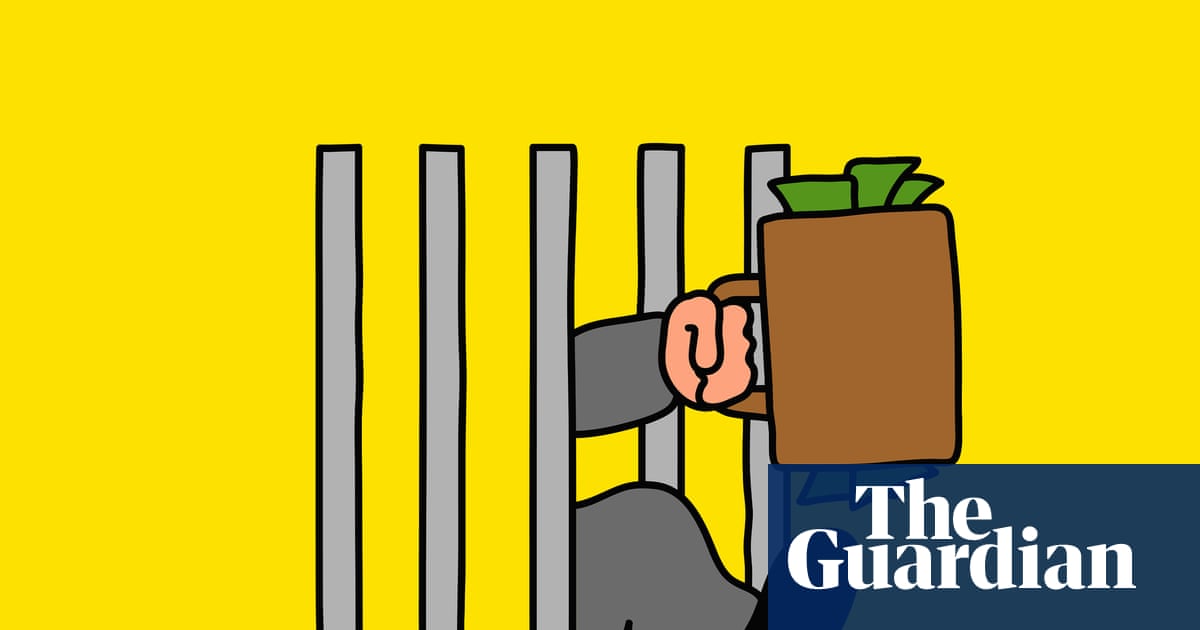
Donald Trump's Policies in 2025: A Boon for White-Collar Crime
हिंदी में सुनें
Listen to this article in Hindi
A look at how Donald Trump's actions, including pardons and dropped investigations, are benefiting white-collar criminals and undermining regulatory efforts.
A series of pardons and dropped investigations under Donald Trump's administration are raising concerns about a growing leniency toward white-collar crime. While in 2023, U.S. prosecutors revealed that groups like ISIS, Al-Qaeda, Hamas, and Palestinian Islamic Jihad had used Binance, the world's largest cryptocurrency exchange, to move funds, the founder, Changpeng Zhao, saw his sentence erased by a Trump pardon.
Zhao, once celebrated as the 'king' of crypto, pleaded guilty to money laundering charges in 2024, and Binance was hit with a record $4.3 billion penalty for enabling terrorist financing. The action was initially viewed as a triumph for regulators, as well as the families of U.S. citizens killed on October 7th who are now pursuing legal action against Binance, accusing it of actively courting terrorist organizations. Karoline Leavitt, the White House press secretary, defended Trump's pardon by characterizing Zhao's crimes as victimless, echoing a familiar argument that downplays the impact of corruption. That said, the reality is a bit more complicated. terrorist groups rely on sophisticated financial networks, and the victims of violence are also victims of the financial professionals who facilitate it. Zhao's pardon is seen as a signal of who stands to gain during Trump's presidency.
This isn't an isolated incident. Trump's administration has shown a pattern of offering reprieves to white-collar offenders, using presidential pardons as a primary tool. This approach contrasts sharply with previous administrations that used this power more selectively. Even when it clashes with stated policy objectives, Trump has been ready to use pardons. Despite claiming to combat drug trafficking, Trump pardoned Juan Orlando Hernandez, the former president of Honduras. In 2024, an American court convicted Hernandez of smuggling around 400 tons of cocaine into the U.S. Hernandez had become the center of a violent drug-trafficking operation, turning Honduras into a major transit point for drugs. His initial conviction represented a major victory against narcotics networks, more significant than any potential military action. Yet, Trump intervened, asserting that Hernandez had been treated unfairly, after Hernandez portrayed himself as an ally on migration and security.
Charles Scott, a businessman found guilty of stock manipulation, and reality TV stars Julie and Todd Chrisley, convicted of tax evasion, also received pardons. Furthermore, David Gentile, a private equity executive sentenced to seven years for defrauding investors of $1.6 billion, had his sentence commuted shortly after entering prison. This decision was particularly painful for the 10,000 victims, including elderly individuals who lost their life savings. Trump's pardons extend beyond financial crimes, reaching into the political sphere. Alexander Sittenfeld, a former Cincinnati city council member convicted of bribery, and Jeremy Hutchinson, an Arkansas legislator found guilty of accepting bribes, were also pardoned. Even Henry Cuellar, a Texas representative accused of acting as a foreign agent, was pardoned, sending a message to lawmakers that loyalty to Trump provides protection and signaling to foreign leaders that the U.S. is open for business.
Pardons represent only one tactic. The Trump administration has also curtailed investigations into corporate misconduct. Public Citizen, a consumer advocacy group, has documented numerous cases where enforcement actions against corporations have been halted or dropped. Approximately a third of 480 corporations previously targeted in enforcement actions have benefited from this shift. For instance, a felony case against Boeing, related to deadly crashes, was dropped after the company donated to Trump's inauguration fund. Cases involving unregistered brokers, pharmaceutical price-fixing, and factories endangering public health have similarly disappeared. Cryptocurrency has become a haven. Major crypto players have seen investigations quietly shelved. Binance, along with founder Zhao, has found itself in the center of this dynamic. Binance assisted Trump's crypto firm, potentially generating millions for the Trumps, before Zhao was pardoned. These developments are raising concerns about the potential for another economic collapse.
While financial gain may be a motivator, Trump's support for white-collar criminals appears more extensive. Contributing factors include a sense of grievance, a desire to consolidate power, and an ideological commitment to dismantling the 'administrative state.' Agencies like the SEC, FTC, and Consumer Financial Protection Bureau face reduced authority. Even the Foreign Corrupt Practices Act is being undermined, and a shell company registry aimed at combating money laundering has stalled. This approach threatens to destabilize the American economy and incentivize further crime, potentially leading to ecological disasters, economic recessions, or terrorist attacks. Ultimately, the consequences of this trend will affect everyone, dispelling the myth of victimless white-collar crime.