Tere Ishk Mein: Dhanush-Kriti Sanon’s love story is so toxic, even therapy can’t save it
Tere Ishk Mein could have been Bollywood’s boldest critique of toxic masculinity. Instead, Dhanush-Kriti Sanon's film ends up glorifying the very behaviour it claims to dissect.
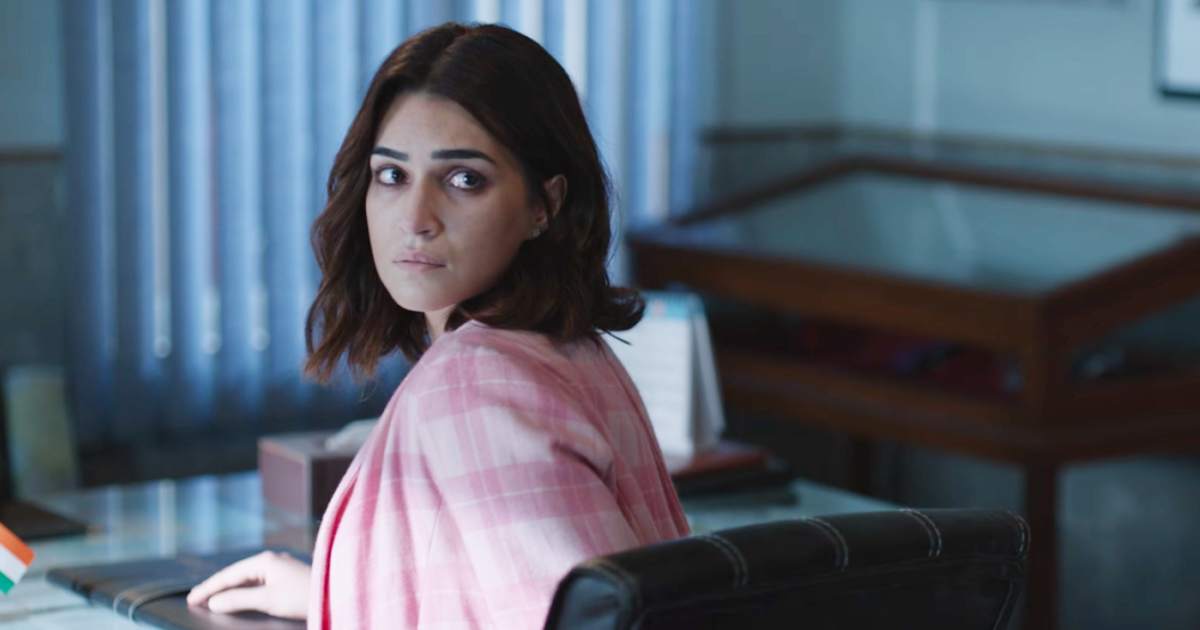
The first red flag is Mukti herself. Despite her supposed maturity and academic grounding, she decides to confront Shankar and slap him for bullying students. His reaction? An incredibly creepy line as the police drag him away: “Apna toh roz ka hai, par sundar ladki roz kaha milti hai.” To make things worse, the policeman actually smiles. Shankar then grabs her hand, asks her to slap him again, and Mukti… smiles back. This moment sets the tone: abuse is flirtation, therapy is a joke, and boundaries are nonexistent.
Determined to prove her thesis, Mukti convinces Shankar to participate in her experiment. Shankar warns her he might fall in love with her, and her response—“Tum pyaar samajh ke kar lena, main kaam samajh ke kar lungi”—is shockingly childish for a woman pursuing a PhD. She exploits Shankar’s emotional vulnerability in the name of research, confusing his affection with “progress.”
What follows is the most bizarre version of “I can fix him” ever put on screen. Mukti mistakes Shankar’s obsession for improvement, records his emotions without any actual therapeutic process, and then takes him before two professors to “prove” anger can be cured. When Shankar rushes to a brawl at a bus station mid-evaluation, her thesis collapses instantly. And yet, Mukti still refuses to accept failure.
ALSO READ | Amid Sooryavanshi and 83, a small OTT series emerged as the best of 2021: 25 Years of Indian Cinema
Things get worse when, at the bus station, Shankar beats up a driver and a conductor. Mukti responds by asking them to slap him to “help” her experiment. Shankar then demands physical intimacy from Mukti in exchange for taking the slap. In the most ethically bankrupt scene of the film, Mukti agrees and takes him to a hotel room. At this point, psychology, ethics, and logic have left the chat.
Story continues below this ad
Shankar later pretends he has changed so Mukti’s thesis gets validated, and she buys it. Their relationship grows more toxic, but Mukti continues enabling him. When her childhood friend visits, she chooses not to introduce Shankar—but then absurdly invites him to meet her parents, a move that in any normal world signals romantic interest.
The primary issue in the film is not just Shankar’s behaviour—it’s Mukti’s complete lack of agency and common sense. She knows he’s unstable, yet she keeps leading him on, dragging him through a toxic relationship to justify her academic experiment.
Shankar’s outbursts are excused, romanticised, and even rewarded. It takes Mukti’s father to finally call the police. But the film turns this moment into an emotional monologue by Shankar’s father (Prakash Raj), who dies in a tragic accident right after apologising. The absurdity peaks when Shankar—now grieving—returns to curse Mukti, announces his father’s death, and vanishes.
Mukti spirals. She breaks her marriage, becomes an alcoholic, and eventually marries the man she once left earlier—because her father asks her to and because of Shankar’s ridiculous curse about her future son. This part defies all logic.
Story continues below this ad
By the finale, Shankar suddenly becomes an Air Force pilot (with the same anger issues intact) and dies heroically in war. The film closes with the line: “Humari generation aakhri hogi jo pyaar karne ki himmat ki hogi.”
Instead of critiquing toxic masculinity, the film ends up worshipping it. This could have been an antidote to the “Animal” era. This could have been a film that exposed toxic alpha behaviour instead of celebrating it. But instead, it glorifies both Shankar’s aggression and Mukti’s poor decision-making.
Did we like the acting? Absolutely. Prakash Raj, especially, leaves an impact. But the story? A complete letdown.
This film had the chance to dismantle a destructive trope. Instead, it reinforces it. And the biggest disappointment is watching a female psychologist reduced to a punchline, made to deliver lines like: “Aise ladke, ladki ko shaadi ke jode mein dekhkar shant ho jaate hain.”
Ma’am, you turned psychologists into a joke.