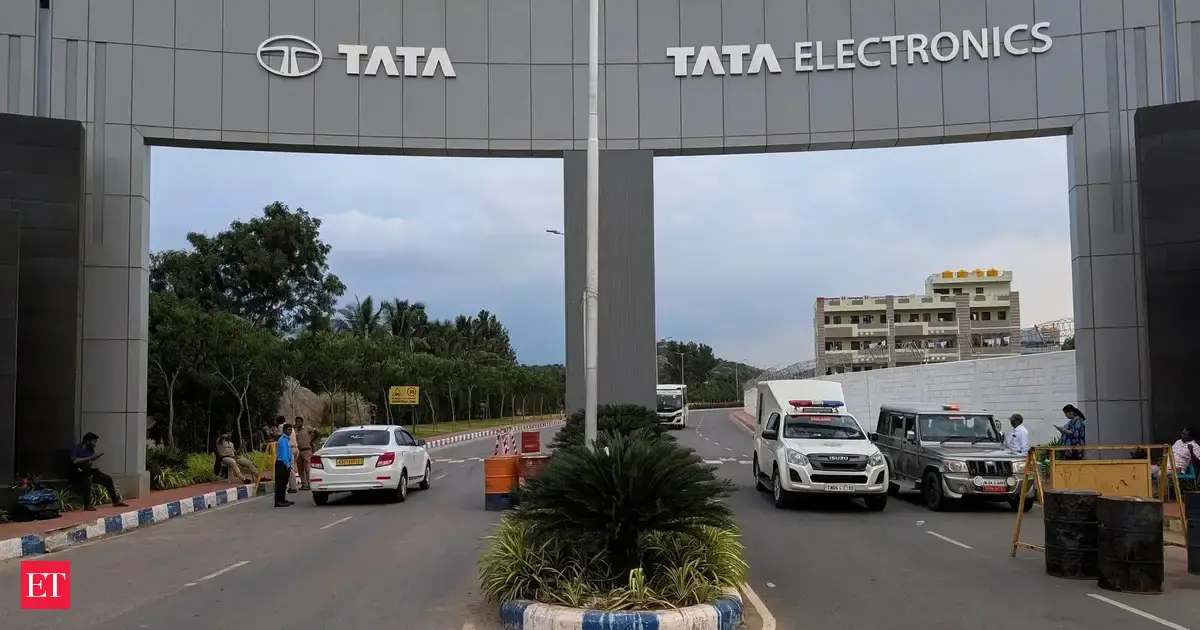
India's Semiconductor Ambition: Tata-ROHM Partnership Signals a Maturing Ecosystem
हिंदी में सुनें
Listen to this article in Hindi
Tata Electronics and ROHM's partnership is a crucial step in India's semiconductor journey, fostering domestic production and reducing reliance on global supply chains.
For decades, the promise of India as a major manufacturing hub has flickered, often overshadowed by cheaper alternatives or logistical hurdles. But the global semiconductor shortage, exacerbated by geopolitical tensions, has injected a renewed urgency into the nation's industrial ambitions. It's no longer just about cost competitiveness; it's about securing a critical component of modern life – the chips that power everything from our cars to our smartphones. This is why the recent partnership between Tata Electronics and Japan's ROHM is more than just another business deal; it's a significant marker in India's quest for semiconductor independence.
India's dependence on foreign sources for semiconductors has been a strategic vulnerability. Securing domestic supply chains is crucial for economic stability and national security. The Tata-ROHM collaboration, focusing on automotive-grade silicon MOSFETs, directly addresses a growing need within the Indian automotive industry. As vehicles become increasingly reliant on electronic components, a local supply of these chips will insulate manufacturers from global disruptions and fluctuating prices. This strengthens the automotive sector and contributes to overall industrial growth.
Beyond the immediate economic benefits, this partnership signifies a maturing of India's technological ecosystem. The government's Production Linked Incentive (PLI) scheme has played a vital role, but incentives alone aren't enough. What's needed is a confluence of capital, expertise, and a supportive regulatory environment. Tata's commitment, combined with ROHM's technological prowess, demonstrates a belief in India's long-term potential.
That said, the reality is a bit more complicated. the path to semiconductor self-sufficiency isn't without its challenges. Establishing a fully integrated semiconductor manufacturing ecosystem is a complex and capital-intensive undertaking. It requires not just fabrication plants (fabs), but also robust assembly and testing facilities (OSAT), a skilled workforce, and a reliable supply of raw materials. Tata's investments in both fab and OSAT facilities are commendable, but scaling up production and achieving global competitiveness will demand sustained effort and innovation.
Furthermore, the semiconductor industry is characterized by rapid technological advancements. India needs to constantly upgrade its capabilities and invest in research and development to stay ahead of the curve. Collaboration with international partners like ROHM is essential for accessing cutting-edge technologies and best practices. But ultimately, India must develop its own indigenous intellectual property and build a strong foundation for future innovation. Understanding RBI monetary policy and its impact on the economy will also be important as the industry develops.
Another risk lies in over-reliance on specific sectors. While the automotive industry is a key driver, India needs to diversify its semiconductor applications across various sectors, including consumer electronics, telecommunications, and healthcare. This will create a more resilient and sustainable semiconductor ecosystem. Diversification can be achieved by investing in advanced skills and building on existing strengths of the Indian economy.
Despite these challenges, the Tata-ROHM partnership offers a glimpse of what's possible. It showcases India's growing attractiveness as a manufacturing destination and its potential to become a major player in the global semiconductor industry. This collaboration can serve as a catalyst for further investments and partnerships, fostering a virtuous cycle of growth and innovation. The long-term success, however, will depend on continued government support, strategic collaborations, and a relentless focus on building a world-class semiconductor ecosystem. This initiative aligns with global trends towards more localized and resilient supply chains, further solidifying its importance. To fully understand the implications, one must consider the broader Indian science and technology landscape.
Ultimately, the success of this venture hinges on execution. Tata Electronics needs to demonstrate its ability to deliver on its promises and meet the stringent quality standards of the automotive industry. If successful, this partnership could pave the way for a new era of manufacturing in India, one characterized by high-tech innovation and global competitiveness.
Editor’s note: This article was independently written by the Scoopliner Editorial Team using publicly available information.