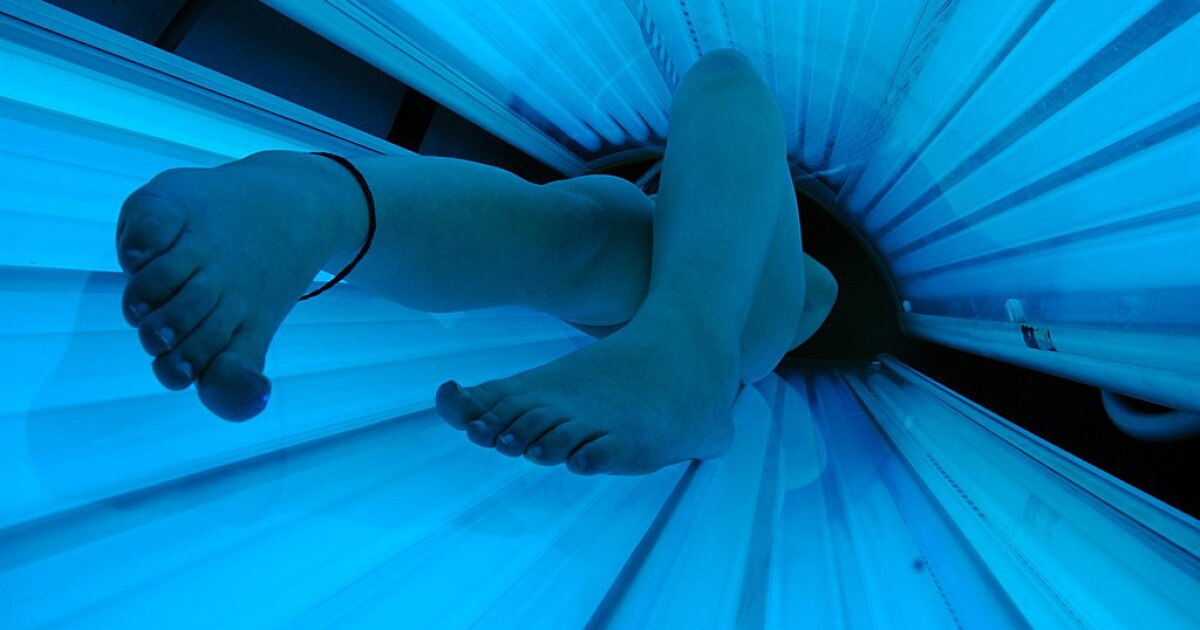
Tanning Beds Cause Widespread DNA Damage, Tripling Melanoma Risk
हिंदी में सुनें
Listen to this article in Hindi
New research shows tanning beds cause significant DNA damage, tripling the risk of melanoma. Learn about the dangers and findings. #tanningbeds #melanoma
New research has confirmed that tanning beds cause significant DNA damage across nearly the entire surface of the skin, leading to an almost threefold increase in the risk of developing melanoma. The findings leave little doubt about the dangers of using these devices.
Scientists at Northwestern Medicine and the University of California, San Francisco, conducted the study to gain a deeper understanding of the link between indoor tanning and the development of skin cancer. Indoor tanning has become increasingly popular, especially among younger people. One study revealed that Florida has more tanning salons than McDonald's restaurants, and data suggests that up to 40% of teenage girls and 20% of adults aged 18 to 29 have used tanning beds in the past year.
The researchers analyzed the medical records of 32,315 patients treated by dermatologists at Northwestern University. Of these, 7,474 reported using tanning beds. Detailed usage information was available for 2,932 patients, forming the study's primary group. A control group of 2,925 individuals with no history of tanning bed use was randomly selected from the remaining 24,841 patients.
The study revealed that melanoma was diagnosed in 5.1% of those who used tanning beds, compared to only 2.1% of those who did not. After adjusting for factors such as age, sex, sunburn history, and family history, the researchers concluded that tanning bed use resulted in a 2.85-fold increase in melanoma risk. Tanning bed users were also more prone to developing skin cancers on areas of the body that are rarely exposed to the sun, such as the lower back and buttocks.
Dr. Pedram Gerami, the study's lead author and a professor of skin cancer research at Northwestern University, explained that while outdoor sun exposure may damage around 20% of the skin, tanning bed users experience similar dangerous mutations across almost their entire skin surface.
Further analysis involved single-cell DNA sequencing of melanocytes, the pigment-producing skin cells where melanoma originates. The team examined cells from three groups: 11 patients with a long history of tanning bed use, nine patients with similar age, sex, and cancer risk factors but no tanning bed use, and skin samples from six cadavers as additional controls.
The DNA sequencing revealed that melanocytes from indoor tanners had almost twice as many mutations as those from the control samples. These mutations were also more likely to be linked to melanoma, and the damage was more prevalent in areas typically shielded from the sun.
Dr. Gerami stated that even in normal skin from tanning bed users, in areas without moles, they found DNA changes that are precursor mutations that predispose to melanoma, a finding that had not been previously demonstrated.
The melanomas that develop from tanning bed use are similar to those found in individuals with a genetic predisposition to skin cancer. The researchers noted that young tanning bed users without a family history of melanoma often develop multiple melanomas on body sites that receive little sun exposure, mirroring the presentation of familial melanoma.
Tanning beds first appeared in the US market in the 1970s and grew into a $3 billion industry by the mid-2010s. In 2013, an estimated 7.8 million women and 1.9 million men in the US used tanning beds, often frequently. The World Health Organization classifies tanning beds as a Group 1 carcinogen, indicating sufficient evidence that they cause cancer in humans, similar to smoking, alcohol, and processed meats.
Dr. Gerami suggests that similar to the warnings on cigarette packs, there should be a public awareness campaign highlighting the risks associated with tanning bed use.
In 2015, the FDA attempted to ban tanning bed use for individuals under 18 and require adults to sign consent forms acknowledging the risks of ultraviolet light exposure. That said, the reality is a bit more complicated. the responsibility for restricting or banning tanning bed services has largely fallen to state and local governments. California was the first state to ban indoor tanning for minors in 2012, and since then, over 40 states have implemented similar bans or restrictions.
Australia, which has the highest rate of melanoma globally, banned tanning beds outright in 2015. Brazil banned cosmetic indoor tanning in 2009 but allows it for some medical conditions. While the tanning bed industry lobby was relatively small in these countries at the time of the bans, powerful lobby groups in Europe and the US continue to fight further restrictions.
The study's researchers conclude that given the high levels of mutational damage in skin cells from tanning bed users, it is difficult to justify marketing claims that the UV radiation in tanning beds is safer than natural sunlight. They also challenge the claim that a pre-vacation tan can protect the skin, stating that tanning bed use increases the mutation burden and melanoma risk, especially in skin cells that receive low cumulative sun damage.
The researchers emphasize that tanning bed exposure should not be considered a safe substitute for natural UV radiation, highlighting the unique ways in which tanning beds alter the mutational landscape of skin cells and contribute to the distinctive presentations of melanoma in this patient population.
Melanoma, the deadliest form of skin cancer, is responsible for an estimated 11,000 deaths in the US each year.
The research findings were published in the journal Science Advances.

:max_bytes(150000):strip_icc()/What-Happens-to-Your-Blood-Sugar-When-You-Eat-Bananas-daf3e534cdb247c2bc9c3d1f396ece17.jpg)


:max_bytes(150000):strip_icc()/healthiest-sandwich-bread-GettyImages-183953960-1a3aeb41759042849186f11e6a279510.jpg)
:max_bytes(150000):strip_icc()/AR-Coca-cola-2x1yellow-bb178bdf660d425bb0af091a138a1cc0.jpg)