Supreme Court Directs Seller Who Concealed Bank Encumbrance In Agreement To Sell To Refund
हिंदी में सुनें
Listen to this article in Hindi
The Supreme Court ruled a seller must refund advance payment after fraudulently concealing a property encumbrance during a sale agreement.
The Supreme Court has ruled that a seller who fraudulently hides existing property encumbrances in a sale agreement must refund any advance payments made by the buyer.
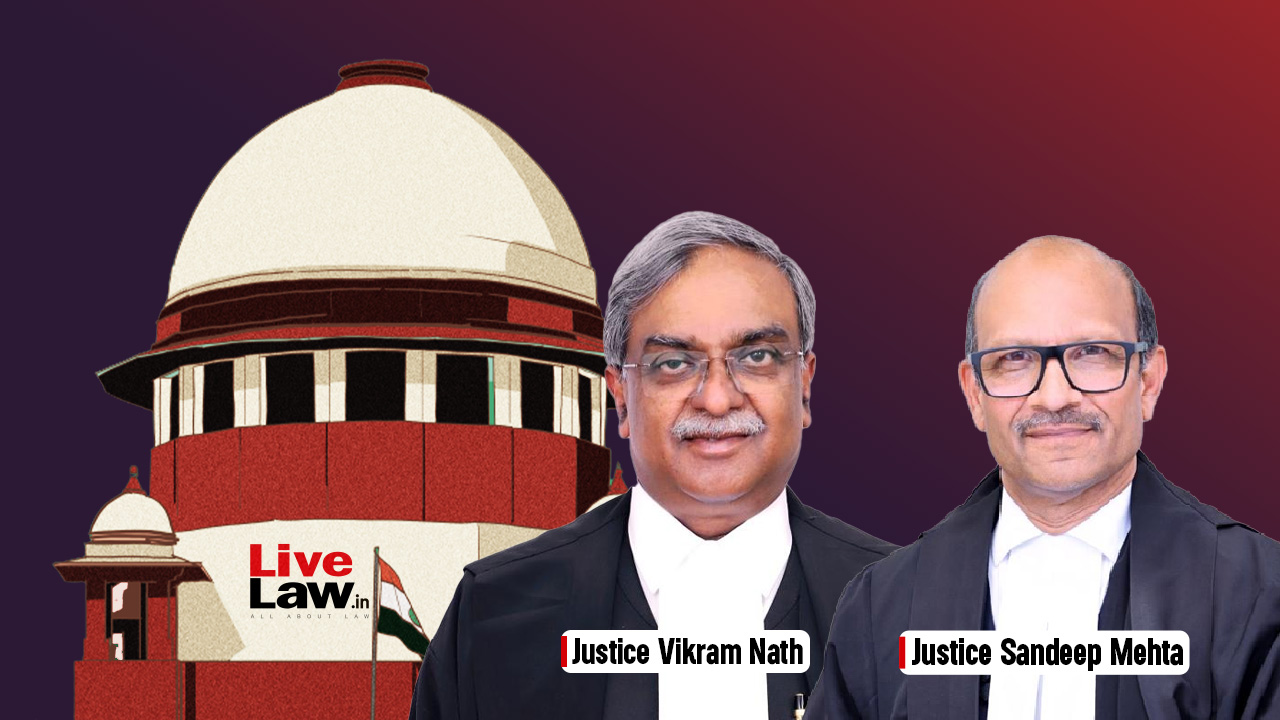
Justices Vikram Nath and Sandeep Mehta presided over the case, ruling in favor of a property purchaser who had been misled. The seller had failed to disclose a pending loan on the property when the agreement was made.
The case originated from a land sale dispute. The seller agreed to sell approximately 77 acres of land to the buyer for ₹4,45,00,000. The buyer paid ₹50,00,000 as an advance on September 10, 2008.
Later, the buyer discovered the land had an equitable mortgage with Federal Bank. This encumbrance had not been disclosed, despite the sale agreement stating the property was free of any such liabilities. The buyer, acting on assurances, made further payments and provided a post-dated cheque for ₹3,55,00,000, which was later dishonored due to insufficient funds.
In 2010, the buyer filed a suit seeking a refund of ₹55,00,000 (including interest), claiming the contract was entered into because of the seller's fraudulent concealment of the mortgage.
The trial court sided with the buyer, ordering the refund. The seller's claim for a set-off was rejected. That said, the reality is a bit more complicated. the High Court reversed this decision, arguing the buyer knew about the encumbrance and had not inspected the original title deeds. The buyer then appealed to the Supreme Court.
The seller argued that the buyer was aware of the loan before the sale agreement.
The Supreme Court, however, noted inconsistencies in the seller's statements. The seller had not responded to the buyer's notice specifically questioning the concealed mortgage. It was only later, in a set-off proceeding, that the seller claimed the buyer knew about the encumbrance from the beginning.
The Court determined the seller's claim of the buyer's prior knowledge was an afterthought, intended to undermine the buyer's claim for a refund.
The Court stated, "the fact that before instituting the suit, the plaintiff-appellant sent a notice to the defendant-respondent specifically mentioning about the concealment of the mortgage, to which the defendant-respondent chose not to furnish any reply, clearly establishes that the case projected in the setoff, that the plaintiff-appellant was aware of the encumbrance on the suit schedule property from the inception, was nothing but an afterthought, devised solely to defeat the plaintiff-appellant's legitimate claim for refund."
The Supreme Court also disagreed with the High Court's disbelief of the buyer's claim that he couldn't examine the title deeds because the seller said they would be available after the sale deed was executed.
The court added, "There was nothing unnatural in the explanation offered by the plaintiff-appellant that he relied on the assurance of the defendant-respondent that the original title deeds would be handed over at the time of execution of the sale deed. It may be noted that the advance amount paid by the plaintiff-appellant was around 10% of the total sale consideration and thus, it cannot be said, unexceptionally, that the plaintiff-appellant would not have entered into the agreement without having a look at the original title deeds.
It is a common practice for landowners to keep original title deeds in the bank lockers for security purposes. Hence, the explanation offered by the plaintiff-appellant for not insisting on the inspection of the original title deeds, at the time of entering into the agreement, was reasonable and justified."
The Court also noted the seller's later reduction of the sale price by Rs 35 lakh, suggesting an attempt to conceal the encumbrance.
Concluding, the court stated, "we are of the firm opinion that the trial Court committed no error whatsoever in decreeing the suit filed by the plaintiff-appellant. The impugned judgment rendered by the High Court does not stand to scrutiny and is, thus, hereby set aside, and the judgment of the trial Court is restored."
Consequently, the Supreme Court allowed the appeal.
The case is titled MOIDEENKUTTY VERSUS ABRAHAM GEORGE, with citation 2025 LiveLaw (SC) 1207.