Supermoon is coming Why the Moon will look bigger in December
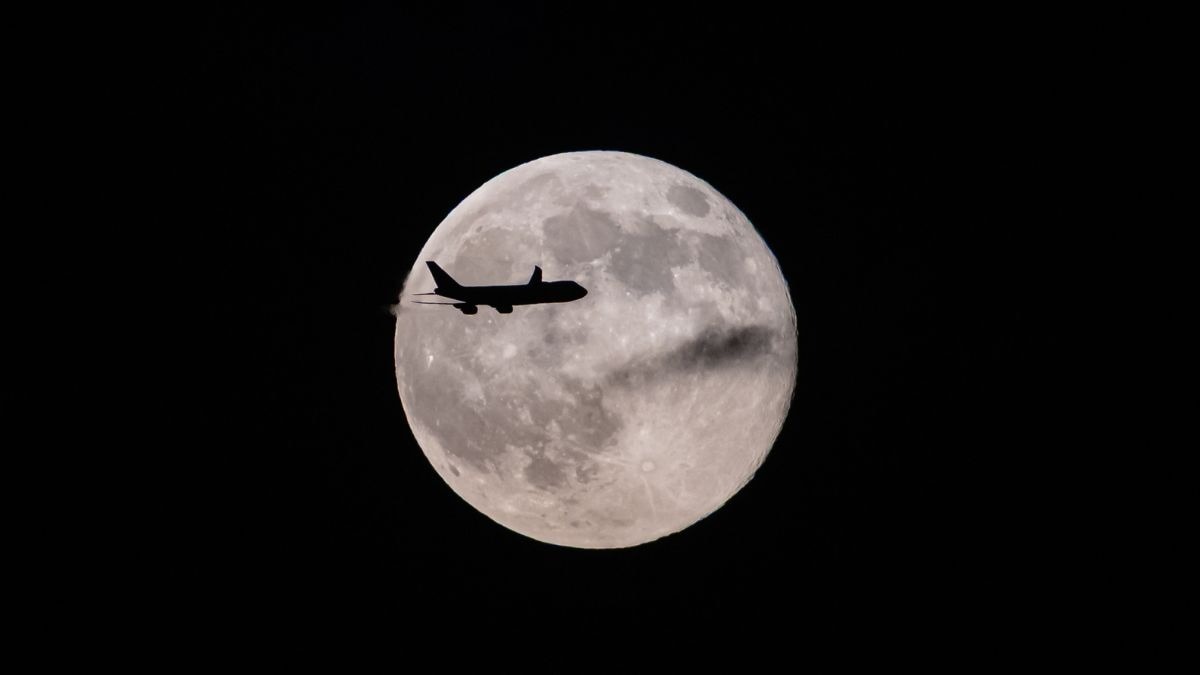
The year's final supermoon rises this week as the majestic Cold Moon. It will be up to 14 per cent larger and 30 per cent brighter than the faintest Moon of the year.
A supermoon is set to illuminate the night skies. This will be the second-biggest and second-brightest supermoon of the year.
The November supermoon, known as the Beaver Moon, was the brightest and biggest of the year.
The December supermoon is the last such astronomical phenomenon of the year. It is known as the Cold Moon because it appears in winter in the Northern Hemisphere.
advertisement
Also called the Long Nights Moon or the Moon Before Yule, it will appear up to 14 per cent larger in diameter and 30 per cent brighter than the faintest Moon of the year, according to NASA.
WHY THE MOON WILL LOOK BIGGER
The supermoon will be 100 per cent illuminated on 5 December at 4:44 am.
The Moon orbits Earth in an elliptical path, which is why the natural satellite appears larger than average when closer to the planet and smaller than usual when farther away.
A supermoon occurs when a full Moon or new Moon reaches its perigee, the point in its elliptical orbit closest to Earth, roughly 363,000 kilometres away.
Although “supermoon” is not an official astronomical term, it is widely used for any full or new Moon that comes within at least 90 per cent of its perigee.
When a full Moon reaches Earth’s perigee, the supermoon is breathtakingly beautiful. The December supermoon will also see a full Moon making its closest approach to Earth.
For the best view, observe the supermoon just after moonrise, when the natural satellite appears largest due to a phenomenon known as the Moon illusion. This happens because the Moon is visible just above the horizon.
The Moon will also appear brighter than usual and cast about 30 per cent more light on Earth than when the natural satellite is at its dimmest.
Since the supermoon rises well before the peak of the Geminids meteor shower, the skies will remain exceptionally dark afterwards.
The supermoon will also cause higher-than-usual tides as the Moon makes its closest approach to Earth.
The Cold Moon carries many traditional names. These include Long Nights Moon (because it rises near the longest night of the year, the winter solstice), Frost Exploding Trees Moon, Hoar Frost Moon, Moon of the Popping Trees, Winter Maker Moon, Little Spirit Moon, and Snow Moon, among others, according to The Old Farmer’s Almanac.
advertisement
The next supermoon will occur in January 2026, with no further supermoons until November 2026.
- Ends

)