Sun Emits Intense Flares, Says NASA. Here's How It May Affect You
According to NASA, radiation is emitted across the entire electromagnetic spectrum, from radio waves at the long wavelength end, through optical emission to x-rays and gamma rays at the short wavelength end
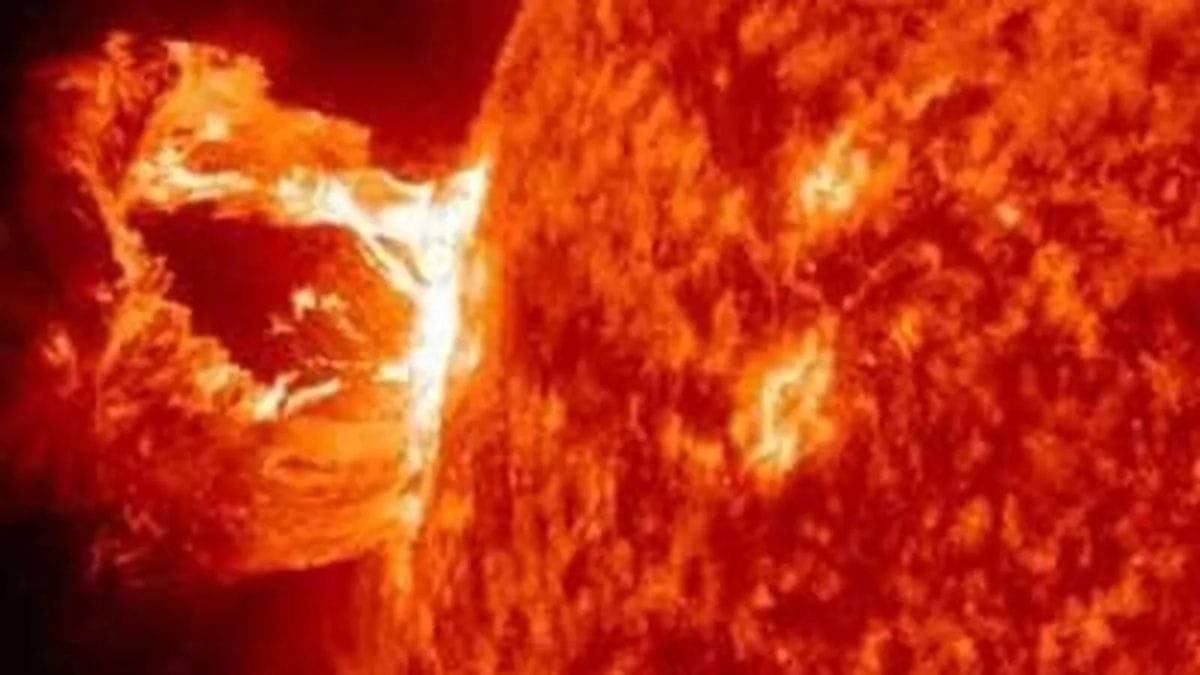
New Delhi: The Sun emitted a strong solar flare on November 30, NASA's Solar Dynamics Observatory stated in a post on Solar Cycle 25. The observatory which watches the Sun closely said that the solar flare peaked at 9:49 p.m. ET on that day. It has also captured an image of the event.
NASA has classified this flare as an X1.9 flare. X-class denotes the most intense flares, while the number provides more information about its strength, it added.
“To see how such space weather may affect Earth, please visit NOAA’s Space Weather Prediction Center https://spaceweather.gov/, the U.S. government’s official source for space weather forecasts, watches, warnings, and alerts. NASA works as a research arm of the nation’s space weather effort. NASA observes the Sun and our space environment constantly with a fleet of spacecraft that study everything from the Sun’s activity to the solar atmosphere, and to the particles and magnetic fields in the space surrounding Earth.” the observatory stated.
Earlier on November 14, the Sun emitted a strong flare, peaking at 3:30 a.m. ET. The flare was classified as an X4.0 flare, NASA's Solar Dynamics Observatory stated.
Advertisement
What Is Solar Flare?
The observatory described that solar flares are powerful bursts of energy. These flares and solar eruptions can impact radio communications, electric power grids, navigation signals, and can also pose risks to spacecraft and astronauts. According to NASA, a solar flare takes place when magnetic energy that has built up in the solar atmosphere is released all of a sudden. Radiation is emitted across the entire electromagnetic spectrum, from radio waves at the long wavelength end, through optical emission to x-rays and gamma rays at the short wavelength end, NASA described. The amount of energy released is the equivalent of millions of 100-megaton hydrogen bombs exploding at the same time, it said.
Advertisement
The energy released during a flare is usually 1027 ergs per second. Large flares can emit up to 1032 ergs of energy. This energy is ten million times greater than the energy released from a volcanic explosion. However, it is less than one-tenth of the total energy emitted by the Sun every second, NASA said.