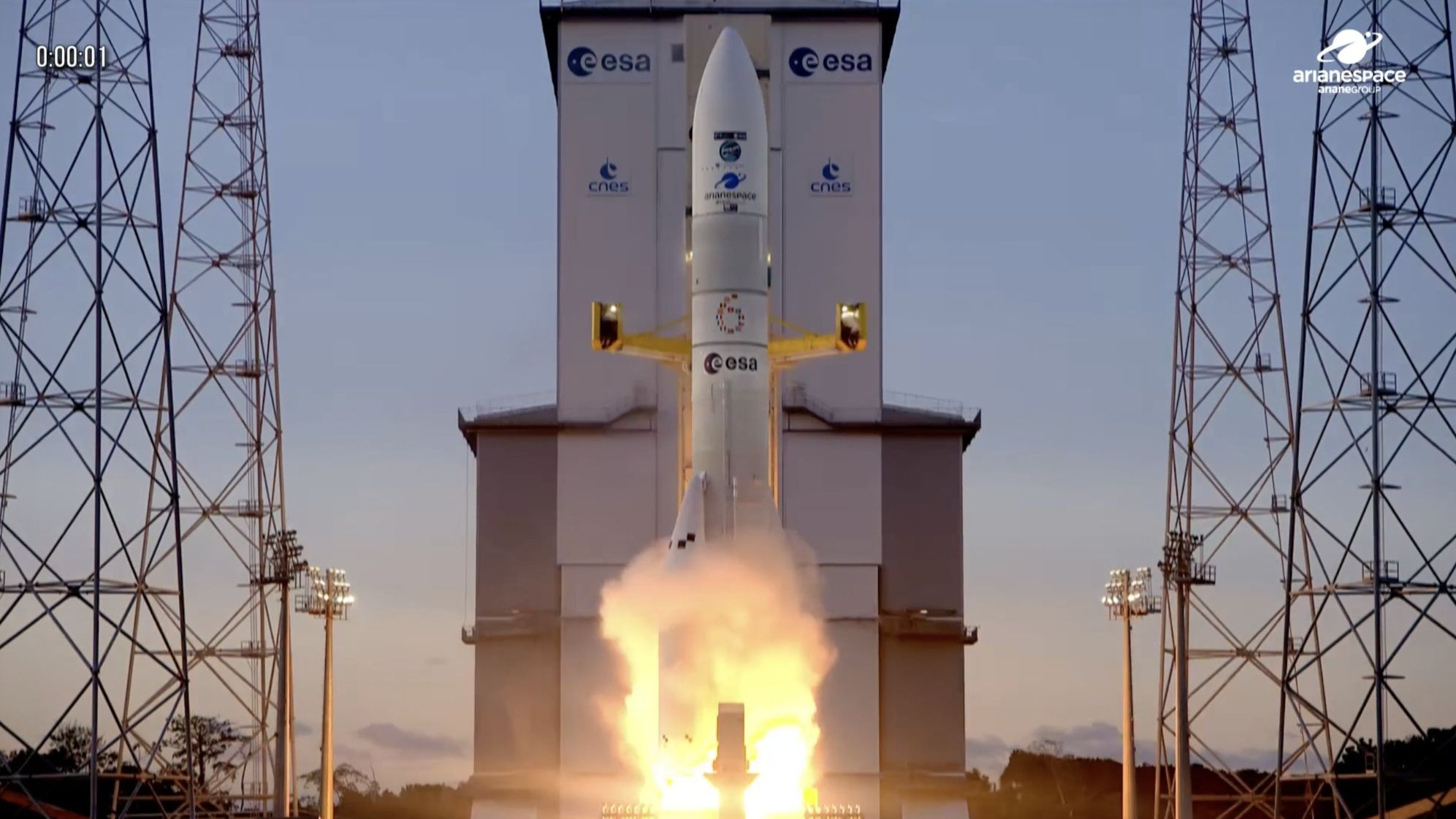
Stay up late tonight to watch Europe's Ariane 6 rocket launch its 1st pair of Galileo navigation satellites

Stay up late tonight to watch Europe's Ariane 6 rocket launch its 1st pair of Galileo navigation satellites

Updated on 17 Dec 2025 Category: Science • Author: Scoopliner Editorial Team
हिंदी में सुनें

Listen to this article in Hindi

गति:

Europe's Ariane 6 rocket is scheduled to launch its first Galileo navigation satellites from French Guiana. Watch the launch live online tonight!


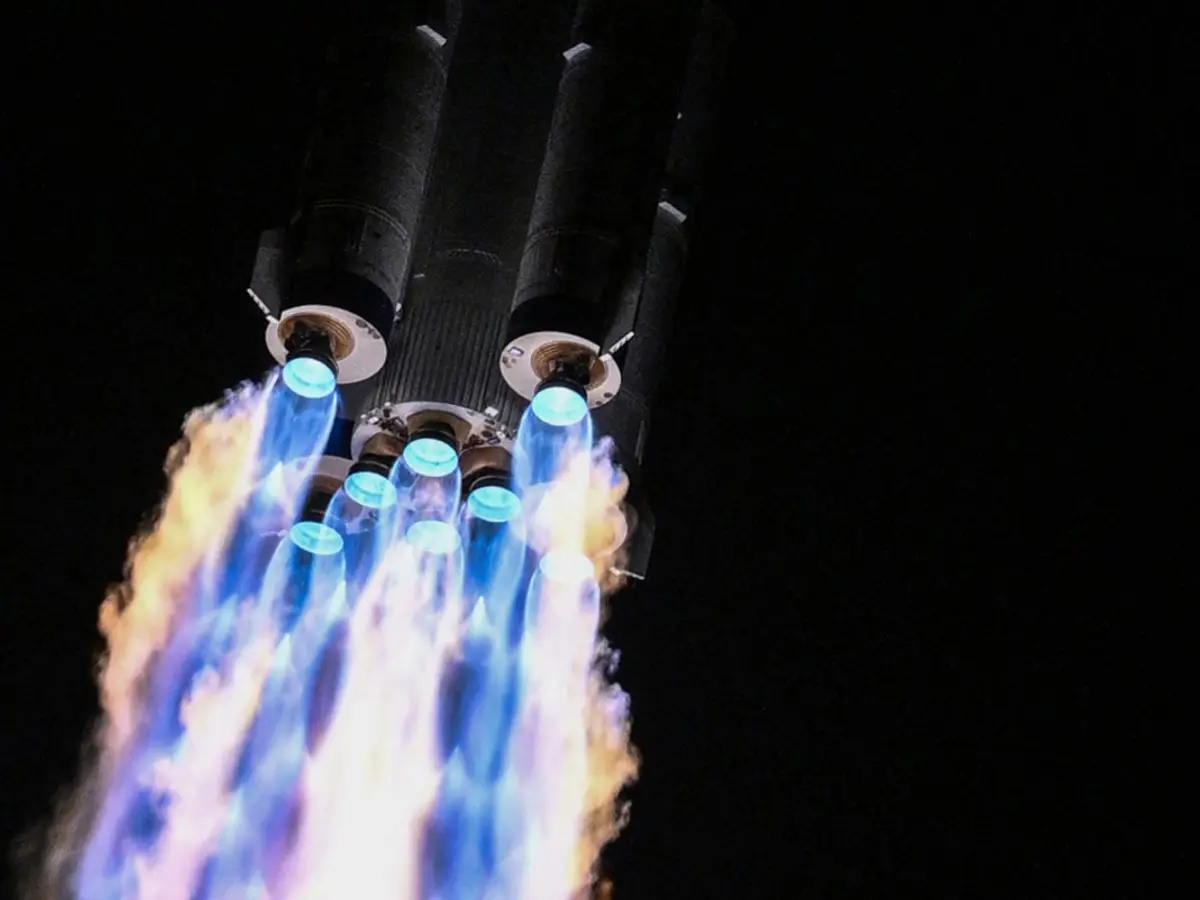
The Ariane 6, Europe's new heavy-lift rocket, is preparing for its fifth flight, a mission that will see the launch of its first pair of Galileo navigation satellites.

The launch, designated Galileo Launch 14 (L14), is scheduled for Wednesday, December 17, at 12:01 a.m. EST (0501 GMT). The event will take place at Europe's Spaceport in Kourou, French Guiana (2:01 a.m. local time).

These two satellites will join the 26 already active in the Galileo constellation, which serves as Europe's equivalent to the United States' Global Positioning System (GPS). Arianespace, the company that operates the Ariane 6, will provide a live broadcast of the launch, which will also be streamed on Space.com starting at 11:35 p.m. EST tonight, December 16 (0435 GMT on Dec. 17).

Following liftoff, the L14 satellites are slated to deploy approximately 3 hours and 20 minutes later. Over the subsequent three days, they will unfold their solar arrays and undergo critical systems checks. After this initial phase, the satellites will enter a four-month period of drifting and positioning before settling into their final orbital positions and commencing operations.

The Galileo constellation orbits Earth at an altitude of 14,429 miles (23,222 kilometers). Previously, most of the 1,610-pound (730 kilograms) Galileo satellites were launched using either the Ariane 5, which was retired in 2023, or the Russian-built Soyuz rocket. That said, the reality is a bit more complicated. Europe ended its reliance on the Soyuz following Russia's invasion of Ukraine in February 2022.

While Europe briefly turned to SpaceX's Falcon 9 to launch Galileo satellites after the invasion of Ukraine, the now-operational Ariane 6 allows the continent to independently handle these missions without needing to depend on external launch providers.
Source: Space   •   17 Dec 2025

Related Articles

Study Warns of Potential Satellite Loss

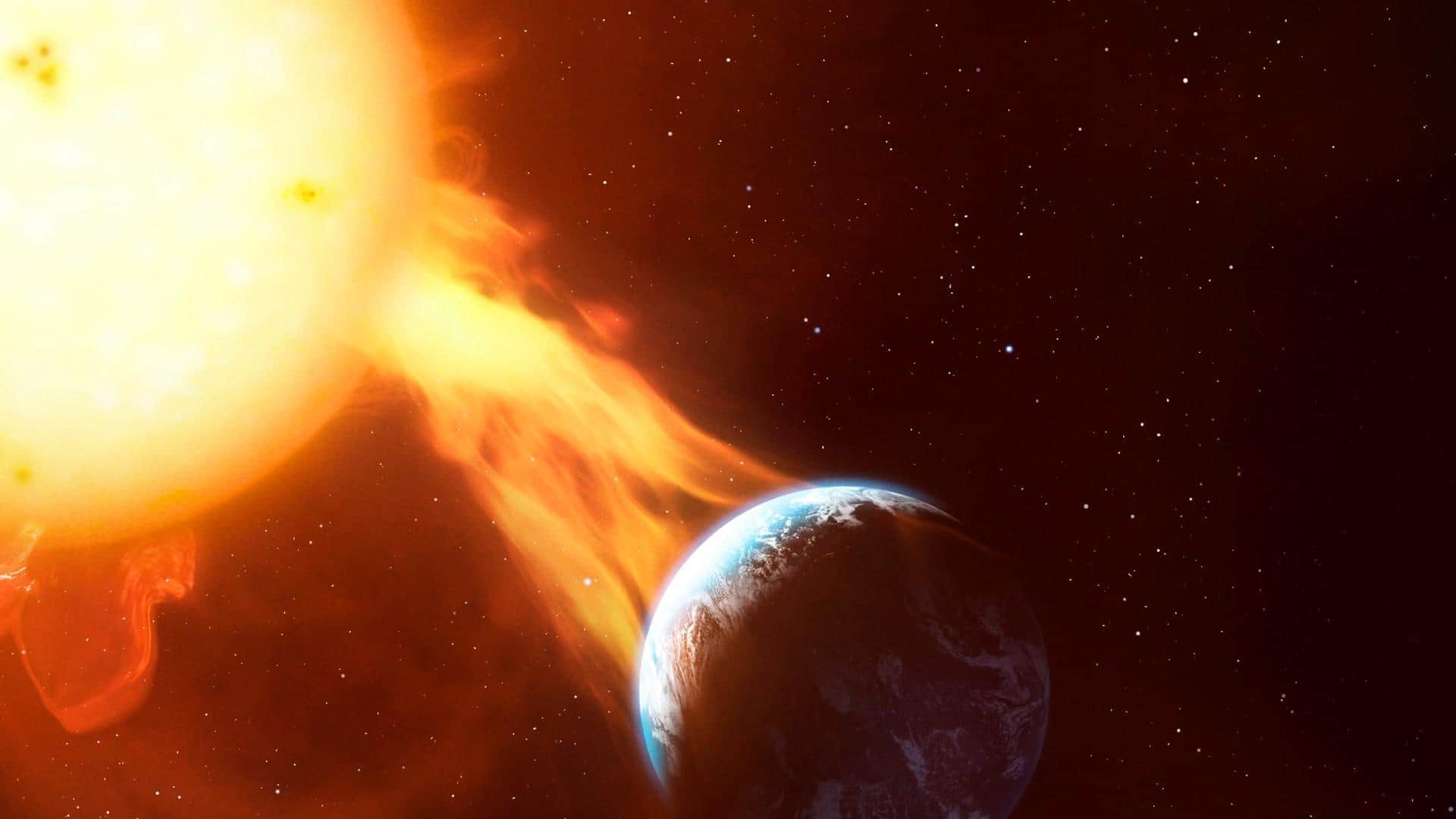
A new study warns that a solar storm could trigger satellite collisions in low-Earth orbit, potentially leading to a catastrophic loss of …

Source: NewsBytes | 17 Dec 2025
New images show that the Moon "broke apart" billions of years ago

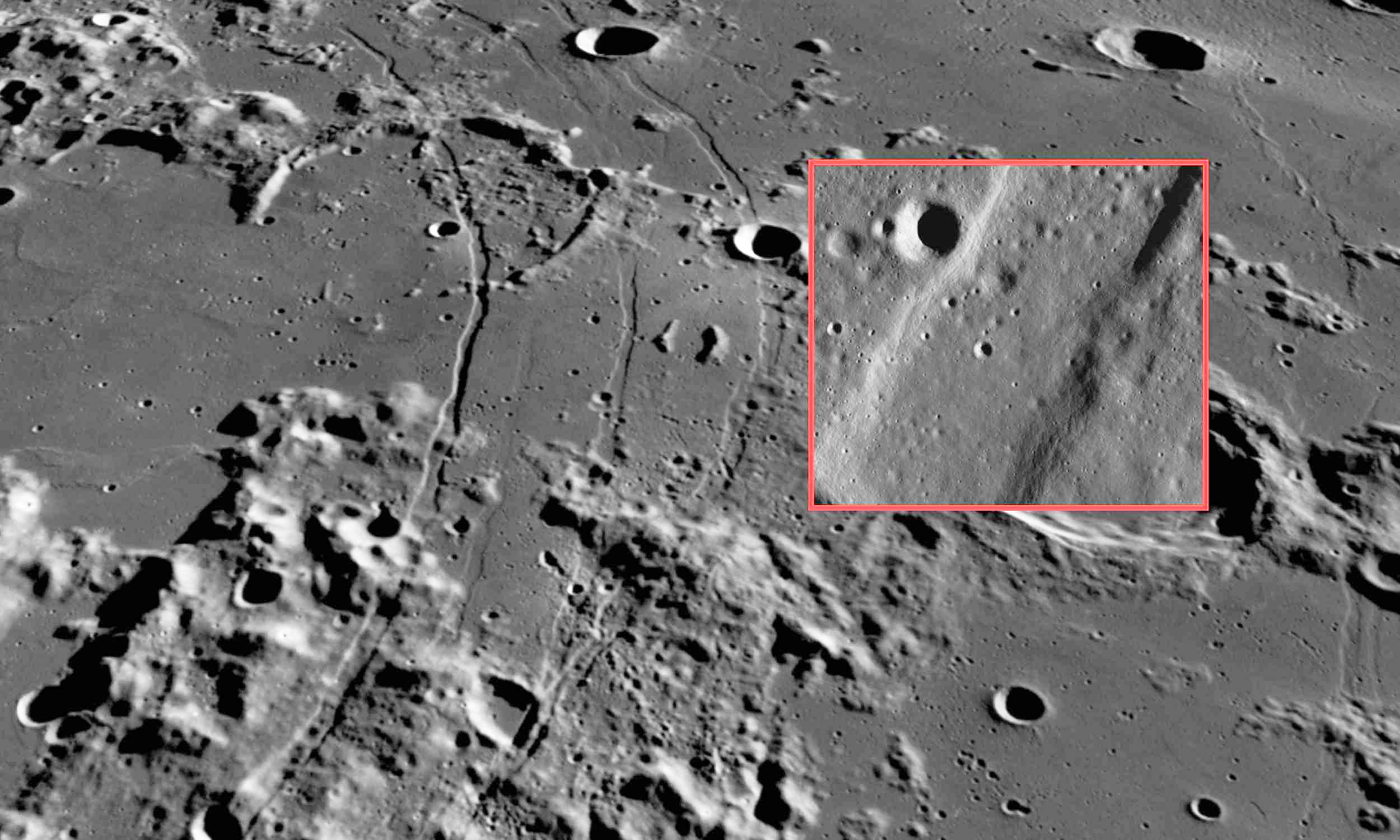
New images from NASA's Lunar Reconnaissance Orbiter reveal massive cracks, or grabens, showing how the Moon's crust was pulled apart long ago.

Source: Earth.com | 17 Dec 2025
NASA's MAVEN spacecraft is still silent at Mars - and apparently is spinning, too

NASA's MAVEN spacecraft, which studies the Martian atmosphere, remains unresponsive. Data suggests it may be rotating unexpectedly and its trajectory may have …

Source: Space | 17 Dec 2025
Space X satellite and Chinese rocket had a disturbing close encounter as Earth's orbit gets overcrowded

A close encounter between a SpaceX satellite and a Chinese Kinetica rocket highlights growing concerns about overcrowding in Earth's orbit and potential …

Source: WION | 17 Dec 2025
What lies beneath Bermuda? Scientists find giant mysterious subsurface layer below seafloor

Scientists have discovered a massive, mysterious layer beneath the seafloor near Bermuda, prompting new questions about the Earth's composition.

Source: Moneycontrol | 16 Dec 2025
Near Miss: Chinese Satellite Encounters SpaceX Starlink in Close Call

A Chinese satellite and a SpaceX Starlink narrowly avoided a collision in orbit, raising concerns about satellite data sharing and space traffic …

Source: India Today | 16 Dec 2025
← Back to Home

QR Code Generator