Red Giant Stars' Elemental Ejection: A Cosmic Puzzle Deepens
हिंदी में सुनें
Listen to this article in Hindi
New research challenges the long-held belief that starlight alone propels dust and essential elements from red giant stars, revealing a more complex process.
The universe is a vast recycling plant, constantly churning out elements that form stars, planets, and even life itself. A crucial part of this process is the dispersal of heavy elements, like carbon, oxygen, and nitrogen, from aging stars into interstellar space. These elements, forged in the nuclear furnaces of stars, are the building blocks of new cosmic structures. For decades, astronomers believed they understood a primary mechanism for this dispersal: starlight pushing dust grains outwards from stars. That said, the reality is a bit more complicated. recent research has thrown this understanding into question, suggesting that the story of how these elements reach the cosmos is far more complex than previously thought.
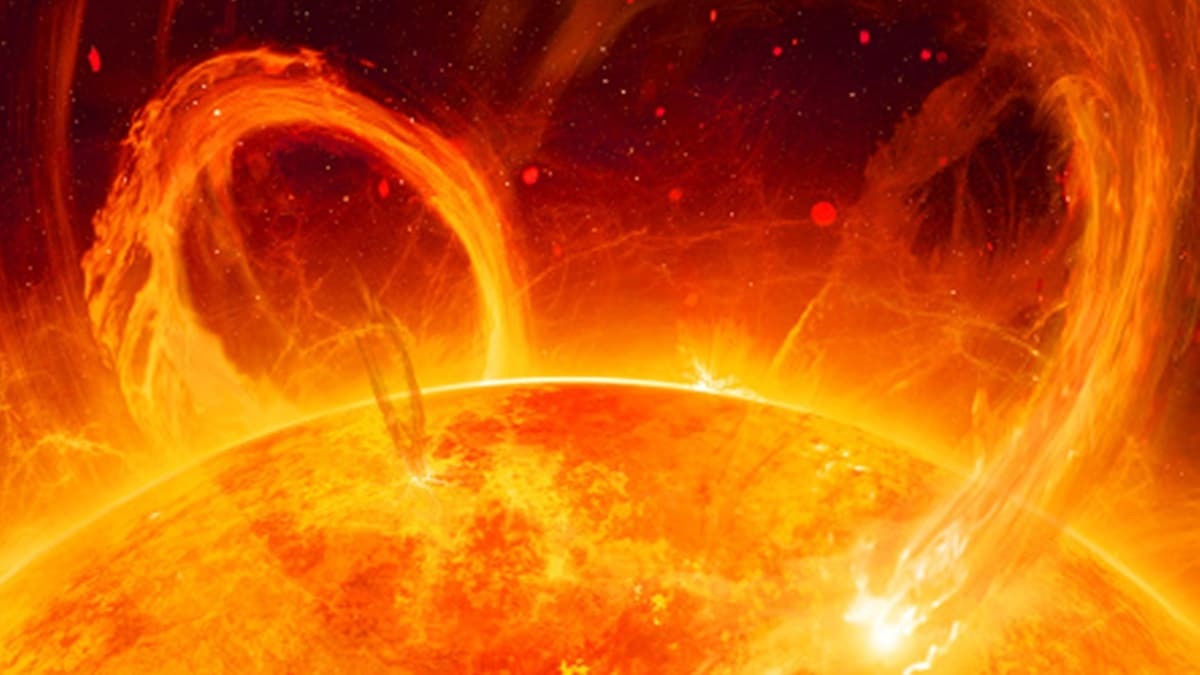
At the heart of this revised understanding are red giant stars – elderly stars that have exhausted the hydrogen fuel in their cores and swelled to enormous sizes. These stars are prolific producers of dust and heavy elements, shedding vast amounts of material into their surrounding environments. Astronomers have long assumed that the intense radiation emitted by these stars, in the form of starlight, provides the necessary force to propel dust grains – and the elements they carry – away from the star. The idea was simple: photons of light collide with dust particles, transferring momentum and pushing them outwards, like a gentle cosmic breeze. This process, known as radiation pressure, seemed to explain how these crucial elements escaped the gravitational pull of the star and seeded the interstellar medium.
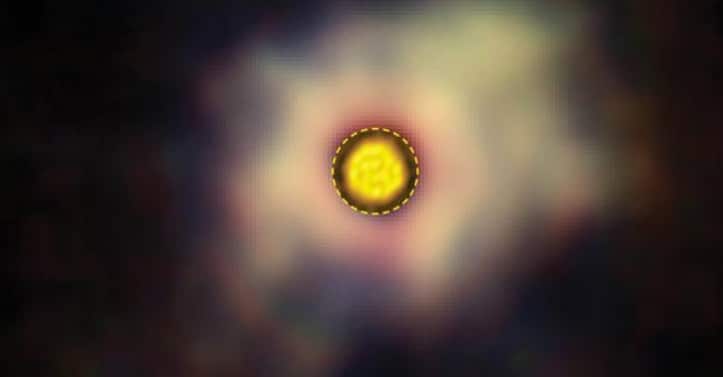
That said, the reality is a bit more complicated. a team of astronomers from Chalmers University of Technology in Sweden decided to take a closer look at this seemingly straightforward process. They focused their attention on R Doradus, a nearby red giant star that is actively shedding gas and dust. Using the Very Large Telescope's SPHERE instrument, they made detailed observations of the dust grains surrounding the star. What they found challenged the conventional wisdom. The dust grains, it turned out, were too small to be effectively propelled by starlight alone. Computer simulations confirmed these findings, demonstrating that radiation pressure simply lacked the oomph to drive the observed stellar winds. This discovery, published in the journal *Astronomy & Astrophysics*, has significant implications for our understanding of cosmic chemical evolution.
So, if starlight isn't the primary driver, what is? The answer, according to the researchers, likely lies in alternative mechanisms that are still being explored. One possibility is stellar pulsations. Red giant stars are known to pulsate, expanding and contracting rhythmically. These pulsations could generate shock waves that propagate through the star's atmosphere, providing the necessary push to launch dust grains into space. Another potential mechanism involves convective bubbles. Hot gas rises from the star's interior, forming large bubbles that could carry dust particles outwards. A third possibility is dynamic dust formation, where the process of dust grain formation itself might contribute to the ejection process. For more on this, see this science basics explainer on star formation.
These alternative mechanisms are not mutually exclusive, and it's likely that a combination of factors is at play. Further research is needed to fully understand the complex interplay of forces that drive stellar winds in red giant stars. The implications of this research extend beyond just understanding how elements are dispersed. Stellar winds play a crucial role in shaping the evolution of stars and the formation of planetary systems. By understanding the forces that drive these winds, we can gain a better understanding of the life cycle of stars and the conditions that lead to the formation of planets, and ultimately, the emergence of life. You can learn more about related field context on planet formation here.
This research highlights the dynamic nature of scientific inquiry. What was once considered a well-established explanation has now been called into question, opening up new avenues for exploration and discovery. While the study sheds light on the limitations of radiation pressure, it doesn't completely negate its role. Starlight likely still plays a part in shaping the distribution of dust, but it's not the dominant force. The exact contribution of each mechanism remains an open question, and future research will undoubtedly focus on disentangling these complex processes. The findings serve as a reminder that our understanding of the universe is constantly evolving, and that even the most fundamental assumptions are subject to revision in light of new evidence. This research has the potential to reshape models of star evolution and cosmic chemical distribution, providing fresh insights into the journey of atoms essential for life. It also underscores the importance of continued observation and theoretical modeling in unraveling the mysteries of the cosmos.
Editor’s note: This article was independently written by the Scoopliner Editorial Team using publicly available information.