South Africa's Illegal Mining Crackdown Exposes Systemic Weakness and Regional Instability
हिंदी में सुनें
Listen to this article in Hindi
Crackdown on illegal mining in South Africa reveals deeper issues of security, immigration, and resource control impacting regional stability.
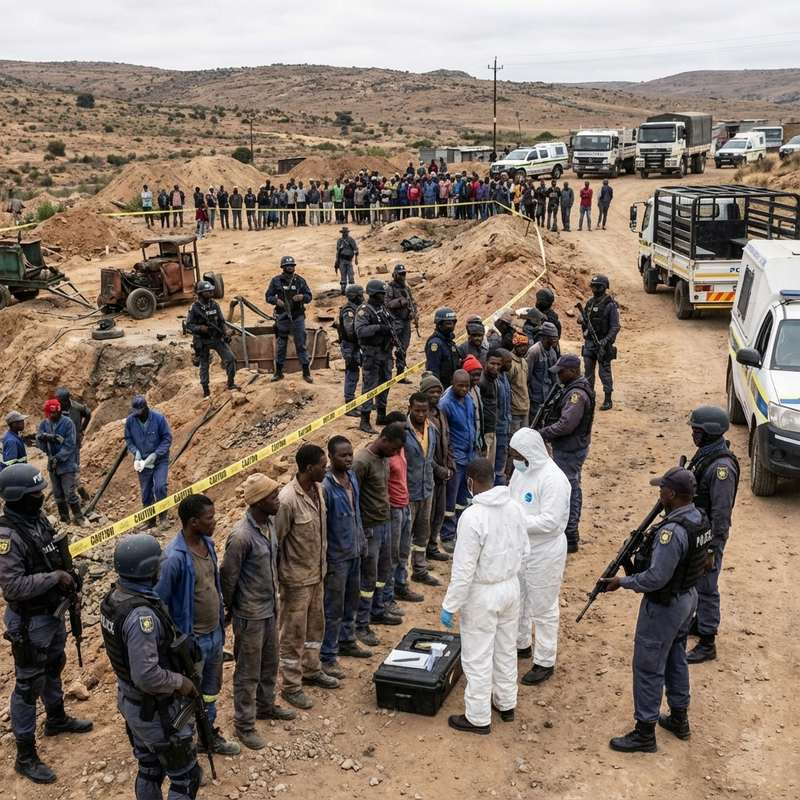
South Africa's struggle to contain illegal mining operations transcends simple law enforcement. Recent arrests following a mass shooting near Johannesburg, while ostensibly addressing a specific crime, underscore a far more complex web of socioeconomic vulnerabilities, porous borders, and the enduring allure of illicit resource extraction that destabilizes the region. The situation highlights not only South Africa’s internal challenges, but also the interconnected security concerns within Southern Africa.
The presence of foreign nationals, particularly from Lesotho and Mozambique, in these illegal mining operations points to the economic disparities and lack of opportunities within the Southern African Development Community (SADC). Lesotho, a landlocked nation entirely surrounded by South Africa, faces chronic unemployment and poverty, pushing its citizens to seek livelihoods across the border, often in precarious and unregulated sectors like illegal mining. Mozambique, recovering from years of conflict and struggling with its own resource management issues, similarly sees its citizens migrating south in search of economic survival. This creates a complex dynamic where South Africa, despite its own economic woes, becomes a magnet for regional migration, straining its resources and exacerbating internal tensions. The discovery of weapons, including AK-47 rifles, further escalates the security risk, suggesting links to organized crime syndicates operating across national borders.
The involvement of a South African mine employee in harboring illegal immigrants is particularly telling. It suggests a level of complicity within the formal mining sector, driven perhaps by the lure of cheap labor or the desire to circumvent regulations. This internal corruption undermines efforts to combat illegal mining and highlights the need for greater oversight and accountability within mining companies. The fact that Sibanye-Stillwater, a major player in the region, operates in areas plagued by illegal mining also brings into question the effectiveness of existing security measures and corporate social responsibility initiatives. While large mining companies pour money into security, they still find themselves unable to police vast areas surrounding their mining operations.
The strategic implications of this situation extend beyond South Africa’s borders. Uncontrolled illegal mining fuels instability, provides funding for criminal networks, and undermines the rule of law. It also exacerbates existing social tensions related to inequality, immigration, and access to resources. If left unchecked, this could contribute to a broader erosion of governance and security within the SADC region, potentially attracting further illicit activities, including human trafficking and arms smuggling. The global demand for precious metals and minerals, often driving the illegal mining trade, inadvertently contributes to this cycle of instability. Addressing this requires a multi-faceted approach involving strengthened border controls, improved regional cooperation on law enforcement, and efforts to address the underlying socioeconomic factors that drive individuals into illegal mining. Furthermore, international pressure on responsible sourcing and supply chain transparency is crucial to curtailing the demand for illegally mined resources. South Africa's domestic politics and economic challenges influence its foreign policy and regional leadership capacity.
Constraints on addressing this issue include limited resources, bureaucratic inefficiencies, and the deeply entrenched nature of criminal networks. South Africa's police force is often stretched thin, and its capacity to effectively patrol vast mining areas is limited. Corruption within the police force and other government agencies further hampers efforts to combat illegal mining. Furthermore, addressing the underlying socioeconomic factors requires long-term investment in education, job creation, and social development, which may be difficult to sustain in the face of competing priorities and fiscal constraints. Ultimately, curbing illegal mining will require a concerted and sustained effort involving government, mining companies, communities, and regional partners. Only through a comprehensive and coordinated approach can South Africa hope to address this complex challenge and mitigate its destabilizing effects on the region. Understanding South Africa's world affairs background is crucial to contextualizing these challenges.
Editor’s note: This article was independently written by the Scoopliner Editorial Team using publicly available information.