Infrastructure Vulnerabilities: The Unseen Threat to Global Supply Chains and Water Security
हिंदी में सुनें
Listen to this article in Hindi
Aging infrastructure, exacerbated by climate change, poses a growing threat to global supply chains and water security, demanding renewed investment and risk assessment.
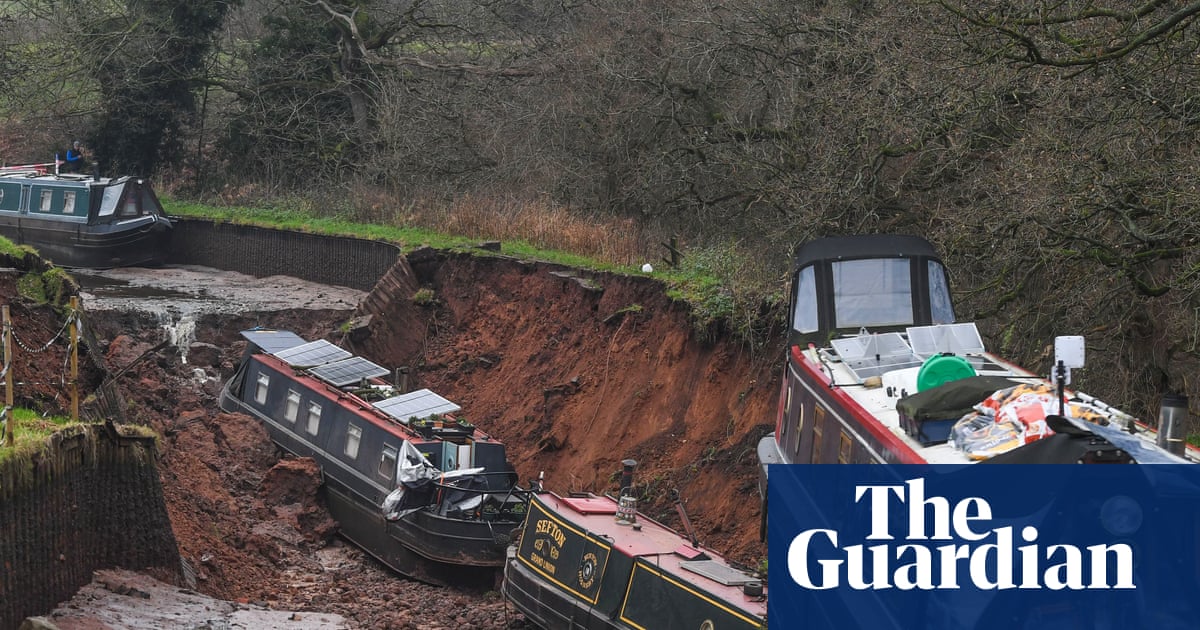
The stability of global commerce and domestic economies increasingly hinges on the reliable operation of often-overlooked infrastructure networks. While geopolitical tensions and trade wars dominate headlines, a more insidious threat lurks beneath the surface: the fragility of aging infrastructure, exacerbated by climate change and underinvestment. A recent canal breach in the UK, while seemingly localized, serves as a stark reminder of the systemic vulnerabilities present within interconnected logistical and resource management systems worldwide.
Canals, often dating back centuries, represent critical arteries for both transportation and water management. Their failure, even on a relatively small scale, highlights the cascading consequences that can ripple through supply chains and local economies. The disruption to navigation impacts businesses reliant on canal transport, while the loss of water can affect agriculture, industry, and even residential water supplies. This seemingly isolated incident in Shropshire underscores a global problem: the deferred maintenance and inadequate resilience planning for essential infrastructure.
The implications extend far beyond the immediate geographical area. The just-in-time delivery systems that underpin modern manufacturing and retail are predicated on predictable and reliable transportation. A disruption, whether caused by a geopolitical event or infrastructure failure, exposes the inherent fragility of these systems. The cost of such disruptions can be substantial, leading to production delays, increased transportation costs, and ultimately, higher prices for consumers. Furthermore, the canal breach emphasizes the growing threat to water security. As climate change intensifies, extreme weather events – from droughts to floods – place increasing strain on existing water infrastructure. Aging canals and reservoirs, designed for different climatic conditions, are particularly vulnerable to these stresses. The potential for widespread water shortages, impacting agriculture, industry, and public health, is a significant and underappreciated risk.
The political dynamics surrounding infrastructure investment further complicate the issue. Many countries face budgetary constraints, forcing difficult choices between competing priorities. Infrastructure projects, often requiring significant upfront investment and yielding long-term benefits, can be politically less appealing than more immediate social programs or defense spending. This short-sightedness can lead to a cycle of neglect, where deferred maintenance ultimately results in more costly and disruptive failures. This neglect is happening at a time when extreme weather events are becoming more frequent and intense, further stressing already overburdened systems. Some governments are actively prioritizing infrastructure upgrades as a matter of national security and economic competitiveness. China's Belt and Road Initiative, for example, represents a massive investment in infrastructure development across Asia, Africa, and Europe, albeit with its own set of geopolitical implications. That said, the reality is a bit more complicated. many developed nations are struggling to maintain their existing infrastructure, let alone invest in upgrades and expansions. The UK, for example, has been grappling with aging infrastructure across various sectors, from transportation to energy, requiring difficult choices regarding resource allocation. Understanding China’s global position requires understanding its infrastructure ambitions.
The path forward requires a multi-faceted approach. First, governments and private sector stakeholders must prioritize infrastructure investment, focusing on both maintenance and modernization. This includes incorporating climate change projections into infrastructure design and planning to ensure resilience against future extreme weather events. Second, improved risk assessment and monitoring are crucial for identifying and addressing potential vulnerabilities before they lead to catastrophic failures. This requires investing in advanced sensing technologies and data analytics to monitor the condition of infrastructure assets and predict potential problems. Finally, international cooperation is essential for sharing best practices and coordinating efforts to address global infrastructure challenges. This includes developing common standards for infrastructure resilience and promoting sustainable financing mechanisms for infrastructure investment. The long-term health of the global economy depends on the reliability of its underlying infrastructure. Ignoring this critical vulnerability will only lead to more frequent and costly disruptions in the future.
The incident in Shropshire serves as a wake-up call. While the immediate focus is on repairing the canal and assisting those affected, the larger lesson is clear: infrastructure vulnerabilities are a growing threat to global supply chains, water security, and economic stability. Addressing this challenge requires a renewed commitment to investment, risk assessment, and international cooperation.
Editor’s note: This article was independently written by the Scoopliner Editorial Team using publicly available information.