Father and Son Reach Accord on Sheep Farming Overhaul
हिंदी में सुनें
Listen to this article in Hindi
A family farm in Aberdeenshire embraces change as a father and son find common ground modernizing their sheep operation with new tech and breeds.
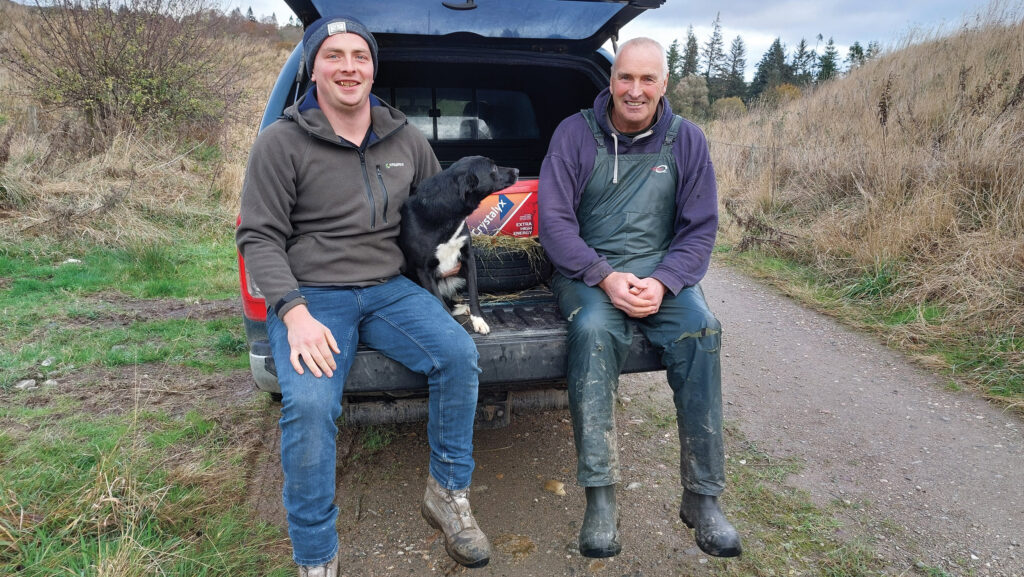
On a family farm near Huntly, Aberdeenshire, a generational transition is underway, marked by both challenges and progress. For Ross Adam, introducing updated technology, investing in a quad bike, and switching out a sheep breed might seem like straightforward choices. That said, the reality is a bit more complicated. these decisions required navigating the complexities of differing opinions with his father, Ian.
The Adams have discovered that modernizing their farm, Newton Turtory, requires a delicate balance. They aim to keep the operation competitive while maintaining strong family relationships. The result of their combined efforts is improved efficiency and a lighter workload for both generations.
Their streamlined approach has also created opportunities to expand their land holdings. Over the past five years, the Adams have more than doubled their sheep numbers and see potential for further growth. "We are a typical father and son," Ross admits, "we don’t communicate as much as we should, nor do we always create a formal plan. Opportunities arise, and we adapt. We do have disagreements, but we always resolve them."
Newton Turtory, one of two family-owned farms, comprises 89 hectares near Huntly. Previously, the farm managed 220 Scotch Mules bred with a Suffolk tup, selling lambs starting in May and purchasing store lambs for finishing. The family also cultivated malting barley, potatoes, and turnips, along with finishing store cattle. By Ian's account, the operation demanded considerable manual labor.
Ian acknowledges that his son's generation has different priorities, emphasizing efficiency, leisure time, and diligent record-keeping. For Ross, acquiring a quad bike four years ago proved transformative. According to Ian, Ross wanted to avoid walking everywhere and using the tractor, which damaged wet fields. The quad bike now enables him to check on 400 ewes in just 15 minutes.
Inspired by shearing experiences at sheep stations in Australia and New Zealand, Ross sought ways to manage sheep with fewer employees and implement a more extensive system. Closer to home, lambing convinced Ross that an easy-lambing breed suited to outdoor conditions, while retaining strong maternal instincts, was the answer. He also preferred a lighter breed that could thrive on a forage-based diet.
"I started by buying some sheep," Ross explained. "We needed more animals, and I found 60 in-lamb ewes for sale on Facebook – Cheviots and Cheviot crosses."
These Cheviots proved highly productive, outlasting the Mules, experiencing fewer udder problems, and requiring minimal attention. Ross saw this as a path to simplifying his work. Ian appreciates the need to balance sheep management with minimal intervention, prioritizing welfare and health. The goal is to breed for maternal instinct, selecting sheep that manage independently.
"We want sheep that can be handled easily, since we lamb in paddocks and then move them. Reducing the stress of catching lambs is important," Ian notes. As grazing land became available on neighboring farms, Ross expanded both flocks. He now uses Innovis genetics for terminal sires and to breed his own efficient ewe replacements, aiming to phase out the Mules.
By flushing ewes and using vasectomized teasers before breeding, lambing is now condensed into two three-week periods. Consequently, 95% of ewes lamb within the first two weeks, fitting Ross's schedule for off-farm contract work starting in May. This year, employing a lambing student for four weeks was another major change, allowing Ross to catch up, prepare for the next lambing group, and rest. Cameras in the shed now allow them to monitor the final group indoors.
As ewe numbers increased, cattle and potatoes were phased out. The family found that buying stores in the autumn and finishing them in the spring yielded tight margins and required extensive manual labor in inadequate sheds. Malting barley has been replaced with 20 hectares of feed barley, either sold or used to finish their own lambs. Ross prefers eliminating barley altogether and collaborating with arable farmers to graze winter forage crops. Ian disagrees, emphasizing the benefits of barley in the rotation.
"Soils benefit from the rooting structure," Ian says. "We have started growing fodder beet successfully, and it is easier to keep free of weeds than turnips." The beet, stubble turnips, and swede crops are grazed from December to March; herbs are planned for the future. Ian is interested in the anthelmintic properties of chicory. "We don’t have a worm problem, but neither do we have any clean grazing. We have to manage the worm burden, and chicory could reduce our reliance on dosing."
According to Ian, concentrate feed has been reduced, with only 17 tonnes of an 18% protein ewe roll fed last year, the least amount yet, given to Mules with twins and triplets. The Cheviot-based flock, grazing forage crops, went straight onto grass without needing concentrates.
As neighboring arable farmers recognize the benefits of sheep in the rotation, Ross and Ian are offered more acreage. This will ultimately determine the maximum sheep numbers. Ross initially aimed for 1,000 ewes, and while further increases are possible, he acknowledges that rapid expansion has compromised ewe quality. "I need to consolidate, focus on quality, and improve efficiency," he says.
To drive productivity, the younger generation is now using electronic tags, recording data on a mobile app and farm computer, and analyzing the information. The older generation has been introduced to a farm WhatsApp group to improve communication.
Ian intends to remain active on the farm as long as his health permits. Ross, hoping to eventually farm full-time, is focused on establishing an easily manageable and profitable business. Both are networking and upskilling, ready to capitalize on opportunities to acquire land or collaborate with other farmers. The collaborative spirit between father and son is paving the way for a sustainable future at Newton Turtory, blending tradition with modern farming practices.