Scientists may have finally detected dark matter nearly after a century
Scientists may have detected the first direct signature of dark matter, nearly 100 years after Swiss astronomer Fritz Zwicky first proposed its existence.
Scientists may have detected the first direct signature of dark matter, nearly 100 years after Swiss astronomer Fritz Zwicky first proposed its existence.
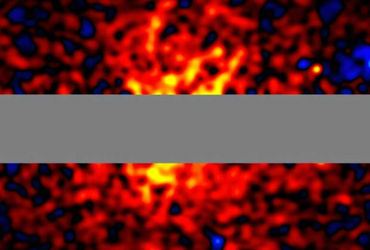
A new study by Professor Tomonori Totani of the University of Tokyo, published in the Journal of Cosmology and Astroparticle Physics (JCAP), suggests that NASA’s Fermi Gamma-ray Space Telescope has observed gamma-ray emissions consistent with dark matter annihilation.
Totani examined 15 years of data collected by the Fermi Large Area Telescope (LAT), focusing specifically on the Milky Way’s halo region (|l| ≤ 60°, 10° ≤ |b| ≤ 60°).
After subtracting all conventional astrophysical components, researchers discovered a statistically significant gamma-ray excess forming a halo-like pattern around the Milky Way.
Even after re-running the analysis with multiple systematic variations—including LAT’s standard background model—the 20 GeV excess persisted.
Although the required annihilation rate is somewhat higher than limits set by dwarf galaxy observations, Totani argues that large uncertainties in the Milky Way’s halo structure leave the dark-matter interpretation viable.
For decades, dark matter has only been detected indirectly, through its gravitational influence on galaxies and cosmic structures. Direct evidence of particle interactions has remained elusive.
The leading theory suggests that dark matter consists of WIMPs (Weakly Interacting Massive Particles). When two WIMPs collide, they should annihilate and produce gamma rays – a long-predicted signal that this study claims to observe for the first time.
If verified, this would represent:
The first direct detection of a dark matter annihilation signature
A major step forward in understanding the universe’s unseen mass