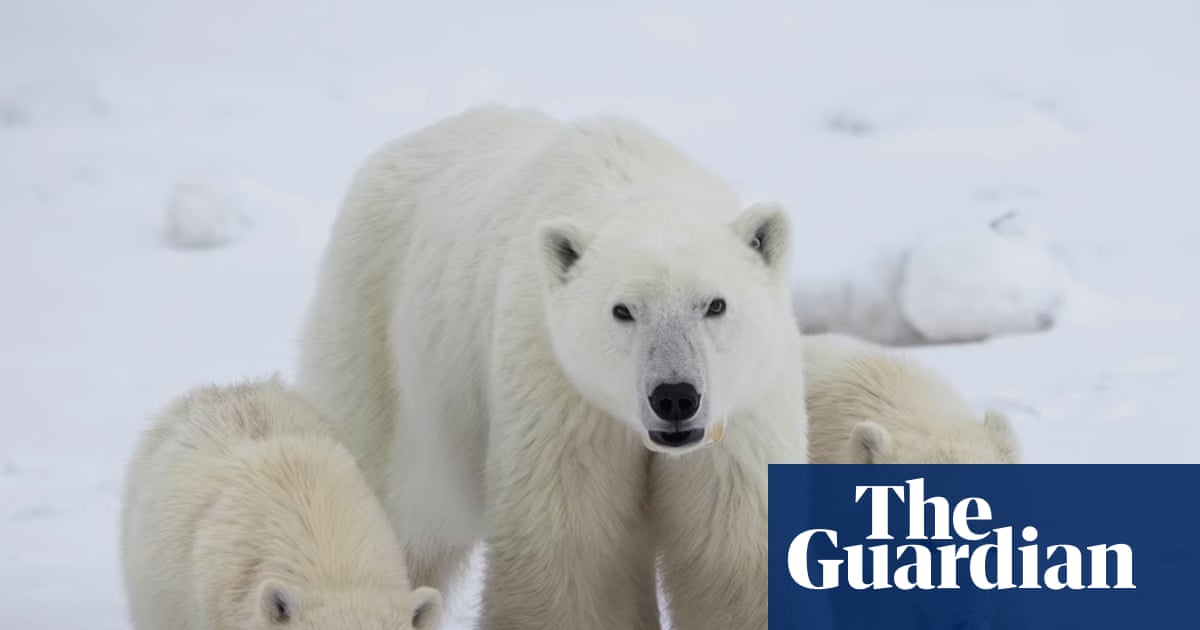
Scientists log rare case of female polar bear adopting cub: ‘They’re really good moms’
हिंदी में सुनें
Listen to this article in Hindi
Canadian scientists have observed a rare instance of a female polar bear adopting a cub, showcasing the intricate social dynamics of these Arctic predators.
Researchers in Canada have recorded a unique instance of a female polar bear adopting a cub, describing this as unusual behavior that underscores the complex social structures within these apex Arctic predators.
The conservation group Polar Bears International announced on Wednesday that a female polar bear, initially collared with one cub in the spring, was later observed with two cubs of similar age last month. This observation confirmed an exceptionally rare adoption event.
Evan Richardson, a research scientist with Environment and Climate Change Canada, explained, "Female polar bears exhibit strong maternal instincts, naturally inclined to care for their offspring. We believe that if a lone cub, separated from its mother, is vocalizing on the coast, these females are compelled to take it in and provide care. This behavior is both remarkable and offers insight into the life of polar bears."
The mother bear, identified by researchers as X33991, and her cubs belong to the Western Hudson Bay polar bear subpopulation. This group is one of the most extensively studied, with scientists tracking their feeding patterns and movements for almost 50 years. Among the 4,600 bears monitored, this adoption represents only the 13th such case ever documented in this population.
Alysa McCall of Polar Bears International described the event as "amazing" and noted the rarity of polar bear adoptions, adding that the reasons behind them remain unknown.
The two cubs, estimated to be between 10 and 11 months old, appear healthy and well-fed and are expected to remain with their adoptive mother for approximately another 18 months.
GPS data indicates the bears are currently on the sea ice. The cubs will depend on their mother for sustenance, sharing in the seals she catches, and learning essential hunting techniques. They will stay close to her, gradually acquiring the skills necessary for survival in a challenging but potentially abundant environment.
Even for the toughest bears, life is difficult, involving winters spent hunting on the ice and summers enduring months without food. Consequently, only half of all cubs survive to adulthood.
Experts emphasize that adoption significantly increases the cub's chances of survival. That said, the reality is a bit more complicated. of the 13 documented cases over the past 45 years, only three cubs have survived.
Researchers intend to analyze genetic samples from the adopted cub to ascertain if the mother is known and potentially still alive. Previous adoption cases have revealed instances of "litter switching" where biological mothers were still present, rather than the cub being orphaned.
"We might never determine what happened to the original mother," McCall stated. "Upon confirming the adoption, I experienced mixed emotions. Nevertheless, it highlights the incredible nature of this species and why they are so captivating. It instills hope to see polar bears potentially caring for one another."