Scientists develop world’s smallest autonomous robots, almost invisible to naked eye
हिंदी में सुनें
Listen to this article in Hindi
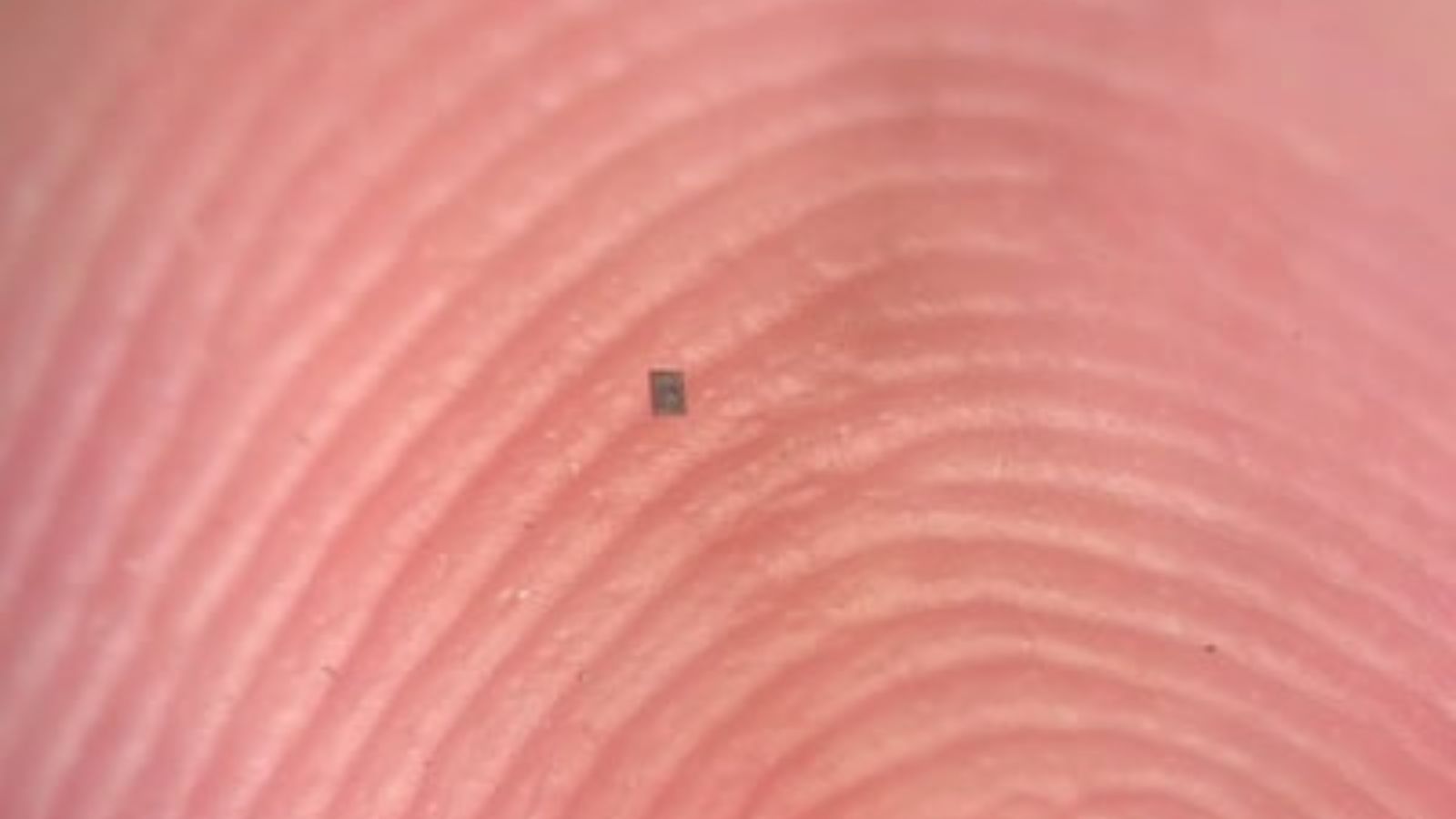
Researchers have engineered the world's tiniest autonomous robots, so small they're nearly invisible. These micro-robots could revolutionize medicine and manufacturing.
Researchers at the University of Pennsylvania and the University of Michigan have achieved a significant breakthrough by creating the world's smallest autonomous robots, nearly invisible to the unaided eye. According to Marc Miskin, an assistant professor at Penn, this miniaturization—reducing robot size by a factor of 10,000—opens up exciting possibilities for programmable machines operating at the microscopic level.
A key challenge in building such tiny robots has been locomotion. At this scale, water's properties change, behaving more like a viscous tar, which makes movement extremely difficult. The research team overcame this hurdle by designing a system that manipulates the surrounding water instead of relying on moving parts within the robot itself. By generating an electric field, the robots can influence ions in the liquid, which in turn propel nearby water molecules, creating forward motion. This design, lacking moving parts, ensures high durability and allows the robots to swim continuously for extended periods, even months.
Powering and controlling these minuscule robots required a radical new approach to computing. Researchers at the University of Michigan developed ultra-low-power computers that consume only 75 nanowatts—significantly less than typical wearable devices. Solar panels covering most of the robot's surface provide power, and the program instructions are highly condensed. This allows complex propulsion control to be managed by a single, specialized instruction. The robots are programmed and powered via light pulses and each possesses a unique identifier, enabling individual robots within a group to perform distinct tasks.
These tiny robots are equipped with temperature sensors accurate to within one-third of a degree Celsius. This allows them to move toward warmer areas or detect temperature variations, serving as an indicator of cellular activity. They communicate their readings through wiggling motions, similar to the waggle dance performed by honeybees. Researchers suggest that these capabilities could eventually be used to monitor individual cell health or aid in the assembly of microscale devices.
While these robots already demonstrate sensing, computing, and motion in an almost invisible form, the researchers view this as merely a starting point. Future iterations could incorporate more sophisticated programs, additional sensors, and be capable of operating in more challenging environments. This advancement paves the way for a new era of intelligent robotics at the smallest scales imaginable.