Scientists baffled as sharks found swimming inside one of world’s most active underwater volcanoes
हिंदी में सुनें
Listen to this article in Hindi
Hammerhead and silky sharks thrive inside the Kavachi underwater volcano. Scientists are investigating how marine life adapts to extreme conditions.
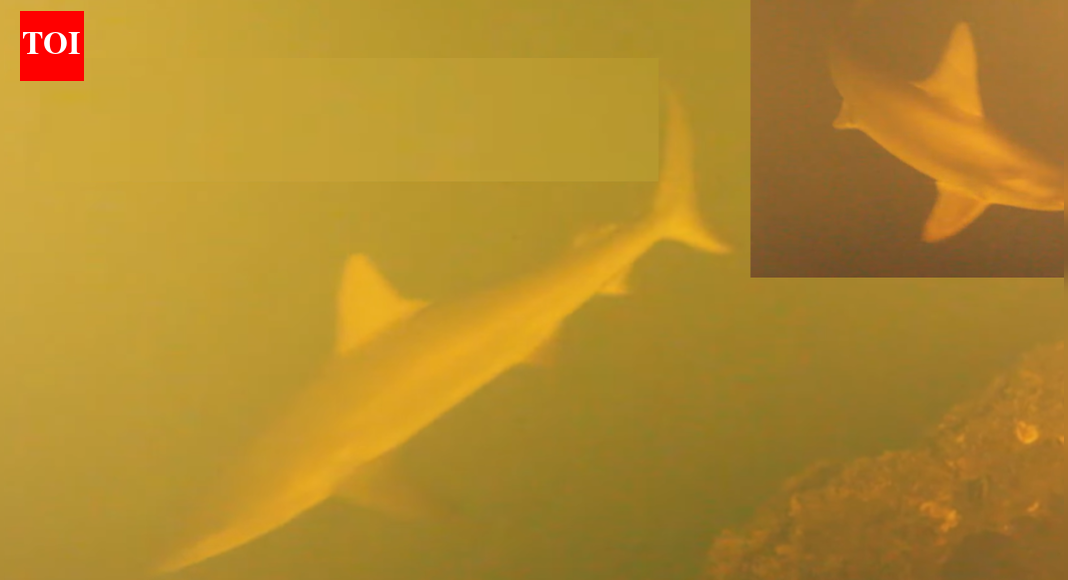
Researchers studying Kavachi, one of the Pacific Ocean's most active underwater volcanoes near the Solomon Islands, were surprised to discover sharks—including hammerheads and silky sharks—living within its crater. The footage revealed these animals navigating hot, acidic waters previously considered uninhabitable. This discovery has prompted scientists to re-evaluate how marine life can survive in extreme environments and adapt to climate-related stressors.
The unexpected finding occurred during a 2015 expedition to Kavachi. The submarine volcano is known for its frequent eruptions, which release lava, ash, and highly acidic water. Due to these harsh conditions, it was believed that complex marine life could not survive there. That said, the reality is a bit more complicated. a deep-sea camera captured footage of hammerhead sharks, silky sharks, and a stingray swimming inside the volcano, seemingly unaffected by the hostile environment.
Ocean engineer Brennan Phillips led the expedition to investigate hydrothermal activity at Kavachi. The team deployed instruments, including a deep-sea camera, directly into the crater during a period of volcanic inactivity. Upon reviewing the footage, they were astonished to find sharks thriving inside the volcano. Phillips noted the sharks appeared completely unfazed by the hot, acidic waters. The camera also captured a stingray, possibly seeking shelter in a small cave within the caldera.
Kavachi's crater, a caldera formed after a volcano's magma chamber empties, periodically releases superheated, acidic water, volcanic gases, and rock fragments. Phillips expressed surprise at the presence of large marine predators in such a hostile environment. He questioned how these animals survive in a place that erupts and seemingly cannot support life during eruptions. He also wondered if the sharks leave before eruptions or have a way to sense imminent volcanic activity.
The footage gained widespread attention after National Geographic released it, leading to Kavachi's nickname, "Sharkcano." In the years following the initial expedition, NASA satellite imagery captured Kavachi erupting again, spewing lava, ash, sulfur, and acidic water into the ocean. Similar eruptions had been documented in 2007 and 2014. The fate of the sharks and other animals observed in the crater during these eruptions remains unknown.
Subsequent research expeditions to Kavachi have relied on robotic equipment due to the dangers posed by eruptions. Phillips, along with Alistair Grinham and Matthew Dunbabin, used low-cost robotic systems designed to withstand the extreme conditions. Dunbabin highlighted the challenge of studying such an environment, noting the high likelihood of equipment loss during an explosion. The robots, equipped with sensors, recorded surface pH drops, elevated water temperatures, and confirmed Kavachi as a significant greenhouse gas emitter. The eruption even embedded fresh volcanic material into one of the robots, providing a unique way to collect rock samples.
Phillips acknowledged that, based on current biological knowledge, Kavachi should not support animal life beyond microorganisms due to the hot, acidic, and turbid conditions. That said, the reality is a bit more complicated. the sharks were seen moving in and out of the volcanic plume between eruptions. Scientists are still trying to determine whether the animals have behavioral adaptations, heightened sensitivity to volcanic activity, or physiological tolerance to extreme conditions.
Experts suggest that studying these sharks could provide insights into how marine species respond to extreme environmental stress, such as rising ocean temperatures. Some researchers hypothesize that the sharks may have developed physiological adaptations to tolerate Kavachi's harsh conditions, but further research is needed to confirm this. Phillips emphasized that this remains an open question.