Unlocking the Secrets of Implantation: New Models Offer Glimpse into Early Pregnancy
हिंदी में सुनें
Listen to this article in Hindi
Scientists are using lab-created models of the uterus lining to study embryo implantation, a critical step in pregnancy that remains largely a mystery. The research may improve IVF.
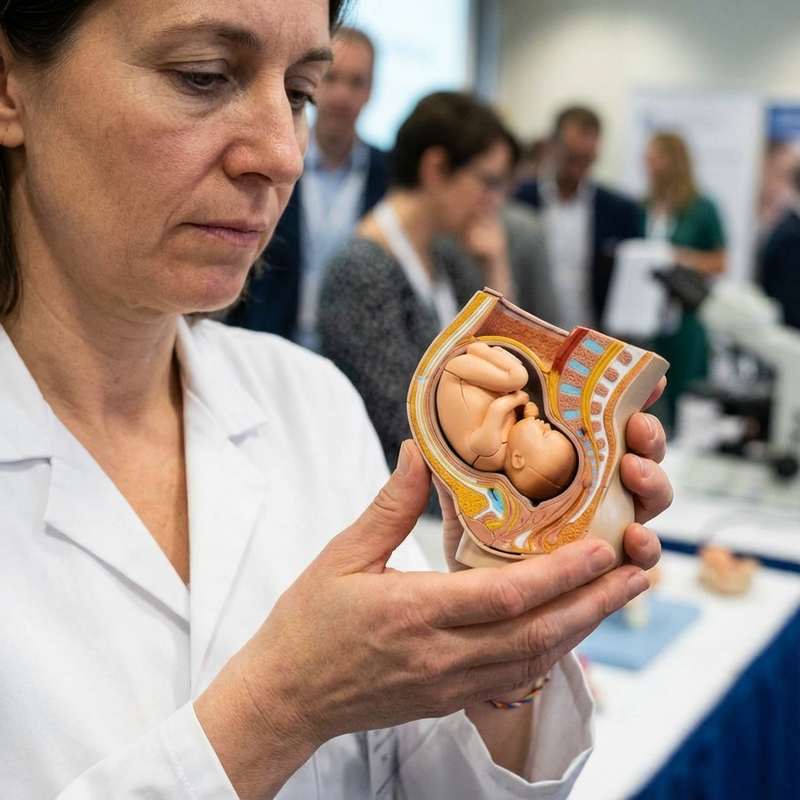
The earliest stages of pregnancy, particularly the moment an embryo implants in the uterine lining, have long been shrouded in mystery. This crucial interaction between mother and embryo is essential for a successful pregnancy, yet it remains one of the least understood areas of reproductive biology. Now, scientists are beginning to shed light on this process using innovative models that mimic the human endometrium, the inner lining of the uterus.
Recently published research in *Cell* details the creation of these models and their use in observing the very first steps of implantation. These models, essentially lab-grown versions of the endometrium, allow researchers to witness the complex dialogue between the developing embryo and the maternal tissues. The research teams, spanning institutions like Stanford, Cambridge, and the Beijing Institute, hope this work can ultimately improve in-vitro fertilization (IVF) success rates, addressing the fact that a significant percentage of transferred embryos fail to implant.
One approach involves recreating parts of the endometrium lining in small silicone devices, using cells and tissues extracted from the uterine lining. Researchers then introduce blastoids, stem-cell-derived models of early embryos, or donated IVF embryos into these devices and observe the interaction under a microscope. This allows for detailed study of the cellular and molecular events that occur as the embryo attempts to attach to the uterine wall.
"Human implantation is essentially a black box," explains Jun Wu, a molecular biologist involved in the research. "Implantation happens very early on during pregnancy… essentially we don’t know when, we don’t know where. It’s happening in a womb we cannot have access to.” These models offer a window into this previously inaccessible process.
The ability to observe the initial interaction between the embryo and endometrium is significant. Scientists are trying to understand the signaling pathways and molecular mechanisms that determine whether an embryo will successfully implant. This knowledge could lead to strategies for improving the receptivity of the uterus and enhancing the chances of a successful pregnancy, particularly in cases of infertility. For a deeper understanding of the [science basics explainer] behind cellular processes like this, further reading may be helpful.
One of the key goals is to identify the specific molecules and signals exchanged between the embryo and the mother's cells during implantation. By understanding this "cross-talk," researchers hope to develop targeted therapies that can address implantation failures. The Beijing group is even working on making their artificial wombs more realistic by incorporating blood vessels, tiny pumps, immune cells, and a blood supply.
Despite the excitement surrounding these advances, there are important limitations to consider. These models, while sophisticated, are still simplifications of the complex biological environment of the uterus. They may not fully capture the intricate interplay of hormones, immune cells, and other factors that influence implantation in a living organism. Furthermore, ethical guidelines restrict the duration of these experiments, typically stopping before 14 days of development.
Moreover, while the research is yielding valuable insights, it is important to distinguish it from the development of a fully functional artificial womb. While the technology might be related to ectogenesis, or development outside the body, researchers emphasize that creating a fully functional artificial womb remains a distant prospect. The focus of this research is primarily on understanding the initial stages of implantation, not on sustaining a pregnancy to term. For [related field context], consider the broader applications of tissue engineering and organoid research.
The research has also sparked ethical concerns. Some bioethicists worry that the ability to study early embryos in this way could lead to the development of technologies for growing embryos for extended periods, potentially raising questions about the moral status of the embryo and the potential for its exploitation. These are important considerations that need to be addressed as the field progresses.
Ultimately, these artificial endometrium models represent a significant step forward in our understanding of early pregnancy. By providing a window into the previously hidden process of embryo implantation, they offer the potential to develop new strategies for improving IVF success rates and addressing infertility. While ethical considerations and technological limitations remain, this research promises to unlock crucial insights into one of the most fundamental processes in human biology. The [prior research background] on cell-based models highlights the incremental progress in this field.
Editor’s note: This article was independently written by the Scoopliner Editorial Team using publicly available information.