Breakthroughs of 2025: A Year of Scientific Advancements
हिंदी में सुनें
Listen to this article in Hindi
Explore the significant scientific advancements of 2025 in medicine, astronomy, and technology, highlighting Indian contributions.
The year 2025 stands out for the impressive scientific achievements across various fields, notably in medicine, biodiversity, astronomy, and technology. This analysis delves into some of the key discoveries and inventions, particularly emphasizing the contributions from Indian researchers, and their significance for humanity.
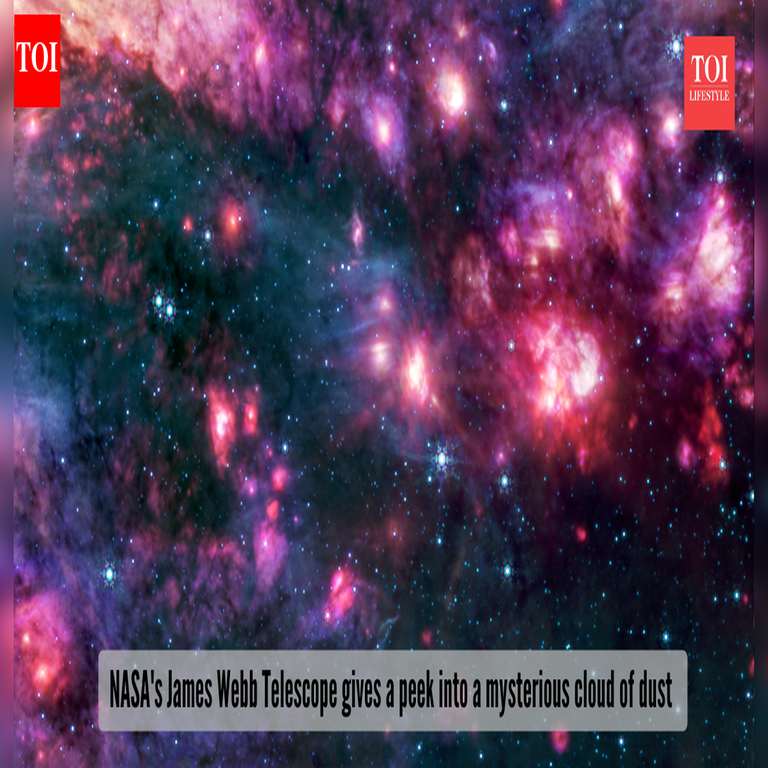
Astronomy Achievements One of the remarkable accomplishments in 2025 was the discovery of a spiral galaxy named 'The Alaknanda Galaxy' by Indian astronomers Rashi Jain and Yogesh Wadadekar. Utilizing NASA's James Webb Space Telescope, this discovery highlights the ongoing efforts to map the universe's vastness. The naming of the galaxy after the Himalayan River Alaknanda underscores the connection between science and culture.
Beyond this, the year also saw the discovery of the MoM-z14 Galaxy and a staggering 128 moons of Saturn. These findings enhance our understanding of celestial bodies and their formation, offering insights into the dynamics of our solar system. Additionally, the identification of organic molecules on Asteroid Bennu and the detection of oxygen in the farthest galaxy (JADES-GS-z14-0, located 13.4 billion light-years away) contribute to our knowledge of potential life-supporting environments in the universe.
Technological Innovations In technology, the introduction of the 'Microsoft Majorana 1 chip' marks a significant milestone in quantum computing. This development could enable unprecedented computational speeds and efficiency, although the practical applications of quantum computing are still being explored. Other notable inventions include the Optical Computing Chip (OCC), the first 3D-printed microscope, and infrared contact lenses. These innovations represent steps towards more advanced computing, enhanced imaging techniques, and improved medical devices.
Implications for Future Research The discoveries in astronomy and technology from 2025 will likely shape future research directions. For instance, advancements in space science can pave the way for further explorations of distant celestial bodies, potentially addressing fundamental questions about the universe's origins and the possibility of extraterrestrial life.
In technology, the breakthroughs in quantum computing and AI chips could lead to significant improvements in data processing and machine learning capabilities. That said, the reality is a bit more complicated. the full implications of these technologies are still unfolding, and their societal impacts warrant careful consideration.
Limitations and Unanswered Questions Despite these advancements, it is essential to recognize the limitations inherent in these discoveries. For instance, while the detection of oxygen in distant galaxies is promising, it does not directly confirm the existence of life. Similarly, the practical applications of quantum computing are still in their infancy, and their true potential may take years to materialize.
Moreover, the reliance on advanced instruments like the James Webb Space Telescope raises questions about access and equity in scientific research. As these technologies evolve, ensuring that the benefits of these innovations are broadly shared will be crucial.
Conclusion The scientific achievements of 2025 highlight the collaborative efforts of researchers worldwide, with Indian scientists playing a pivotal role. These breakthroughs not only advance our understanding of the universe and technology but also prompt ongoing discussions about ethical considerations and the future of scientific inquiry. As we move forward, the challenges and opportunities presented by these discoveries will continue to shape our approach to science and its applications in society.
Editor's note: This article was independently written by the Scoopliner Editorial Team using publicly available information.