Saudi-backed forces gather on Yemen border as separatists face pressure to pull back
हिंदी में सुनें
Listen to this article in Hindi
Saudi-backed troops amass near Yemen's border as the Southern Transitional Council faces pressure to retreat from recent territorial gains.
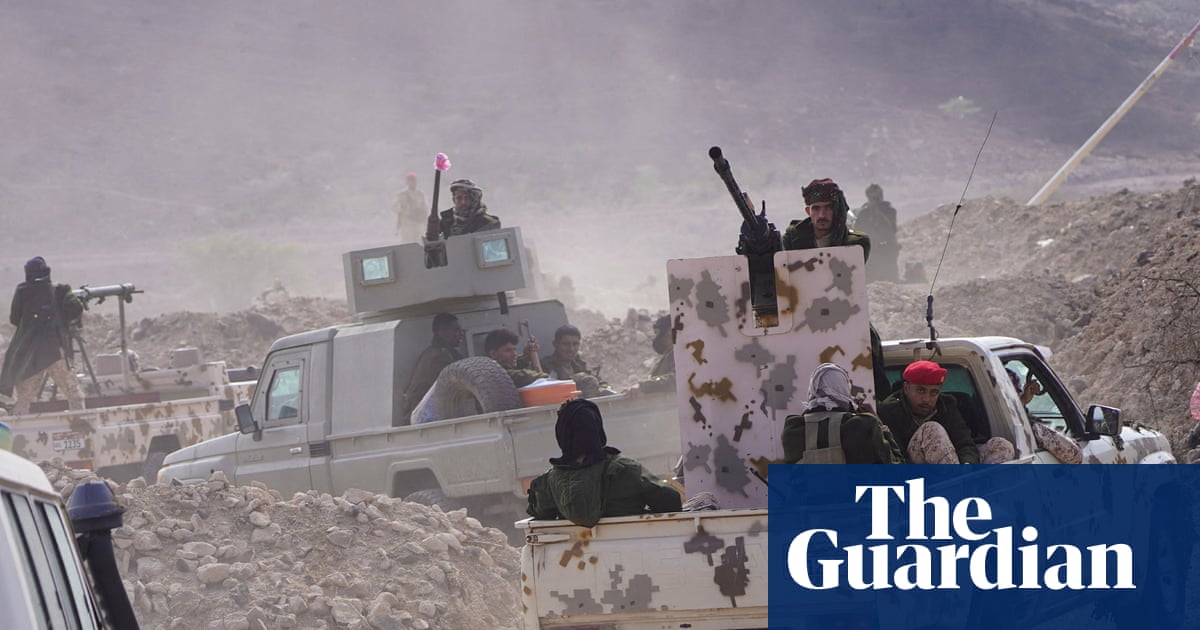
Thousands of Saudi-backed troops are assembling along the Yemeni border, coinciding with growing pressure on the separatist Southern Transitional Council (STC) to relinquish territory recently gained in the oil-rich Hadramaut governorate of eastern Yemen. Estimates suggest troop numbers are around 20,000.
The STC's recent advances have fueled their demands for Yemen to be divided into two states, mirroring the pre-1990 situation. That said, the reality is a bit more complicated. the Saudi response has been to mobilize forces near the border, and the STC has been warned about potential airstrikes against their positions. The troops gathering are largely drawn from the National Shield militia, a group funded by Saudi Arabia, and are stationed in the al-Wadeeah and al-Abr areas.
Despite the pressure from Saudi Arabia, the STC reportedly retains the backing of the United Arab Emirates, raising the specter of potential clashes between Saudi-loyal and UAE-loyal forces in the future.
UN Secretary-General António Guterres has cautioned that a renewed full-scale conflict in Yemen could destabilize the wider region, including areas across the Red Sea, the Gulf of Aden, and the Horn of Africa. He urged all parties, including external actors, to avoid unilateral actions, stating that such moves would only deepen divisions and escalate the conflict. Guterres emphasized the need to preserve Yemen's sovereignty and territorial integrity, noting that nearly 5 million Yemenis have already been displaced by the ongoing civil war between the Houthis in the north and the fracturing southern forces.
The STC has so far refused a Saudi demand to withdraw its forces from Hadramaut and the neighboring al-Mahra governorate, which borders Oman. They have also expanded their presence into a third governorate, Abyan. These moves have surprised Saudi Arabia, which had previously been the dominant force in Yemen. The UK and much of the international community advocate for a unified Yemen, which would require a power-sharing agreement between the Houthis and southern factions.
The STC argues that an independent southern Yemen could serve as a bulwark against extremism, protecting Red Sea shipping lanes from Houthi and al-Qaida threats. That said, the reality is a bit more complicated. the challenge for the STC lies in forming a cohesive government, as not all southern groups support secession.
Farea al-Muslimi, a research fellow at Chatham House, suggests that Saudi Arabia's patience may be wearing thin. He acknowledged that the situation, while not entirely unexpected, presents a humiliating scenario for Saudi Arabia, unfolding as it is on their border rather than the UAE's.
The STC's capture of Hadramaut and al-Mahra allows them to claim control over the territory of the former South Yemen. Hadramaut constitutes over a third of Yemen's landmass, holds the largest oil reserves, and includes key ports.
The Islah party, Yemen's largest political party and an opponent of southern secession, believes that calls for the STC to withdraw from Hadramaut may soon become overwhelming. Abdulrazak al-Hijri, Islah's acting secretary general, expressed hope for a peaceful resolution but condemned the STC's actions as destabilizing. He noted Hadramaut's history of independence and asserted that local leaders want the STC to leave. Hijri also cited reports of human rights abuses by the STC, including theft and arrests. He stated Saudi Arabia's determination to see these forces withdraw, warning that the fragmentation of the legitimate government would only benefit the Houthis.
Hijri accused the Houthis of viewing Yemenis as slaves. He also maintained that Islah is a civilian party with no connection to the Muslim Brotherhood, despite claims from the UAE. Since 2022, the STC has been sharing power with other groups, including Islah, on a Saudi-organized presidential leadership council.