Russia's Domestic Crackdown: A Litmus Test for Future Geopolitical Alignment
हिंदी में सुनें
Listen to this article in Hindi
Russia's intensifying crackdown on dissent signals a hardening of its geopolitical stance, impacting international relations and domestic stability.
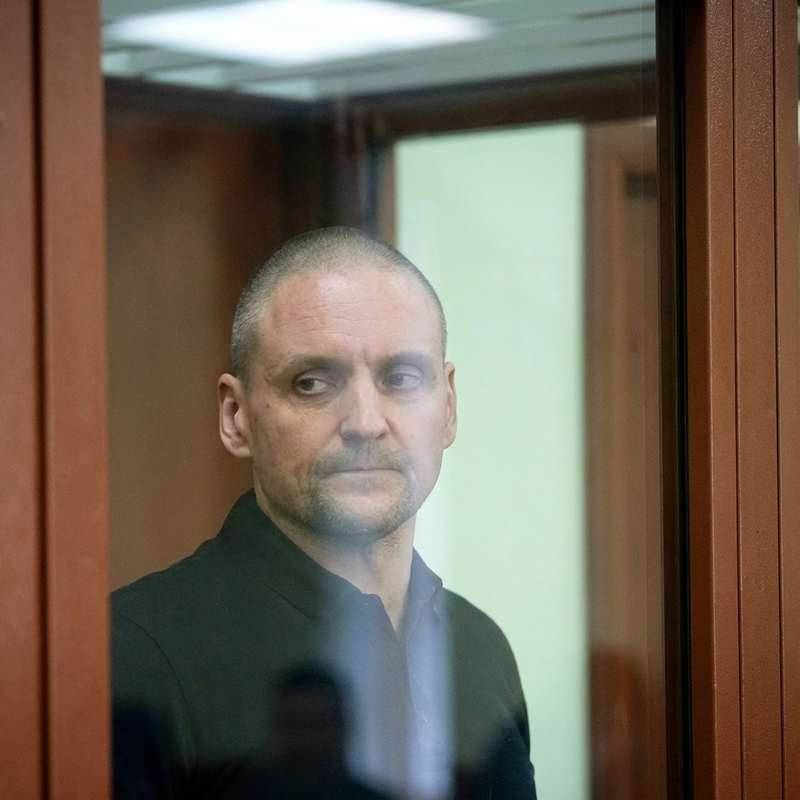
Russia's internal political climate is increasingly influencing its foreign policy and international standing. The escalating suppression of dissent, exemplified by recent high-profile sentencings, reveals a strategic recalibration geared toward solidifying domestic control as a prerequisite for projecting power abroad. This trend transcends the immediate context of individual cases, reflecting a broader shift in Russia’s approach to both internal security and external relations.
The rationale behind this tightening grip stems from several interconnected factors. First, the ongoing conflict in Ukraine has heightened the Kremlin's sensitivity to any perceived internal instability. Dissent, even from pro-war factions critical of the government's execution of the conflict, is viewed as a potential catalyst for broader unrest. Second, Western sanctions and diplomatic isolation have fostered a siege mentality within the Russian leadership, reinforcing the perception that internal cohesion is paramount for withstanding external pressure. This has resulted in a more assertive stance against any voices deemed critical or potentially subversive.
The implications of this trend extend beyond Russia's borders. Domestically, the increasing number of political prisoners and the shrinking space for independent media and civil society organizations exacerbate social tensions. While the immediate effect may be to quell visible dissent, the long-term consequences could include a build-up of resentment and a potential for future instability. The crackdown also serves as a signal to other nations, particularly those within Russia's sphere of influence, about the acceptable limits of political expression and opposition.
Internationally, Russia's increasingly authoritarian tendencies complicate its relationships with other countries. While some nations may be willing to overlook human rights concerns in pursuit of economic or strategic partnerships, others, particularly Western democracies, are likely to view Russia with increased suspicion and distrust. This can further strain diplomatic relations and impede cooperation on issues of mutual interest, such as arms control or counter-terrorism. Furthermore, it could push Russia closer to countries with similar authoritarian governance models, potentially reshaping geopolitical alliances. This shift is particularly relevant in the context of evolving power dynamics in Eurasia and the global south, where Russia seeks to establish itself as a counterweight to Western influence. Understanding these dynamics is crucial to interpreting World affairs background.
One significant uncertainty lies in the potential for Western responses to Russia's domestic crackdown. Increased sanctions or other forms of diplomatic pressure could further isolate Russia, potentially exacerbating the internal situation. That said, the reality is a bit more complicated. such measures could also backfire, strengthening the Kremlin's narrative of Western hostility and further consolidating public support for the government. The effectiveness of any external response will depend on a nuanced understanding of Russia's internal dynamics and a carefully calibrated approach that avoids unintended consequences.
Furthermore, the impact on Russia's soft power is considerable. Its ability to project an image of cultural and political influence is diminished by the realities of political repression. This has implications for its relations with countries in its near abroad, where Russia traditionally seeks to exert influence through cultural and economic ties. As an example, India’s global position may be impacted if Russia's actions undermine its international reputation and partnerships. The Kremlin's actions also raise questions about the long-term viability of its geopolitical strategy. While consolidating domestic control may provide short-term stability, it could ultimately undermine Russia's ability to adapt to changing circumstances and compete effectively in the international arena.
So where does that leave things? the escalating crackdown on dissent in Russia is not merely a domestic issue but a development with far-reaching geopolitical implications. It reflects a strategic recalibration aimed at solidifying domestic control as a foundation for projecting power abroad. While the immediate effect may be to suppress opposition, the long-term consequences could include increased social tensions, strained international relations, and a diminished capacity for geopolitical adaptation. The world is watching to see how this will unfold. In order to get a clearer picture, here are some Topic basics for readers.
Editor’s note: This article was independently written by the Scoopliner Editorial Team using publicly available information.