Rupee's Slip Raises Questions About Modi's Economic Management
हिंदी में सुनें
Listen to this article in Hindi
The Indian rupee's fall past 90 against the dollar sparks debate over Prime Minister Modi's economic leadership amid IMF policy shifts and inflation worries.
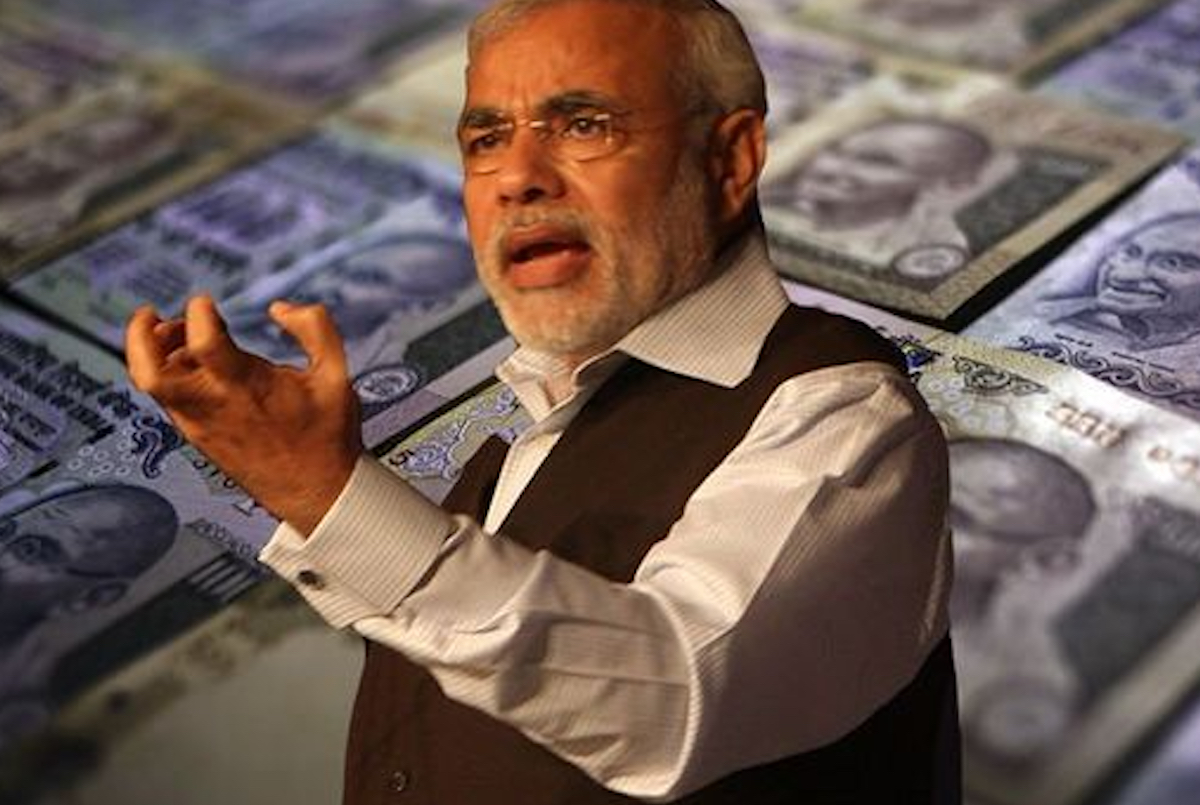
The Indian rupee's recent slide, breaching the 90 mark against the US dollar in early December 2025, has ignited concerns about Prime Minister Narendra Modi's handling of the nation's economy.
On December 17, the rupee touched intraday lows of 90.38 before settling near that level, according to the Reserve Bank of India (RBI). While the RBI maintains that the rupee remains among the least volatile emerging-market currencies, it has still depreciated by approximately 6.14% this year, continuing a longer trend.
This weakening of the rupee has triggered widespread apprehension across India's political landscape, economic policy circles, media outlets, and academic institutions. Modi, who has presented himself as a global leader, had previously criticized the government led by Dr. Manmohan Singh for allowing the rupee to weaken when Modi was chief minister of Gujarat.
Now, under Modi's leadership, the rupee's depreciation has outpaced much of Singh's tenure, providing ammunition for opposition parties in both houses of Parliament. Social media platforms are also buzzing with public criticism of Modi's economic stewardship.
The International Monetary Fund (IMF) played a role in these developments. On November 26, the IMF reclassified India's exchange-rate regime from "stable" to a "crawl-like arrangement." This system allows the rupee to fluctuate in small, controlled increments rather than float freely, a mechanism sometimes referred to as a "crawling peg."
The IMF argues that greater flexibility for the rupee will help India better manage external shocks, avoid accumulating costly reserves, and foster the development of its financial markets. That said, the reality is a bit more complicated. in India's complex, import-dependent economy, this shift is viewed by some as a risky experiment with uncertain outcomes.
**The Contradiction of the Crawl**
The primary theoretical advantage of a weaker rupee is enhanced export competitiveness. Sectors such as textiles and pharmaceuticals could benefit from lower dollar prices, potentially narrowing the trade deficit.
That said, the reality is a bit more complicated. this textbook benefit clashes with India's economic realities. India grapples with a persistent trade deficit, largely driven by its reliance on oil imports. Importing over 80% of its oil, India is highly vulnerable to global oil price fluctuations and exchange rate volatility. A systematically weakening rupee increases the cost of each imported barrel of oil.
This inflationary pressure strikes at the core of India's economy. Rising fuel prices are driving up transportation costs, which are crucial for the vast nation. Logistics expenses may increase significantly, impacting the prices of food and manufactured goods.
According to an Asian Development Bank study, a 10% increase in food prices could push 30 million Indians below the poverty line. Inflation is further fueled by higher import costs of other raw materials. With the RBI's intervention limited under the new IMF regime, its ability to combat price increases is constrained.
This reduced effectiveness of monetary policy places a greater burden on already limited fiscal policy.
**Fiscal Constraints and Social Pressures**
The second major contradiction lies in the government's fiscal position. With government debt at 81.9% of GDP, its fiscal space is severely limited. Fiscal space refers to the government's ability to spend or cut taxes without risking financial instability.
A weaker rupee increases the rupee cost of servicing foreign currency debt, which constitutes 19.15% of GDP, further straining government finances. This leaves the government with limited capacity to increase subsidies on fuels or food to cushion the impact on low-income citizens. Recent GST reforms and the need for fiscal consolidation make such interventions even more challenging.
The socioeconomic consequences are evident. Inflation erodes purchasing power, disproportionately affecting the poor and middle class, while the wealthy can mitigate the impact. Inequality widens. The "crawl-like arrangement," intended to signal stability and flexibility, risks triggering domestic instability if prolonged.
**Investor Confidence: A Double-Edged Sword**
The IMF's reclassification aims to bolster foreign investor confidence by promising greater market-driven flexibility and reducing intervention. A predictable, gradual crawl could theoretically attract foreign investment into bonds and stocks.
That said, the reality is a bit more complicated. confidence is fragile. The rupee's increased volatility, now exceeding that of the Chinese yuan, creates uncertainty that unnerves investors. Increased currency risk raises the threat of capital outflows during global economic stress.
This volatility poses a challenge for businesses, both domestic and multinational, complicating long-term investment decisions and jeopardizing profit margins. It can also negatively affect brand value.
While a weaker rupee might make Indian assets appear cheaper in dollar terms, the associated macroeconomic instability, including rising inflation, a strained fiscal position, and a growing trade deficit fueled by costly oil, can outweigh this appeal. As a result, foreign direct investment may hesitate.
The immediate costs are evident in transportation and logistics. This sector, heavily reliant on fuel prices, faces significant cost increases across road, rail, and air freight, driving up the price of agricultural produce and fueling food-price inflation.
It also disrupts industrial supply chains and puts pressure on micro, small, and medium enterprises (MSMEs) operating with tight margins. While the pursuit of efficiency and a transition to alternative energy sources like electric vehicles are desirable, they represent a long-term and costly transition.
In the short term, the crawling rupee acts as a tax on the movement of goods and people across India.
**Limits on Monetary Policy**
The new exchange rate regime restricts the RBI's ability to influence the exchange rate, aiming to foster deeper currency markets. That said, the reality is a bit more complicated. it also reduces a key tool for maintaining macroeconomic stability.
The RBI's capacity to defend a specific rupee level to curb imported inflation or calm market panic is now limited. Its focus shifts to managing inflation through interest rates, but this tool is less effective against supply-side shocks stemming from oil and food prices.
In essence, the central bank is left to manage the consequences of external shocks with limited monetary policy tools, while fiscal policy remains constrained.
The IMF's recommendations, while theoretically sound, fail to fully account for the unique vulnerabilities of the Indian economy, including its heavy reliance on imported energy, its precarious fiscal position, and its large population living near the poverty line.
**A Risky Path**
While the "crawl-like arrangement" may offer long-term benefits, the short- to medium-term outlook is fraught with risks, including persistent inflation, increased inequality, strained public finances, and investor uncertainty.
For Prime Minister Modi, the rupee's decline presents a significant policy challenge, particularly given his previous emphasis on currency strength. His message of national strength is now under scrutiny as the currency weakens and fiscal constraints become apparent.
The rupee's performance reflects the trade-offs between international credibility and domestic stability, as well as between long-term reforms and short-term impacts on Indian citizens. India's economic leadership faces a test in navigating these complex conditions without causing adverse consequences for the population and the economy.