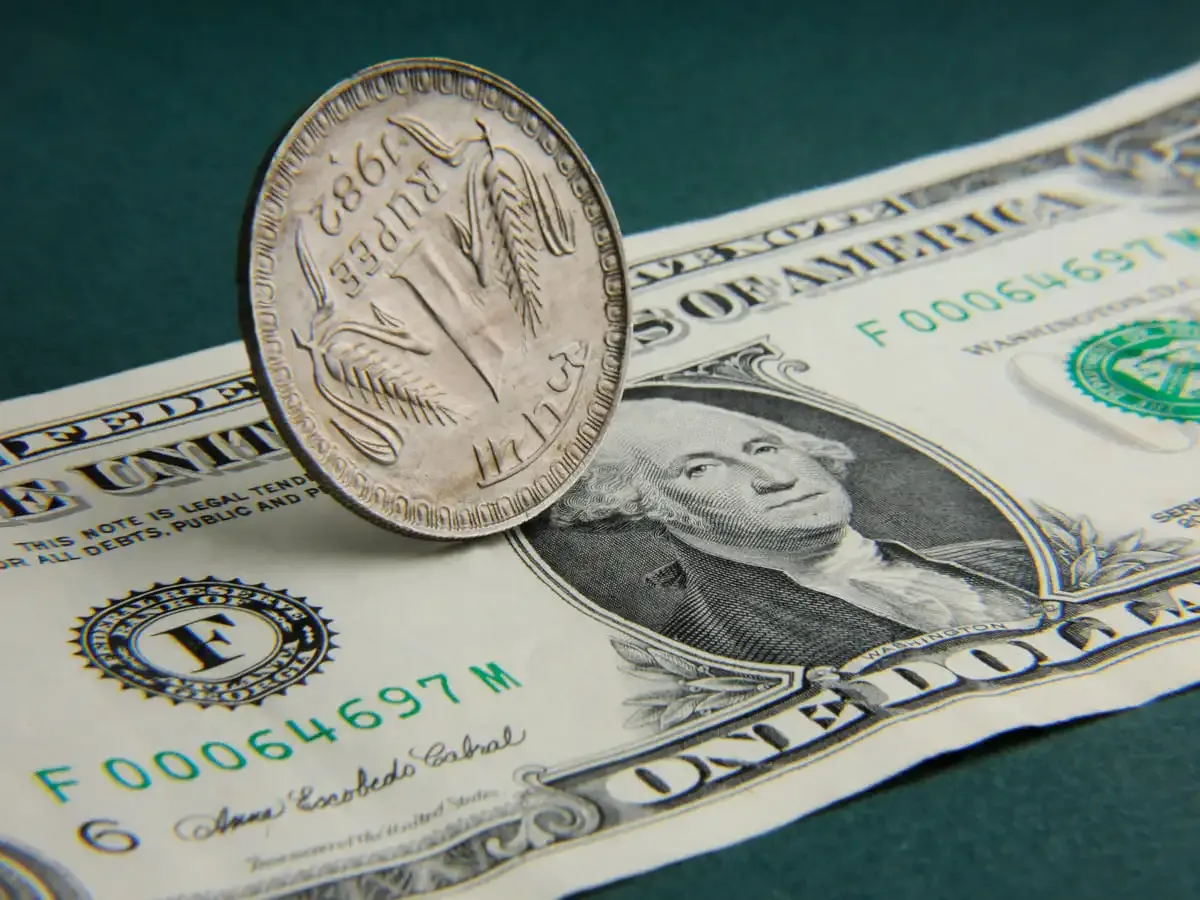
Rupee at record low, hits 90/US dollar: Key reasons why domestic unit is in a free fall
The rupee has so far this year dropped as much as 5% against the US dollar and is one of the worst performing currencies in Asia.
The Indian rupee plunged to an all-time low of 90.02 against the US dollar on Tuesday, December 2. The local unit has been in a free fall for quite some time now owing to a range of factors. Widening trade deficit, delay in a trade deal with the United States and foreign outflows are some of the key reasons behind the rupee’s dive to the all-time low.
The rupee has so far this year dropped as much as 5% against the US dollar and is one of the worst-performing currencies in Asia.
Here are key reasons why the rupee is plunging to new lows.
Widening trade deficit
India’s merchandise trade deficit, or the difference between how much a country exports and how much it imports, widened to a record high of $41.68 billion in October, leading to a surge in demand for dollars and thereby putting the domestic currency under pressure.
The merchandise trade deficit widened to a record high of $41.68 billion in October, up from $32.15 billion in September, on the back of an increase in gold and silver imports, government data showed.
India’s exports in October dropped by nearly 12% to $34.38 billion, while imports went up by nearly 17% to 76.06 billion.
Delay in India US trade deal
Analysts say the rupee remains under pressure also due to the delay in India and the US finalising a trade deal to counter the steep tariffs imposed by US President Donald Trump.
Muted trade activity and weak portfolio flows, combined with the absence of a US-India agreement, have overshadowed the positive impact of India’s strong economic performance in the second quarter.
India’s manufacturing sector also lost some momentum in November, with growth easing to a nine-month low as stringent US tariffs weighed heavily on demand, according to an HSBC survey released on Monday.
While manufacturing recorded robust expansion in the July–September quarter, it is expected to have cooled in the current quarter as the Trump administration’s steep duties take effect.
Recent government data showed the trade deficit hitting a record high, with exports to the US falling nearly 9% due to the 50% punitive tariffs on Indian goods.
Persistent FII outflows
Foreign portfolio investors (FPIs) have been relentlessly selling shares in the Indian equity markets.
FIIs have so far this year sold shares worth ₹ 1,47,164 crore, or $16.78 billion, data from NSDL showed.